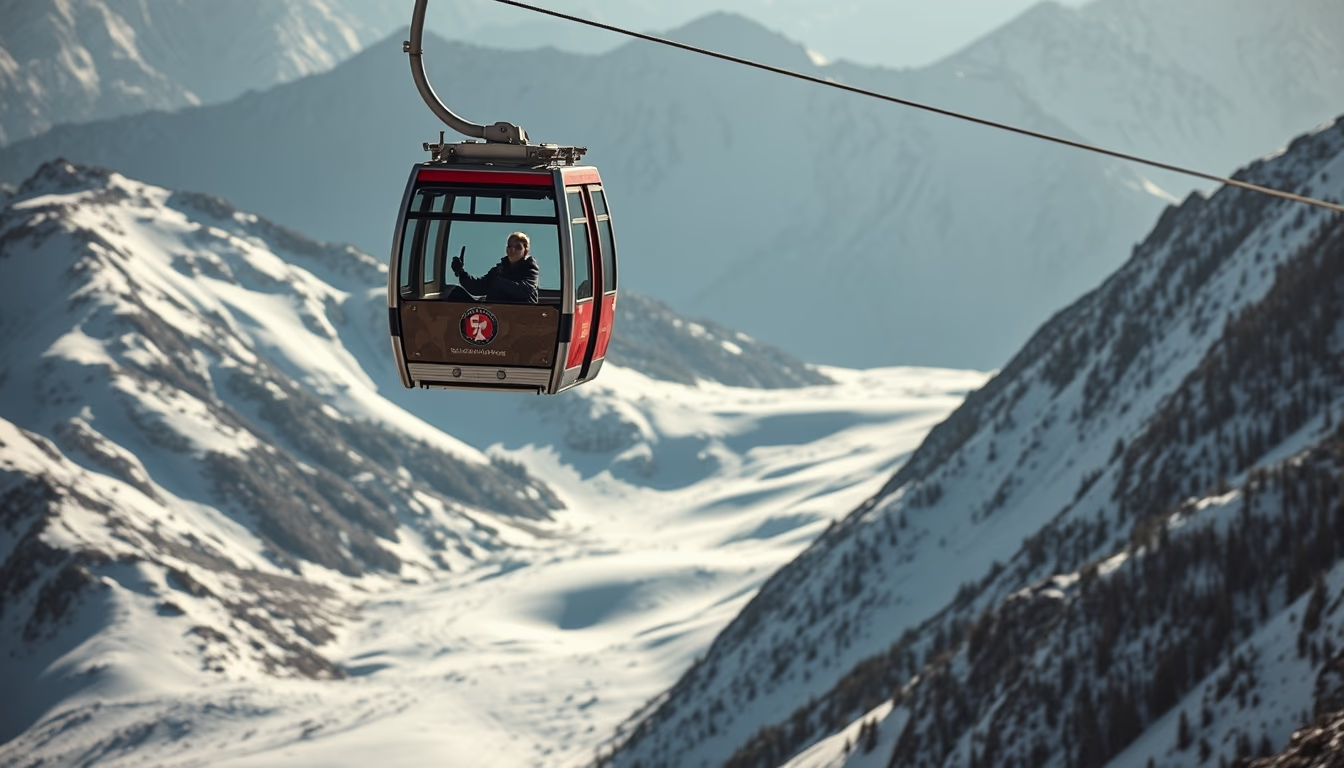
Cable car alpine
1344×768 · AVIF · CC BY 4.0
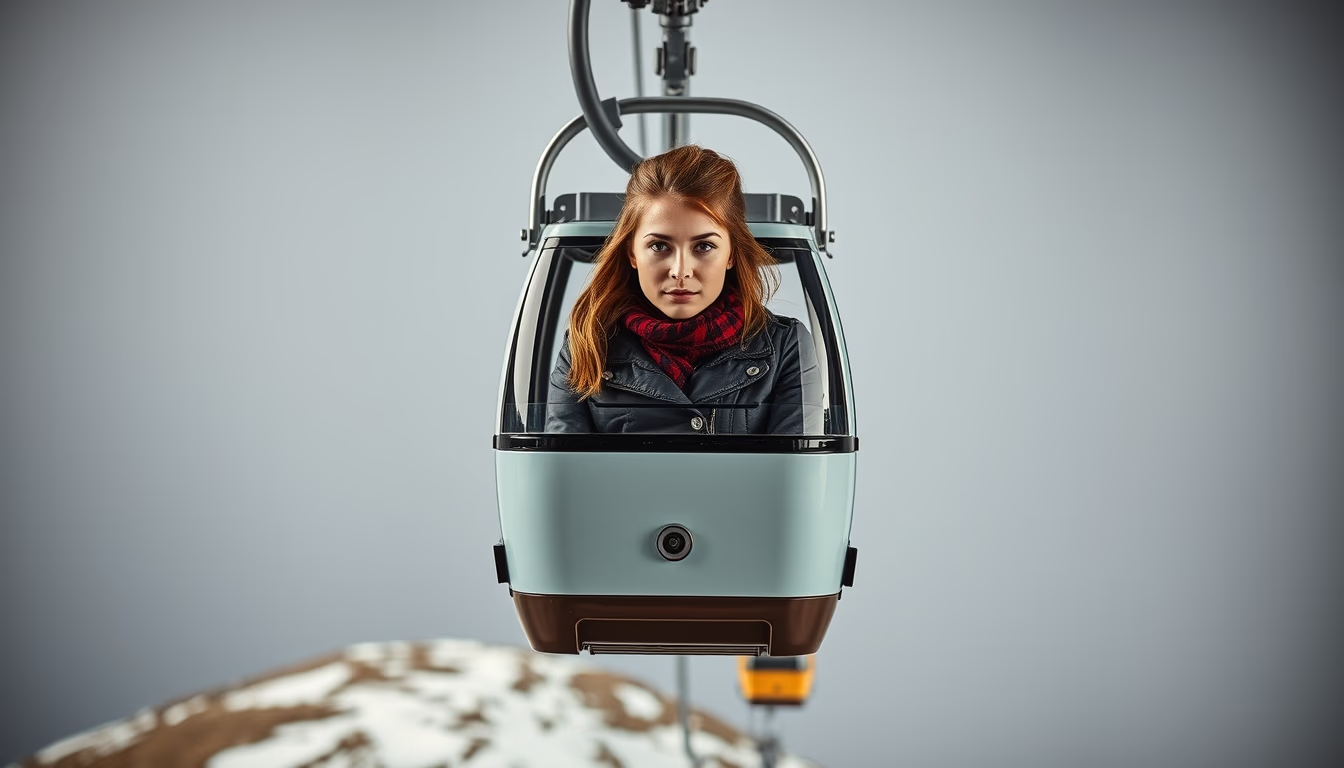
Cable cars are aerial transportation systems that connect points in mountainous regions, offering panoramic views and efficiency in alpine areas.
About this subject
Cable cars, also known as aerial trams or gondolas, are transportation systems that use steel cables to move suspended cabins between stations. They are widely used in alpine regions such as the European Alps, the Andes in South America, and the Rocky Mountains in North America, where steep terrain and snow make conventional road construction difficult.
These systems play a crucial role in winter tourism, transporting skiers and visitors to high altitudes. Additionally, in some cities like Rio de Janeiro (Brazil) and La Paz (Bolivia), cable cars integrate public transit, reducing congestion and connecting isolated communities. The world's highest cable car, the Peak 2 Peak in Whistler (Canada), reaches 436 meters in height, while the longest, the Mount Yasheng Cable Car in China, spans 7.2 km.
Historically, the first passenger cable car opened in 1894 in Grindelwald, Switzerland, powered by steam engines. Modern advancements such as glass-floor cabins and continuous boarding systems have increased capacity and user experience. These modes of transport are considered eco-friendly compared to roads, as they emit fewer pollutants per passenger.
Interestingly, cable cars are also used for military and research purposes, such as in Antarctica for supply transport. In Brazil, the Sugarloaf Mountain Cable Car, inaugurated in 1912, is one of the oldest in continuous operation worldwide. Cable maintenance is rigorous, with regular inspections to ensure safety, as these systems can transport thousands of people per hour at high altitudes.
Frequently Asked Questions
What was the world's first passenger cable car?
The first passenger cable car opened in 1894 in Grindelwald, Switzerland, powered by steam engines to move the cabins.
Where is the highest cable car in the world located?
The highest cable car is the Peak 2 Peak in Whistler, Canada, with cabins reaching 436 meters above ground between stations.
Are cable cars only used for tourism?
No, cable cars are also used for public transit in cities like La Paz and Medellín, as well as for military and research purposes in remote locations such as Antarctica.
Direct URL
https://pub-c7d6a6ea828543ac903a74a341ccb2e1.r2.dev/imagens/cable-car-alpine-studio-editorial-portrait-p0.avifHow to credit
Include a visible link back to UtilizAí. Copy one of the snippets below:
<a href="https://xn--utiliza-eza.com/en/midia/imagens/cable-car-alpine-studio-editorial-portrait-p0">Cable car alpine</a> by <a href="https://xn--utiliza-eza.com">UtilizAí</a>, licensed under <a href="https://creativecommons.org/licenses/by/4.0/">CC BY 4.0</a>.
[Cable car alpine](https://xn--utiliza-eza.com/en/midia/imagens/cable-car-alpine-studio-editorial-portrait-p0) by [UtilizAí](https://xn--utiliza-eza.com), CC BY 4.0
License: CC-BY-4.0