Bugatti type 35
1344×768 · AVIF · CC BY 4.0
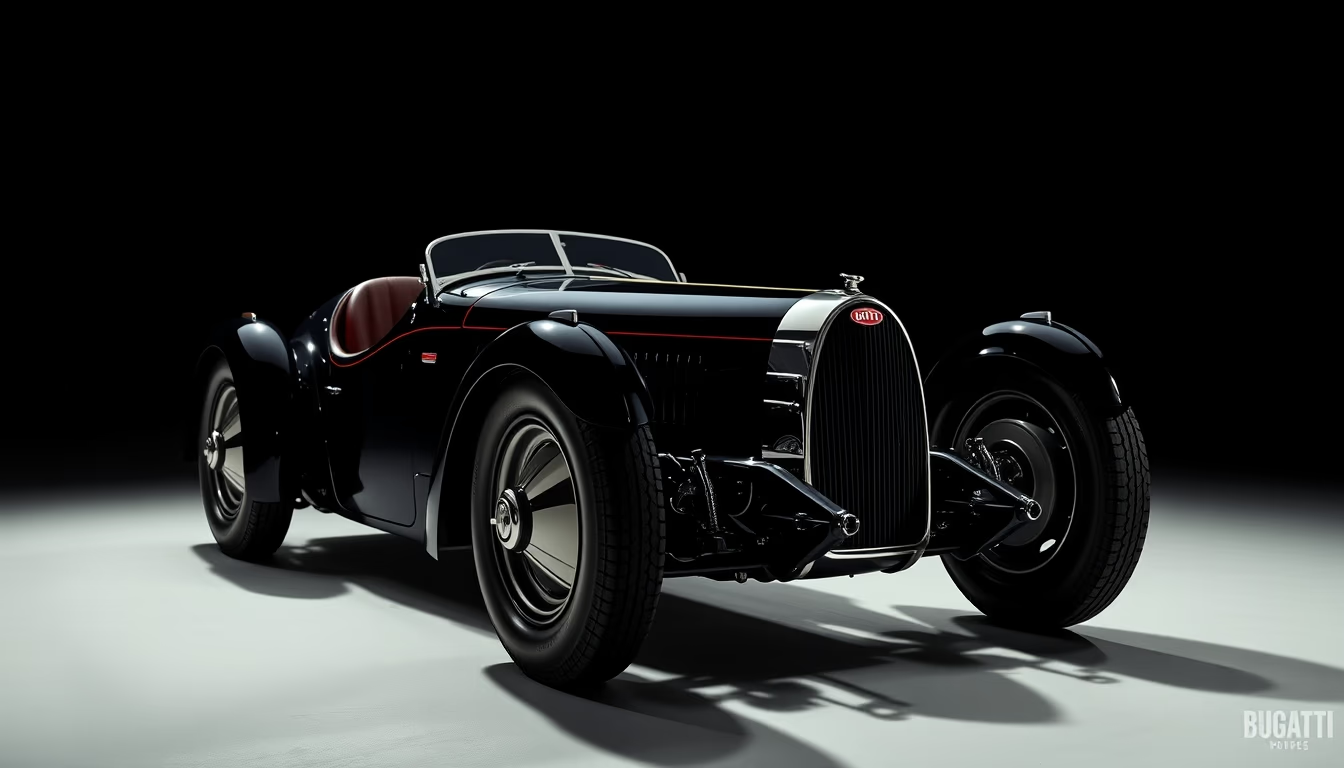
The Bugatti Type 35 is one of the most iconic racing cars in history, with over a thousand victories and a symbol of the pinnacle of automotive engineering in the 1920s.
About this subject
The Bugatti Type 35 was introduced in 1924 and became the most successful racing car of its era. Its revolutionary design featured a straight-8 engine displacing 2.0 liters, later enlarged to 2.3 liters, capable of producing up to 100 horsepower. The chassis was extremely lightweight thanks to extensive use of aluminum, including cast wheels with integrated brake drums, an innovation that improved heat dissipation and braking efficiency.
Ettore Bugatti, the company's founder, designed the Type 35 with meticulous attention to detail. The horseshoe-shaped grille and elegant bodywork were not only aesthetically pleasing but also functional for aerodynamics. The car dominated competitions such as the Targa Florio, winning it five consecutive times between 1925 and 1929. In total, the Type 35 is estimated to have achieved over 1,000 race victories worldwide, including Grands Prix.
Production of the Type 35 was limited, with approximately 96 units built. Each car was hand-assembled and individually tuned. Its legacy endures today, regarded as a masterpiece of engineering and design. The model established Bugatti's reputation as a manufacturer of high-performance cars and influenced generations of sports vehicles.
Interestingly, the Type 35 was also renowned for its superior handling. The combination of a lightweight chassis, solid front axle, and live rear axle provided exceptional balance through corners. Many contemporary drivers considered it the easiest car to drive at high speed, a testament to Ettore Bugatti's genius.
Frequently Asked Questions
How many Bugatti Type 35s were produced?
Approximately 96 units were built between 1924 and 1930, all hand-assembled.
What was the Type 35's greatest achievement?
It won the Targa Florio five consecutive times (1925 to 1929) and amassed over 1,000 race victories.
What made the Type 35 innovative for its time?
Its extensive use of aluminum, cast wheels with integrated brakes, and high-performance straight-8 engine were advanced technologies for the 1920s.
Direct URL
https://pub-c7d6a6ea828543ac903a74a341ccb2e1.r2.dev/imagens/bugatti-type-35-fine-art-photography-fresh14.avifHow to credit
Include a visible link back to UtilizAí. Copy one of the snippets below:
<a href="https://xn--utiliza-eza.com/en/midia/imagens/bugatti-type-35-fine-art-photography-fresh14">Bugatti type 35</a> by <a href="https://xn--utiliza-eza.com">UtilizAí</a>, licensed under <a href="https://creativecommons.org/licenses/by/4.0/">CC BY 4.0</a>.
[Bugatti type 35](https://xn--utiliza-eza.com/en/midia/imagens/bugatti-type-35-fine-art-photography-fresh14) by [UtilizAí](https://xn--utiliza-eza.com), CC BY 4.0
License: CC-BY-4.0