Bubble chamber tracks
1344×768 · AVIF · CC BY 4.0
Bubble chambers revolutionized particle physics by revealing invisible trajectories of subatomic particles. Learn how they work and their historical importance.
About this subject
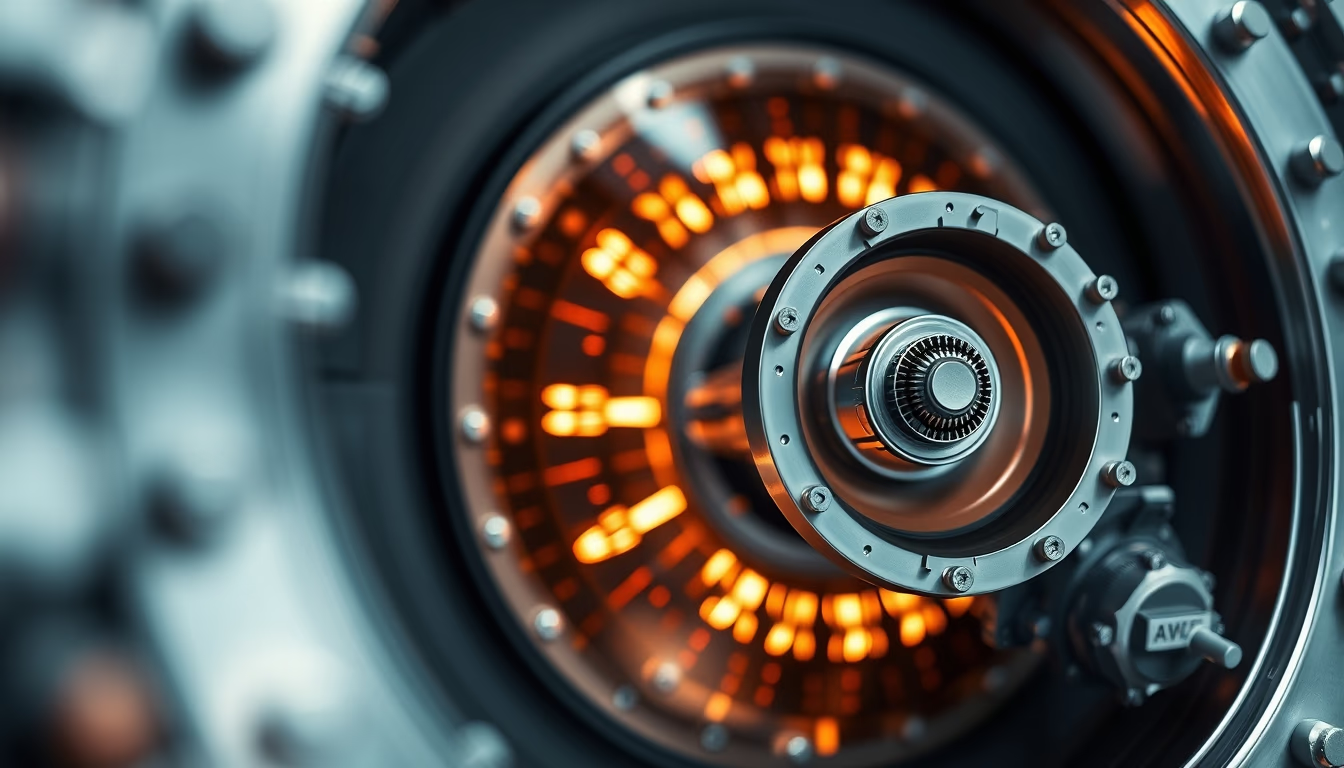
Invented by Donald Glaser in 1952, the bubble chamber earned him the Nobel Prize in Physics in 1960. The principle is simple: a container holds a superheated liquid, such as liquid hydrogen, kept at a temperature above its boiling point but under pressure to prevent boiling. When a charged particle traverses the liquid, it deposits energy along its path, causing the liquid to boil locally, forming a visible trail of bubbles. These trails are photographed and analyzed to determine the particle's charge, mass, and momentum.
The bubble chamber was essential for discovering many particles, such as the eta meson, the omega minus particle (1964), and various baryons and mesons. In 1964, at Brookhaven National Laboratory, the observation of the omega minus confirmed the quark model proposed by Gell-Mann and Zweig. Bubble chambers were also used at CERN, such as Gargamelle, which in 1973 detected neutral currents, providing crucial evidence for the electroweak model.
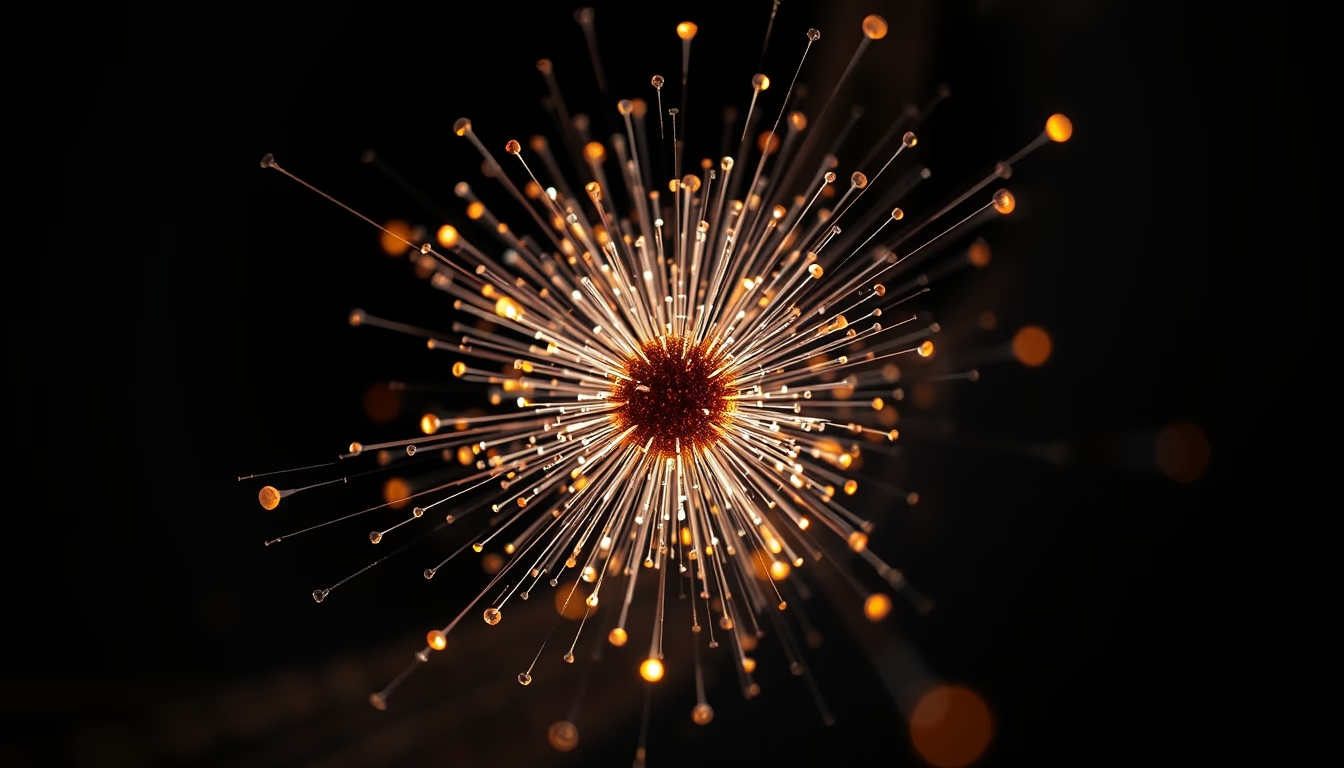
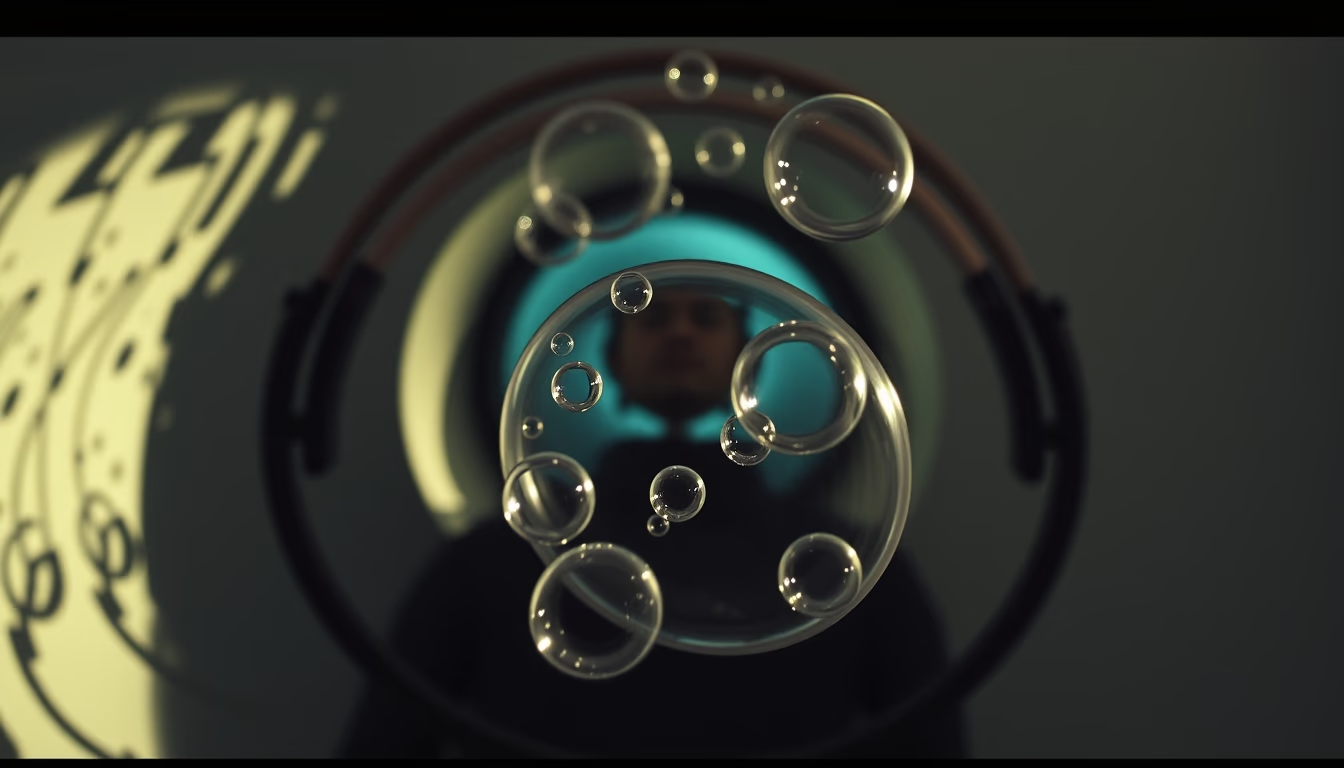
Despite its success, the bubble chamber was gradually replaced by faster electronic detectors, such as spark chambers and drift chambers. However, they left an important legacy in the understanding of particle physics. Interestingly, Glaser is said to have been inspired by the bubbles formed in a glass of beer when thinking about the operating principle. The images produced by bubble chambers are iconic and often used to illustrate particle physics, showing spirals and curves that reveal the interaction of particles with magnetic fields.
Frequently Asked Questions
How does a bubble chamber work?
A bubble chamber contains a superheated liquid. When a charged particle passes through, it deposits energy, causing the liquid to boil locally and form bubbles that mark the particle's path. These bubbles are photographed for analysis.
Who invented the bubble chamber?
It was invented by physicist Donald Glaser in 1952, for which he received the Nobel Prize in Physics in 1960.
What important discoveries were made with bubble chambers?
The omega minus particle (1964) was discovered in a bubble chamber, confirming the quark model. Neutral currents were detected in CERN's Gargamelle chamber in 1973, supporting the electroweak model.
Direct URL
https://pub-c7d6a6ea828543ac903a74a341ccb2e1.r2.dev/imagens/bubble-chamber-tracks-magazine-editorial-p1.avifHow to credit
Include a visible link back to UtilizAí. Copy one of the snippets below:
<a href="https://xn--utiliza-eza.com/en/midia/imagens/bubble-chamber-tracks-magazine-editorial-p1">Bubble chamber tracks</a> by <a href="https://xn--utiliza-eza.com">UtilizAí</a>, licensed under <a href="https://creativecommons.org/licenses/by/4.0/">CC BY 4.0</a>.
[Bubble chamber tracks](https://xn--utiliza-eza.com/en/midia/imagens/bubble-chamber-tracks-magazine-editorial-p1) by [UtilizAí](https://xn--utiliza-eza.com), CC BY 4.0
License: CC-BY-4.0