Brutalist concrete facade
1344×768 · AVIF · CC BY 4.0
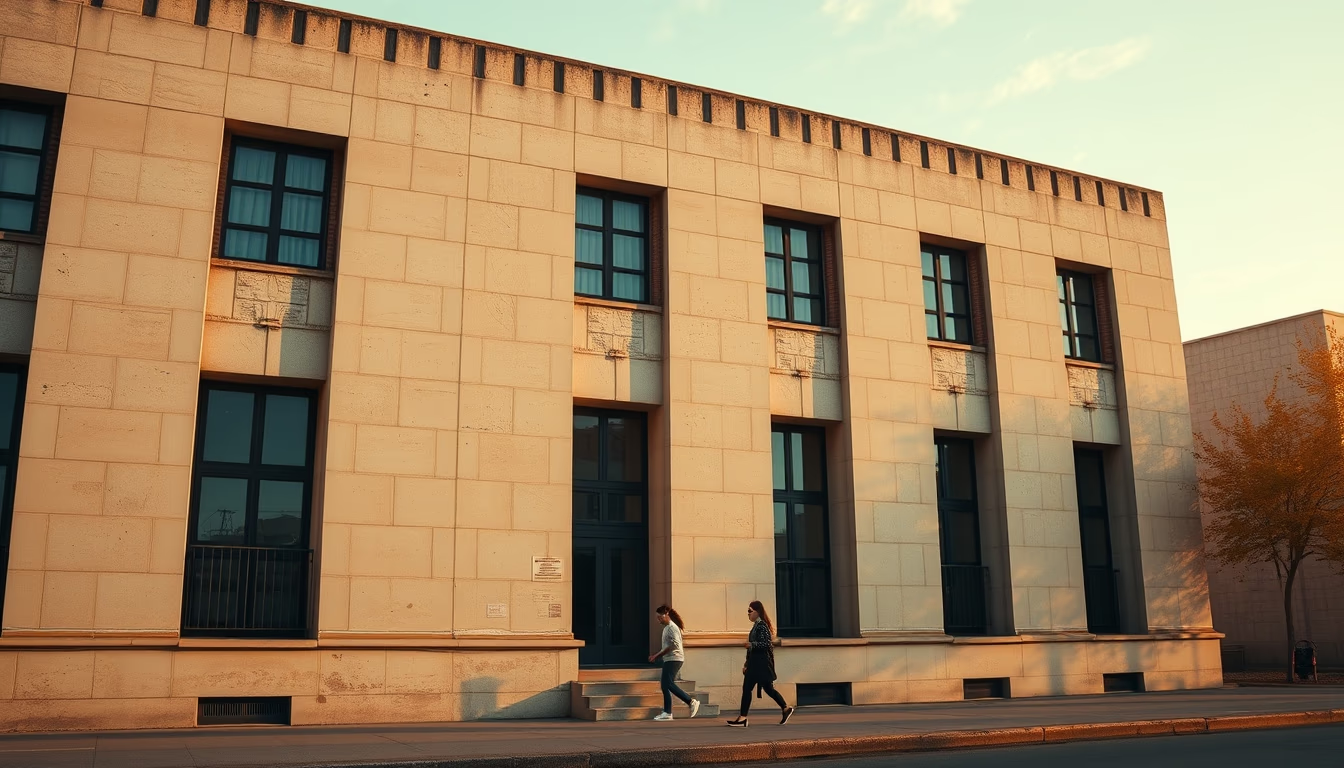
Raw concrete facade exemplifies brutalist architecture, a 20th-century movement defined by geometric forms and exposed materials.
About this subject
Brutalism emerged in the 1950s, primarily in Europe, as an offshoot of modernism. Its name derives from the French term 'béton brut' (raw concrete), popularized by Le Corbusier in the Unité d'Habitation in Marseille. The brutalist aesthetic values material honesty: exposed concrete surfaces, angular forms, and a strong emphasis on function. In Brazil, the movement was embraced by the Paulista School, with leading figures such as Vilanova Artigas and Paulo Mendes da Rocha. The Faculty of Architecture and Urbanism of the University of São Paulo (FAUUSP) stands as a national icon: its concrete pillars and large spans express the plasticity of the material. Another remarkable example is SESC Pompéia in São Paulo, designed by Lina Bo Bardi, which combines raw concrete with green areas and communal spaces.
Brutalist architecture has always sparked controversy. Many find its monolithic facades and gray tones cold or oppressive. Others see a powerful and honest aesthetic that rejects superfluous ornament. This duality makes brutalist buildings fascinating subjects for travel photography. Concrete textures, light and shadow interplay, and repetitive geometries create striking visual compositions. In the last decade, brutalism has seen a revival, with new projects and a growing appreciation for modernist heritage. Cities like São Paulo, Brasília, and Rio de Janeiro hold significant collections, though many buildings face decay and lack of preservation.
Interestingly, brutalism has also influenced popular culture, appearing in sci-fi films and video games as a dystopian backdrop. This association with the future and the monumental fuels interest in these structures. When photographing a brutalist facade, a traveler captures not just an architectural object but a chapter in design and urban history. The raw concrete texture, with its formwork marks and imperfections, tells the story of its fabrication and the social context that produced it.
Frequently Asked Questions
What defines brutalist architecture?
Brutalist architecture is defined by the use of exposed concrete, angular geometric forms, monolithic volumes, and an aesthetic that emphasizes functionality and material honesty. It emerged in the 1950s as a branch of modernism.
What are major brutalist examples in Brazil?
In Brazil, key examples include the FAUUSP building (Vilanova Artigas), SESC Pompéia (Lina Bo Bardi), and the Conjunto Nacional in São Paulo. In Brasília, the Palácio do Itamaraty and the Metropolitan Cathedral have brutalist elements, though they are often classified as modernism.
Why is brutalism controversial?
Brutalism divides opinions: many find its concrete facades oppressive or ugly, while others appreciate its aesthetic honesty and visual power. The decay of some buildings and its association with authoritarian regimes also draw criticism.
Direct URL
https://pub-c7d6a6ea828543ac903a74a341ccb2e1.r2.dev/imagens/brutalist-concrete-facade-travel-photography-p4.avifHow to credit
Include a visible link back to UtilizAí. Copy one of the snippets below:
<a href="https://xn--utiliza-eza.com/en/midia/imagens/brutalist-concrete-facade-travel-photography-p4">Brutalist concrete facade</a> by <a href="https://xn--utiliza-eza.com">UtilizAí</a>, licensed under <a href="https://creativecommons.org/licenses/by/4.0/">CC BY 4.0</a>.
[Brutalist concrete facade](https://xn--utiliza-eza.com/en/midia/imagens/brutalist-concrete-facade-travel-photography-p4) by [UtilizAí](https://xn--utiliza-eza.com), CC BY 4.0
License: CC-BY-4.0