Brutalist concrete facade
1344×768 · AVIF · CC BY 4.0
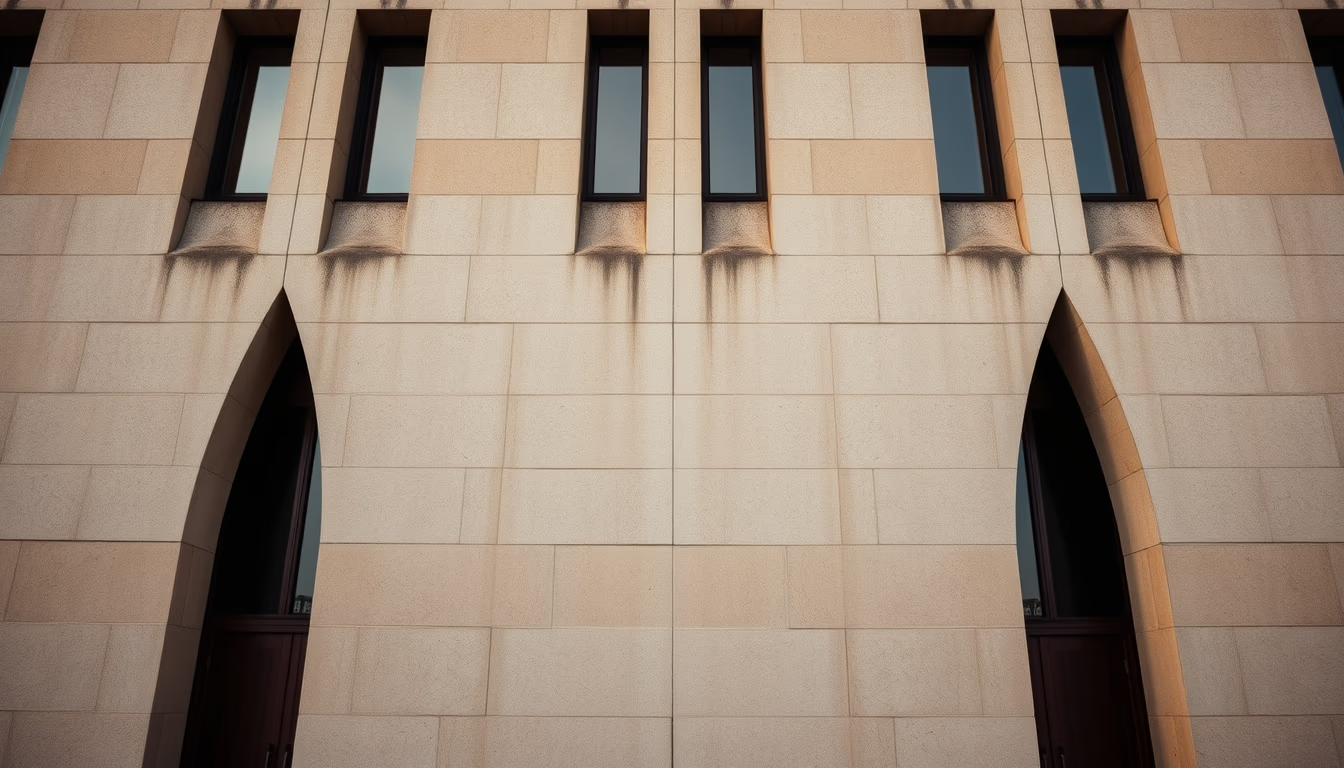
The brutalist concrete facade reveals the raw and functionalist aesthetic that marked 20th-century architecture, especially in Brazil.
About this subject
Brutalism emerged in the 1950s, inspired by Le Corbusier's works such as the Unité d'Habitation in Marseille. The term was popularized by critic Reyner Banham, derived from the French 'béton brut' (raw concrete), emphasizing the use of exposed concrete without cladding. Brutalist facades are characterized by striking geometric forms, textured surfaces, and a sense of monumental solidity.
In Brazil, brutalism found fertile ground, especially in the Paulista school, with architects like Paulo Mendes da Rocha, Vilanova Artigas, and Lina Bo Bardi. The São Paulo Museum of Art (MASP), designed by Lina Bo Bardi, is a global icon, with its 74-meter free span supported by four concrete pillars. The Sesc Pompeia, also by Bo Bardi, uses concrete in an organic and brutalist way. In Brasília, the Palácio do Planalto and the National Congress, by Oscar Niemeyer, though more curvilinear, also employ exposed concrete.
Brutalism was criticized for its aggressive appearance and lack of urban integration, but it has experienced a revival since the 2010s, with new projects and debates about its heritage value. Its concrete facades are seen as expressions of structural honesty and resistance to ornament, echoing socialist and democratic ideals. Today, the style is reevaluated for its sustainability and durability, inspiring new generations of architects.
Frequently Asked Questions
What characterizes Brutalist architecture?
Brutalist architecture is defined by the use of exposed concrete, bold geometric forms, textured surfaces, and a functionalist aesthetic that emphasizes structure over ornament.
Why is exposed concrete so common in Brutalism?
Exposed concrete is central to Brutalism because it represents the honest expression of materials, without cladding that hides the structure. It also evokes durability, solidity, and an industrial aesthetic.
Where can examples of Brutalism be found in Brazil?
Notable examples include the MASP and Sesc Pompeia in São Paulo, the Palácio do Planalto in Brasília, and works by Paulo Mendes da Rocha, such as the Brazilian Museum of Sculpture (MuBE).
Direct URL
https://pub-c7d6a6ea828543ac903a74a341ccb2e1.r2.dev/imagens/brutalist-concrete-facade-national-geographic-style-p5.avifHow to credit
Include a visible link back to UtilizAí. Copy one of the snippets below:
<a href="https://xn--utiliza-eza.com/en/midia/imagens/brutalist-concrete-facade-national-geographic-style-p5">Brutalist concrete facade</a> by <a href="https://xn--utiliza-eza.com">UtilizAí</a>, licensed under <a href="https://creativecommons.org/licenses/by/4.0/">CC BY 4.0</a>.
[Brutalist concrete facade](https://xn--utiliza-eza.com/en/midia/imagens/brutalist-concrete-facade-national-geographic-style-p5) by [UtilizAí](https://xn--utiliza-eza.com), CC BY 4.0
License: CC-BY-4.0