Breakdance cardboard urban
1344×768 · AVIF · CC BY 4.0
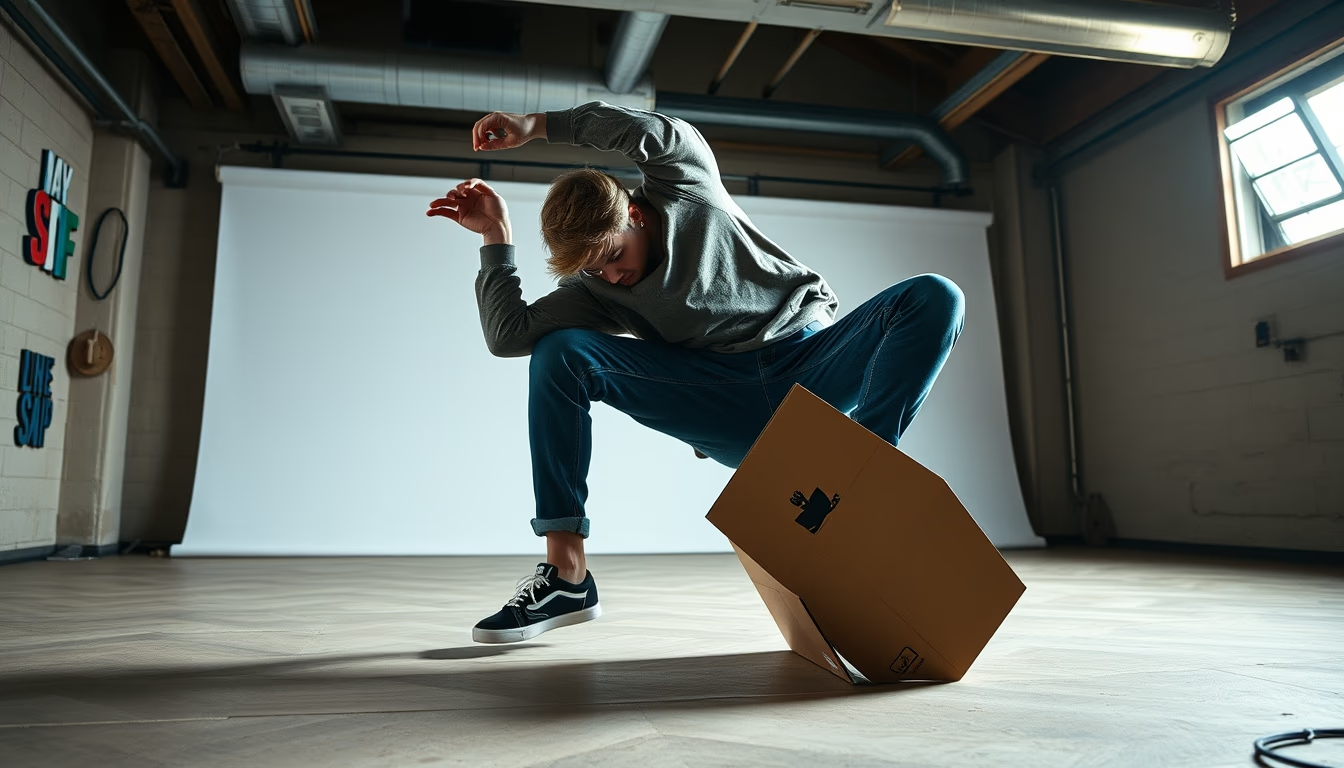
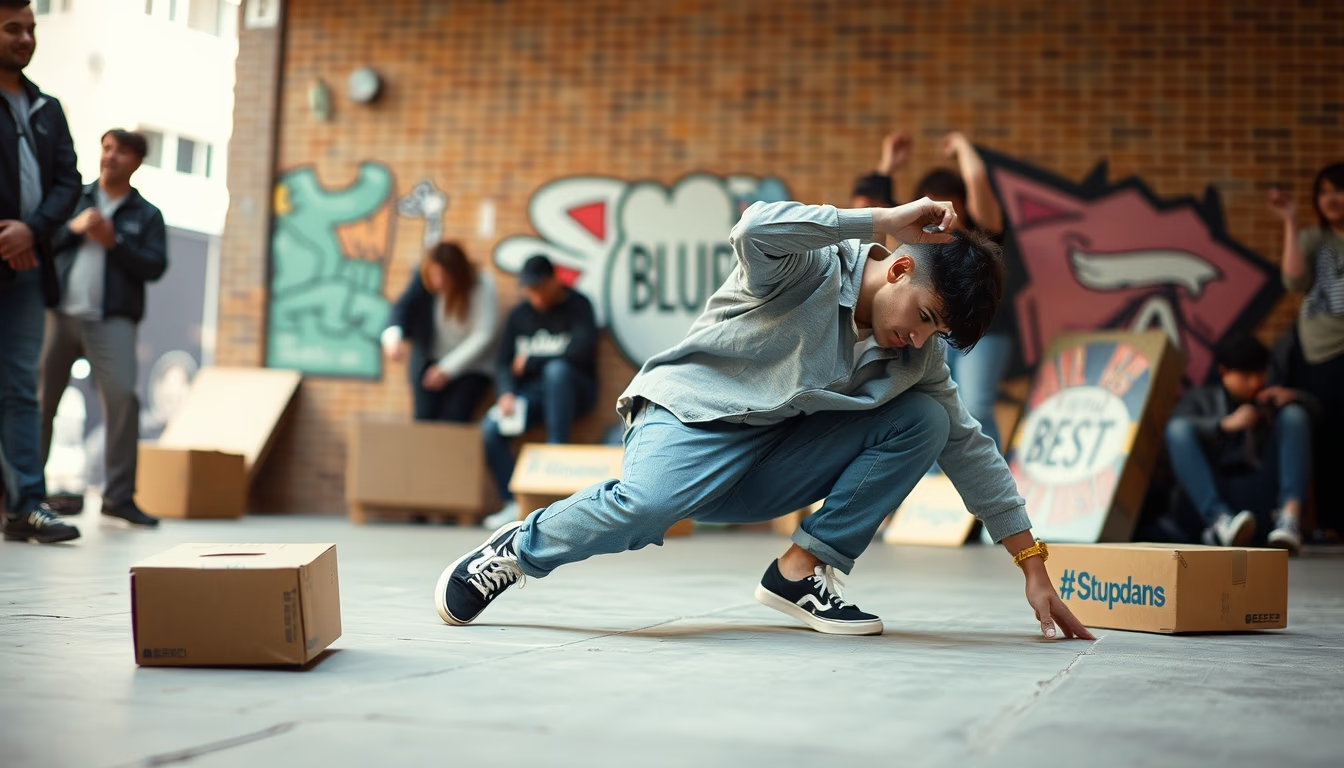
Breakdance on the streets: the art of dancing on cardboard, a symbol of hip hop culture and urban creativity.
About this subject
Breakdance, also known as breaking, is a dance that emerged on the streets of the Bronx, New York, in the 1970s. As one of the four elements of hip hop culture alongside rap, DJing, and graffiti, breaking began as an artistic expression within African American and Latino communities. Over time, it spread worldwide, gaining international competitions and even Olympic recognition in 2024.
The use of cardboard is a hallmark of street battles. Dancers place cardboard sheets on the ground to reduce friction, allowing slides and spins that would be difficult on asphalt or concrete. Besides protecting clothing and the body, cardboard symbolizes the improvisation and accessibility of the dance: anyone can tear a box and create a stage. Movements like backspin and headspin are favored by the smooth surface of cardboard.
Breaking technique combines fast footwork, freezes (frozen poses), and power moves (acrobatic movements). Cardboard is especially useful for power moves, which require rotations on the ground. Each b-boy or b-girl develops their own style, influenced by their city and experiences. In Brazil, breaking gained momentum in the 1980s with the rise of hip hop, and today there are globally recognized crews, such as those from the south side of São Paulo.
Culturally, cardboard represents the essence of breaking: the ability to transform any urban space into a place of expression. In an increasingly digital world, dancing on cardboard is an act of resistance and authenticity, keeping the tradition of street battles alive. Breaking's inclusion in the 2024 Paris Olympics reinforces its global importance, but its soul remains on street corners, where the sound of the turntable and the scraping of cardboard echo.
Frequently Asked Questions
Why do breakdancers use cardboard?
Cardboard reduces friction between the dancer and the ground, allowing smoother slides and spins. It also protects clothing and the body, and is a cheap, accessible material to create an improvised stage anywhere.
What is the origin of breakdance?
Breaking originated in the Bronx, New York, in the 1970s as part of hip hop culture. It was influenced by dances like uprock and funk, and developed at street parties with DJs such as Kool Herc.
Are breakdance and breaking the same thing?
Yes, 'breakdance' is the popular name, but the correct term is 'breaking' or 'b-boying/b-girling'. The media coined 'breakdance' in the 1980s, but the community prefers 'breaking'.
Direct URL
https://pub-c7d6a6ea828543ac903a74a341ccb2e1.r2.dev/imagens/breakdance-cardboard-urban-studio-editorial-portrait-fresh8.avifHow to credit
Include a visible link back to UtilizAí. Copy one of the snippets below:
<a href="https://xn--utiliza-eza.com/en/midia/imagens/breakdance-cardboard-urban-studio-editorial-portrait-fresh8">Breakdance cardboard urban</a> by <a href="https://xn--utiliza-eza.com">UtilizAí</a>, licensed under <a href="https://creativecommons.org/licenses/by/4.0/">CC BY 4.0</a>.
[Breakdance cardboard urban](https://xn--utiliza-eza.com/en/midia/imagens/breakdance-cardboard-urban-studio-editorial-portrait-fresh8) by [UtilizAí](https://xn--utiliza-eza.com), CC BY 4.0
License: CC-BY-4.0