Brazilian Bitcoin miner inspecting industrial mining rigs
1344×768 · AVIF · CC BY 4.0
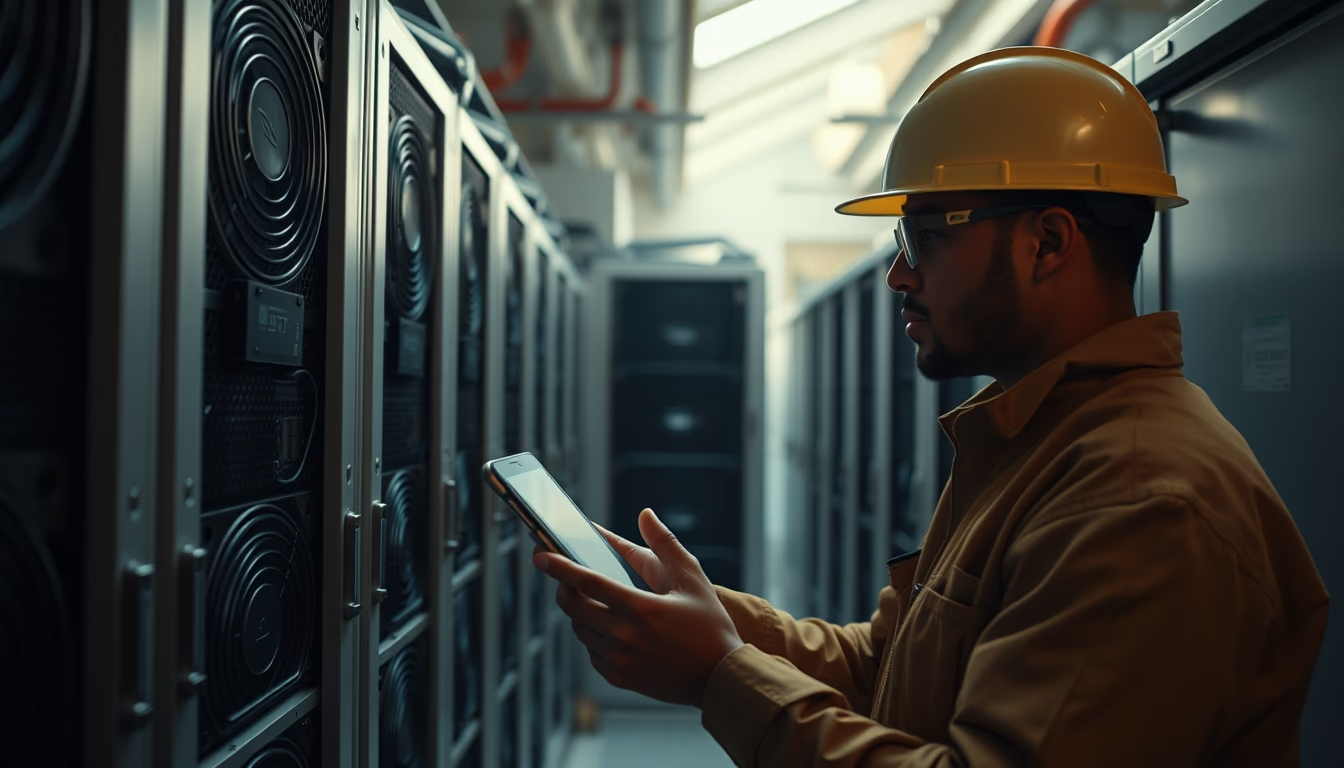
Bitcoin miner inspects industrial mining rigs in a cooled warehouse, revealing the scale of infrastructure behind the cryptocurrency.
About this subject
Bitcoin mining is the process by which new coins are created and transactions are verified on the blockchain. Unlike traditional mining, which extracts physical resources, digital mining requires specialized hardware, such as ASICs (Application-Specific Integrated Circuits), that solve complex mathematical problems. Brazil has stood out in this sector, with mining farms installed in regions with cheap energy, like the South and Southeast, taking advantage of hydroelectric surpluses.
Inspecting mining rigs is a crucial routine to ensure efficiency and avoid losses. The equipment generates intense heat, requiring industrial cooling systems and constant maintenance. An experienced miner checks cables, fans, and boards, monitoring metrics like hashrate and temperature. Small failures can lead to significant losses, as the competition for blocks is global and fierce.
The symmetry and lighting of the warehouse reflect an organized and controlled environment, essential for high-performance operations. In Brazil, Bitcoin mining moves millions of reais annually, but faces regulatory and tax challenges. Even so, the country consolidates itself as an emerging hub, with initiatives seeking clean and cheap energy to maintain competitiveness.
Curiosity: the first Bitcoin block (genesis block) was mined in 2009 by Satoshi Nakamoto. Today, mining difficulty is millions of times higher, requiring immense computational power. Daily inspection of rigs is a practice that combines cutting-edge technology and manual labor, showing the human side of an automated system.
Frequently Asked Questions
What is a Bitcoin mining rig?
A mining rig is a set of specialized hardware, usually ASICs, designed to solve the hash algorithms needed to validate transactions and create new blocks on the Bitcoin blockchain.
How does Bitcoin mining work in Brazil?
In Brazil, mining takes advantage of cheap hydroelectric energy in regions like the South and Southeast. Miners operate large warehouses with thousands of ASICs, requiring constant cooling and maintenance to compete globally.
Why is regular inspection of rigs important?
Mining equipment generates a lot of heat and is prone to failures. Regular inspections prevent overheating, identify electrical issues, and ensure that hashrate remains high, avoiding financial losses.
Direct URL
https://pub-c7d6a6ea828543ac903a74a341ccb2e1.r2.dev/imagens/brazilian-bitcoin-miner-inspecting-industrial-mining-rigs-symmetric-bright-midday-4.avifHow to credit
Include a visible link back to UtilizAí. Copy one of the snippets below:
<a href="https://xn--utiliza-eza.com/en/midia/imagens/brazilian-bitcoin-miner-inspecting-industrial-mining-rigs-symmetric-bright-midday-4">Brazilian Bitcoin miner inspecting industrial mining rigs</a> by <a href="https://xn--utiliza-eza.com">UtilizAí</a>, licensed under <a href="https://creativecommons.org/licenses/by/4.0/">CC BY 4.0</a>.
[Brazilian Bitcoin miner inspecting industrial mining rigs](https://xn--utiliza-eza.com/en/midia/imagens/brazilian-bitcoin-miner-inspecting-industrial-mining-rigs-symmetric-bright-midday-4) by [UtilizAí](https://xn--utiliza-eza.com), CC BY 4.0
License: CC-BY-4.0