Brazilian Bitcoin miner inspecting industrial mining rigs
1344×768 · AVIF · CC BY 4.0
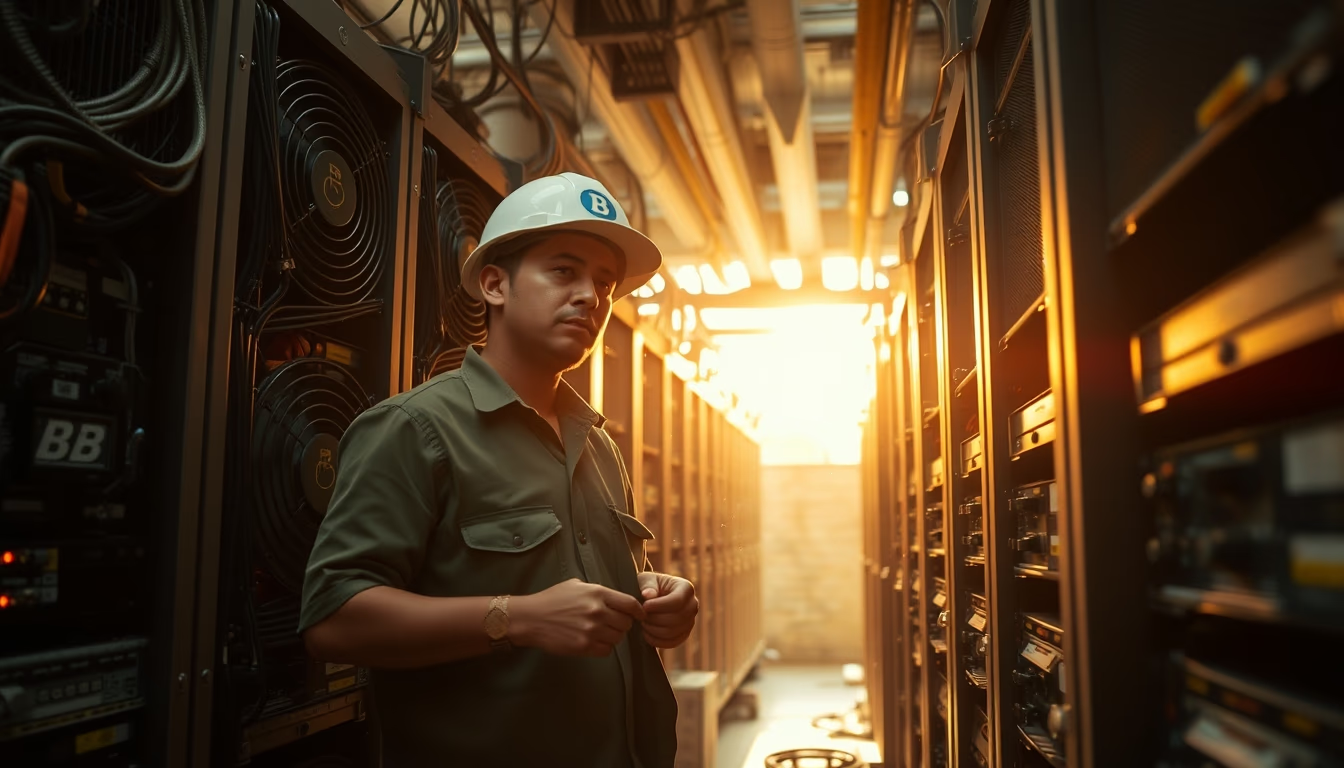
Bitcoin miner inspects industrial mining rigs in a climate-controlled warehouse during a commercial-scale cryptocurrency mining operation.
About this subject
Industrial-scale Bitcoin mining is a capital- and energy-intensive operation. Large warehouses house thousands of ASICs (application-specific integrated circuits), devices dedicated exclusively to computing SHA-256 hashes to validate transactions and mint new bitcoins. Brazil, with its energy surplus in certain regions, especially the South and Southeast, and renewable sources like hydroelectric plants, attracts investors seeking competitive costs. Manual inspection of the machines is crucial: each ASIC consumes between 1.5 and 3.5 kW and generates intense heat, requiring air cooling or immersion in dielectric liquid to prevent overheating. The miner in the image checks cables, connectors, and status panels, ensuring the facility's total hash rate remains stable. In 2023, mining difficulty reached all-time highs, exceeding 50 trillion hashes per second, rendering equipment older than two years obsolete. Predictive maintenance, based on temperature and noise analysis, reduces downtime and maximizes return on investment. Moreover, strategic location near electrical substations minimizes transmission losses. In Brazil, regulation of the activity is still incipient, but ANEEL (National Electric Energy Agency) monitors the consumption of large loads to avoid grid overload. The image captures a typical routine moment: the technician, wearing a helmet and lab coat, walks through narrow aisles between rows of rigs in a climate-controlled environment between 20°C and 25°C, with cold lighting and constant fan noise. This operation contrasts with home mining, which became unfeasible for most enthusiasts after the rise of industrial pools and farms.
Frequently Asked Questions
What is an ASIC and why is it used for Bitcoin mining?
ASIC stands for Application-Specific Integrated Circuit. It is designed exclusively to compute SHA-256 hashes, Bitcoin's algorithm, far more efficiently than CPUs or GPUs, making it dominant in professional mining.
What is the electricity cost to run a mining farm in Brazil?
It depends on the region and the contract with the utility. Large operations negotiate special rates, paying between R$ 0.20 and R$ 0.40 per kWh. A medium farm (10 MW) consumes as much as a city of 10,000 inhabitants.
Is Bitcoin mining legal in Brazil?
Yes, there is no prohibition. However, the Federal Revenue requires income declaration, and ANEEL may impose consumption limits during peak hours. Additionally, activity must comply with environmental and occupational safety regulations.
Direct URL
https://pub-c7d6a6ea828543ac903a74a341ccb2e1.r2.dev/imagens/brazilian-bitcoin-miner-inspecting-industrial-mining-rigs-editorial-overcast-daytime.avifHow to credit
Include a visible link back to UtilizAí. Copy one of the snippets below:
<a href="https://xn--utiliza-eza.com/en/midia/imagens/brazilian-bitcoin-miner-inspecting-industrial-mining-rigs-editorial-overcast-daytime">Brazilian Bitcoin miner inspecting industrial mining rigs</a> by <a href="https://xn--utiliza-eza.com">UtilizAí</a>, licensed under <a href="https://creativecommons.org/licenses/by/4.0/">CC BY 4.0</a>.
[Brazilian Bitcoin miner inspecting industrial mining rigs](https://xn--utiliza-eza.com/en/midia/imagens/brazilian-bitcoin-miner-inspecting-industrial-mining-rigs-editorial-overcast-daytime) by [UtilizAí](https://xn--utiliza-eza.com), CC BY 4.0
License: CC-BY-4.0