Bitcoin atm on city street at night
1344×768 · AVIF · CC BY 4.0
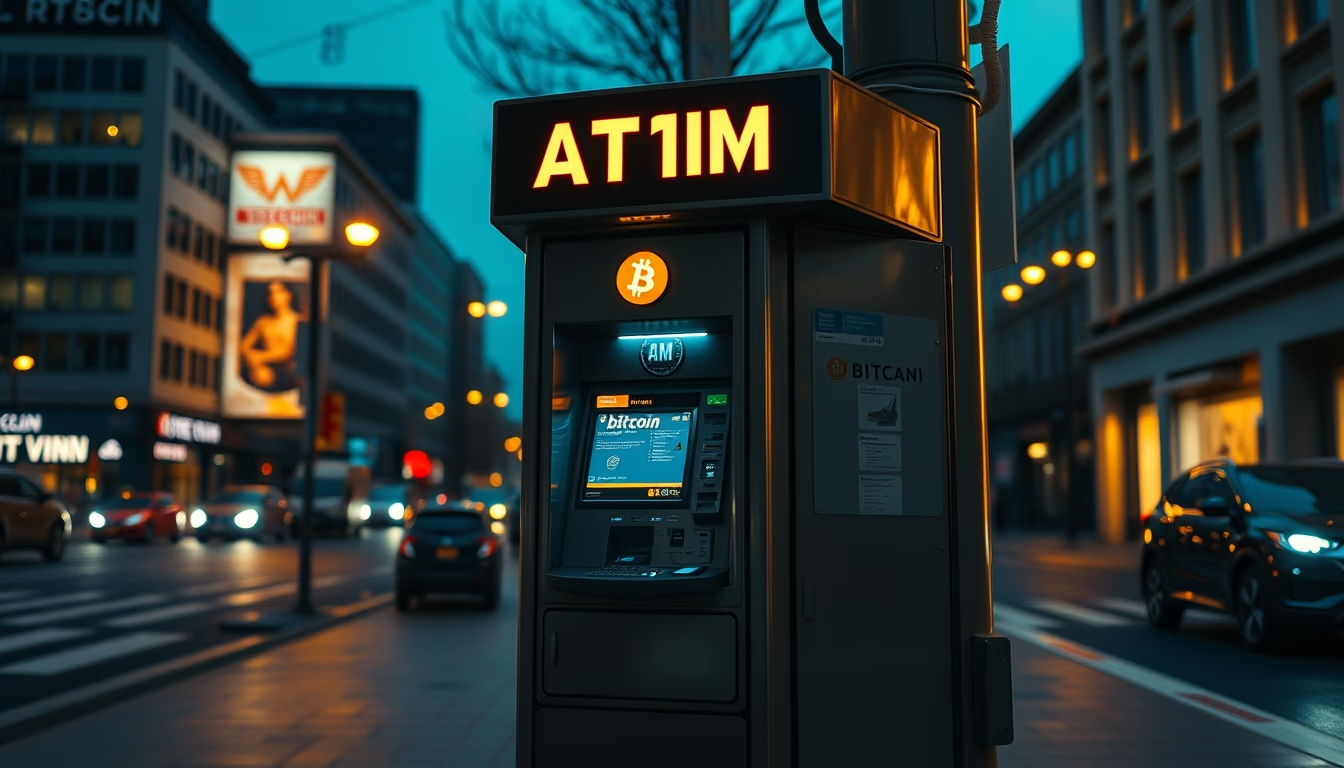
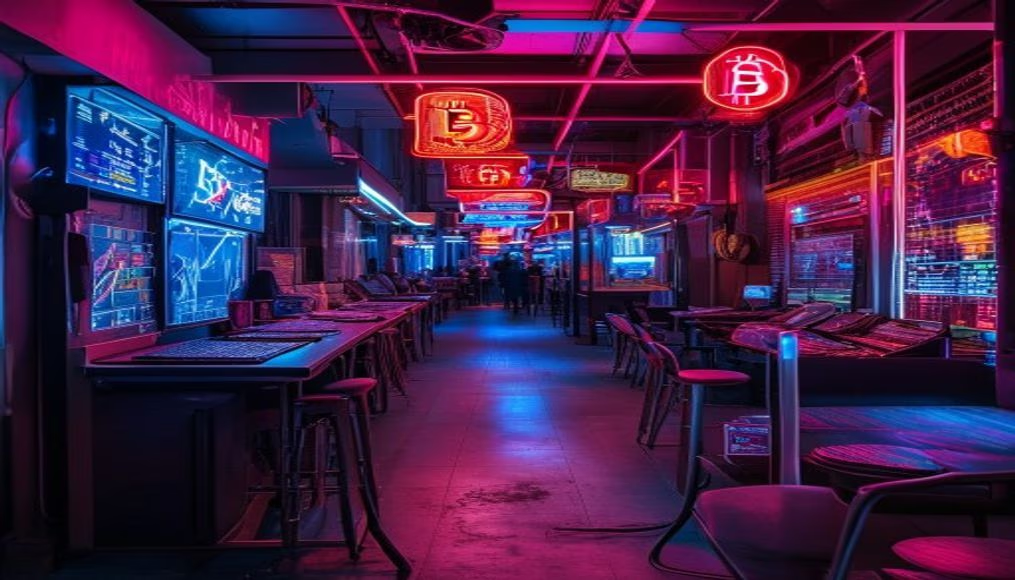
Bitcoin ATMs on public streets at night symbolize the fusion between the digital world of cryptocurrencies and the concrete urban space.
About this subject
Bitcoin ATMs are physical terminals that allow users to buy or sell Bitcoin and other cryptocurrencies using cash or cards. Unlike regular ATMs, they connect to online exchanges to process transactions in real time. The first Bitcoin ATM was installed in 2013 at the Waves Coffee House in Vancouver, Canada. Since then, the global number has grown to over 38,000 units by 2025, with concentrations in the United States, Canada, Europe, and Asia. In Brazil, hundreds of machines exist, primarily in shopping malls and upscale neighborhoods of São Paulo and Rio de Janeiro.
The nighttime location on a busy street highlights the 24-hour accessibility of these terminals. Many users turn to them outside traditional banking hours, either for quick transactions or to avoid the bureaucracy of online platforms. The screen lighting and robust design are intended for security and visibility, as handling cash at night requires caution. Some machines include cameras and fingerprint readers for authentication.
The presence of a Bitcoin ATM on a public street also reflects the growing acceptance of cryptocurrencies as a legitimate financial asset. Although skepticism remains regarding volatility and money laundering risks, physical infrastructure helps popularize usage among unbanked individuals or those unfamiliar with digital exchanges. Countries like El Salvador, which adopted Bitcoin as legal tender, have installed ATMs in public squares to promote financial inclusion.
Fun fact: the largest Bitcoin ATM network is CoinFlip, with over 4,000 machines in the US alone. Transaction fees range from 5% to 15%, much higher than online exchanges, but the relative anonymity and convenience justify the cost for many users. As regulations advance, these terminals are expected to become even more common in global urban centers.
Frequently Asked Questions
How does a Bitcoin ATM work?
The user inserts cash or card, scans their digital wallet's QR code, and the machine sends the equivalent amount in Bitcoin to the wallet. To sell, the process reverses: the machine receives Bitcoin and dispenses cash.
What fees are charged at a Bitcoin ATM?
Fees range from 5% to 15% per transaction, depending on the operator and volume. They are higher than online exchanges but offer convenience and anonymity.
Is it safe to use a Bitcoin ATM at night?
Most machines have cameras, lights, and reinforced design. It is recommended to choose well-lit, busy locations. Some models require identity verification for added security.
Direct URL
https://pub-c7d6a6ea828543ac903a74a341ccb2e1.r2.dev/imagens/bitcoin-atm-on-city-street-at-night-cinematic-wide-shot-v2.avifHow to credit
Include a visible link back to UtilizAí. Copy one of the snippets below:
<a href="https://xn--utiliza-eza.com/en/midia/imagens/bitcoin-atm-on-city-street-at-night-cinematic-wide-shot-v2">Bitcoin atm on city street at night</a> by <a href="https://xn--utiliza-eza.com">UtilizAí</a>, licensed under <a href="https://creativecommons.org/licenses/by/4.0/">CC BY 4.0</a>.
[Bitcoin atm on city street at night](https://xn--utiliza-eza.com/en/midia/imagens/bitcoin-atm-on-city-street-at-night-cinematic-wide-shot-v2) by [UtilizAí](https://xn--utiliza-eza.com), CC BY 4.0
License: CC-BY-4.0