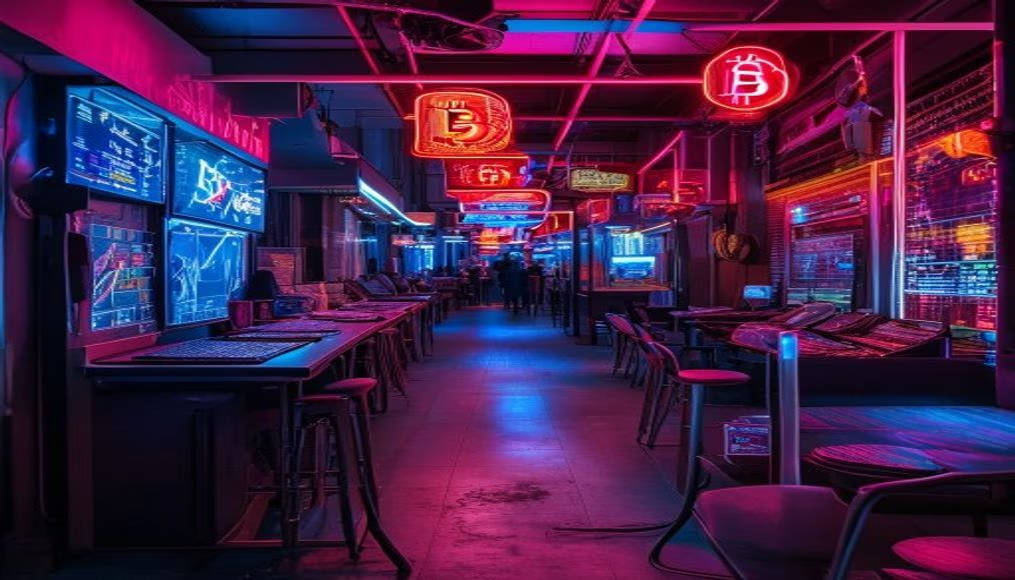
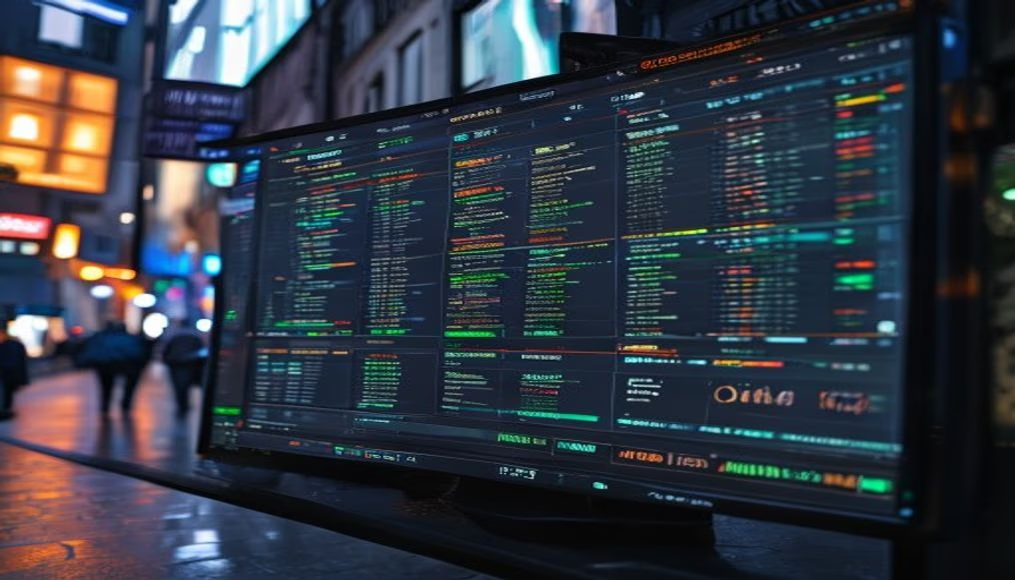
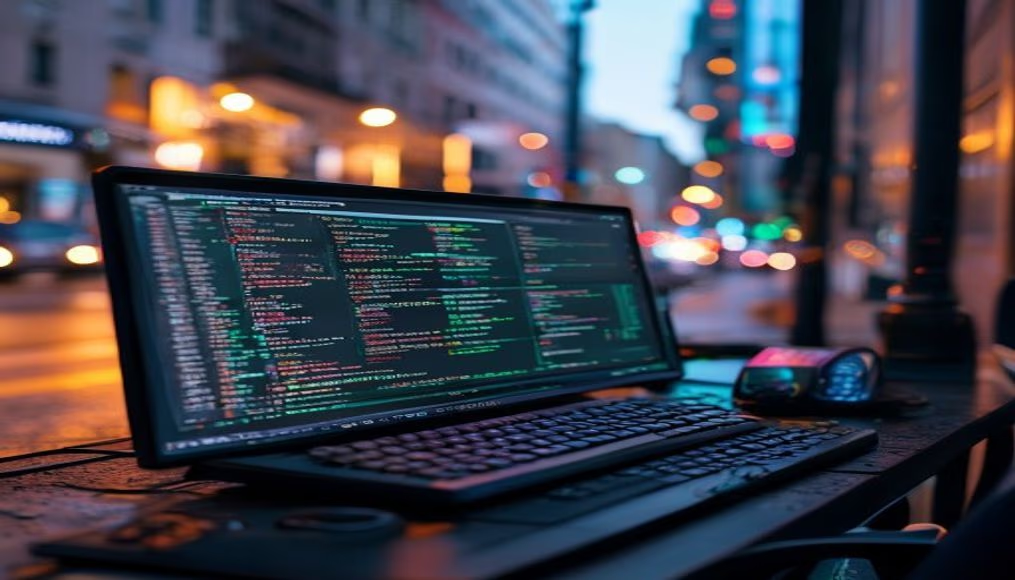
Bitcoin atm machine on city street at night
1344×768 · AVIF · CC BY 4.0
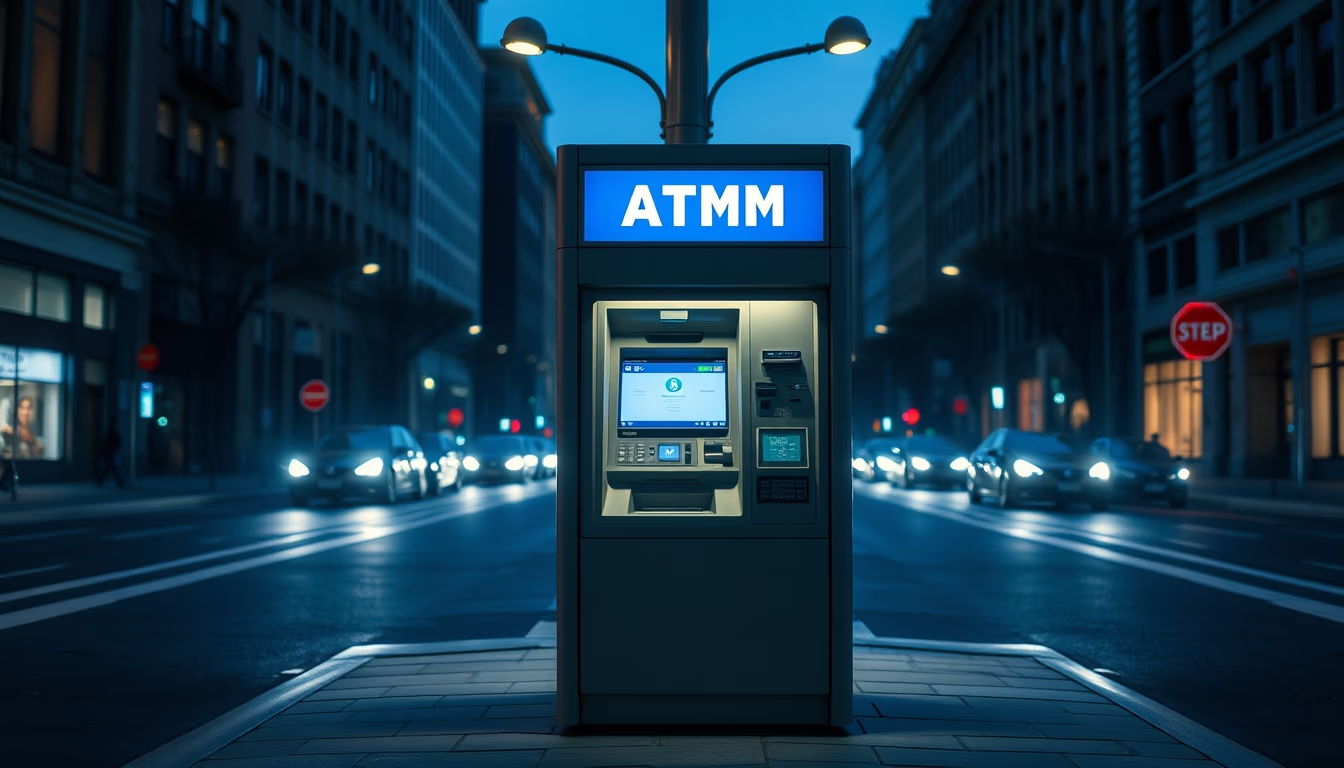
Bitcoin ATMs are spreading across urban streets, enabling the purchase and sale of cryptocurrencies with physical cash at any time.
About this subject
Bitcoin ATMs are physical terminals that connect users to cryptocurrency exchanges, enabling transactions with cash or card. Unlike regular ATMs, they rely on internet connectivity to fetch real-time exchange rates and process blockchain movements. The first such machine was installed in 2013 in Vancouver, Canada, and today there are over 38,000 units worldwide, with the highest concentrations in the United States, Canada, and Europe.
In Brazil, adoption is still modest but growing. According to Coin ATM Radar, the country has about 150 machines, mainly in São Paulo, Rio de Janeiro, and Brasília. Regulation falls under the Federal Revenue Service, which requires transaction registration, and the Central Bank, which monitors money laundering risks. Installation on public streets at night reflects a quest for security and visibility, as many users prefer quieter hours.
Operating these terminals involves fees ranging from 5% to 15% of the transaction amount, well above online exchanges. Nevertheless, they serve an audience that values the relative anonymity of cash or lacks a bank account. In high-inflation regions like Argentina and Venezuela, such ATMs have become an alternative to preserve purchasing power.
Interestingly, the nighttime lighting and symmetric design of these machines are intended to convey technological trust, reminiscent of traditional ATMs. However, bitcoin's volatility poses risks: in 2022, its value dropped over 60%, causing losses to investors who used these terminals. Despite this, the trend is toward expansion, with more compact models and integration with instant payment systems like Brazil's Pix.
Frequently Asked Questions
How does a Bitcoin ATM work?
The user inserts cash or a card, scans a QR code from their digital wallet, and the terminal sends the equivalent bitcoin to that address, deducting a service fee.
Is it safe to use a Bitcoin ATM?
Generally yes, but risks include high fees and cryptocurrency volatility. Check the operator's reputation and avoid transacting large amounts at once.
Do I need to identify myself to use it?
It depends on the country and amount. In Brazil, transactions above R$30,000 require identification. For smaller amounts, partial anonymity is often possible.
Direct URL
https://pub-c7d6a6ea828543ac903a74a341ccb2e1.r2.dev/imagens/bitcoin-atm-machine-on-city-street-at-night-symmetric-composition-twilight-blue-hour.avifHow to credit
Include a visible link back to UtilizAí. Copy one of the snippets below:
<a href="https://xn--utiliza-eza.com/en/midia/imagens/bitcoin-atm-machine-on-city-street-at-night-symmetric-composition-twilight-blue-hour">Bitcoin atm machine on city street at night</a> by <a href="https://xn--utiliza-eza.com">UtilizAí</a>, licensed under <a href="https://creativecommons.org/licenses/by/4.0/">CC BY 4.0</a>.
[Bitcoin atm machine on city street at night](https://xn--utiliza-eza.com/en/midia/imagens/bitcoin-atm-machine-on-city-street-at-night-symmetric-composition-twilight-blue-hour) by [UtilizAí](https://xn--utiliza-eza.com), CC BY 4.0
License: CC-BY-4.0