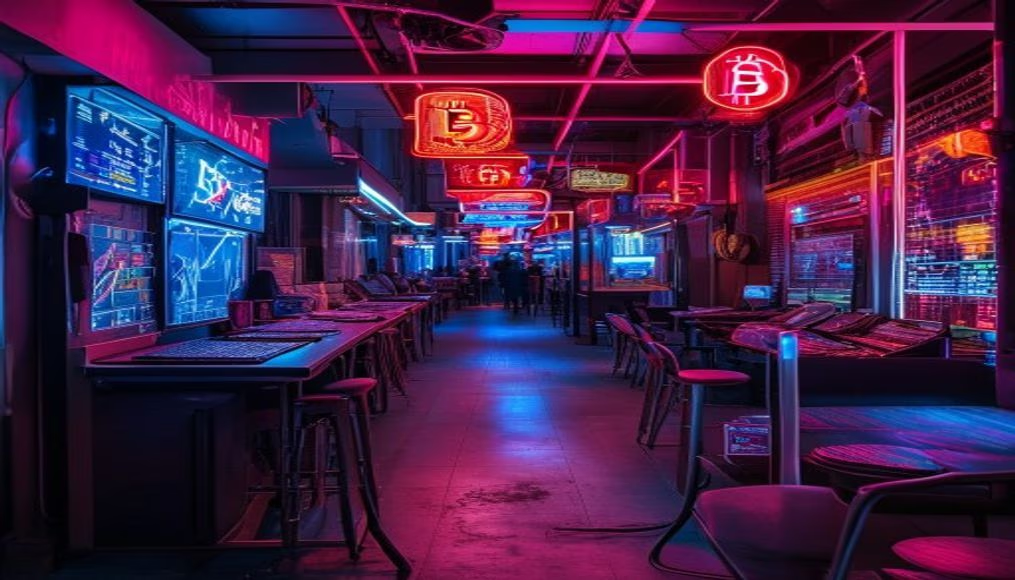
Bitcoin atm machine on city street at night
1344×768 · AVIF · CC BY 4.0
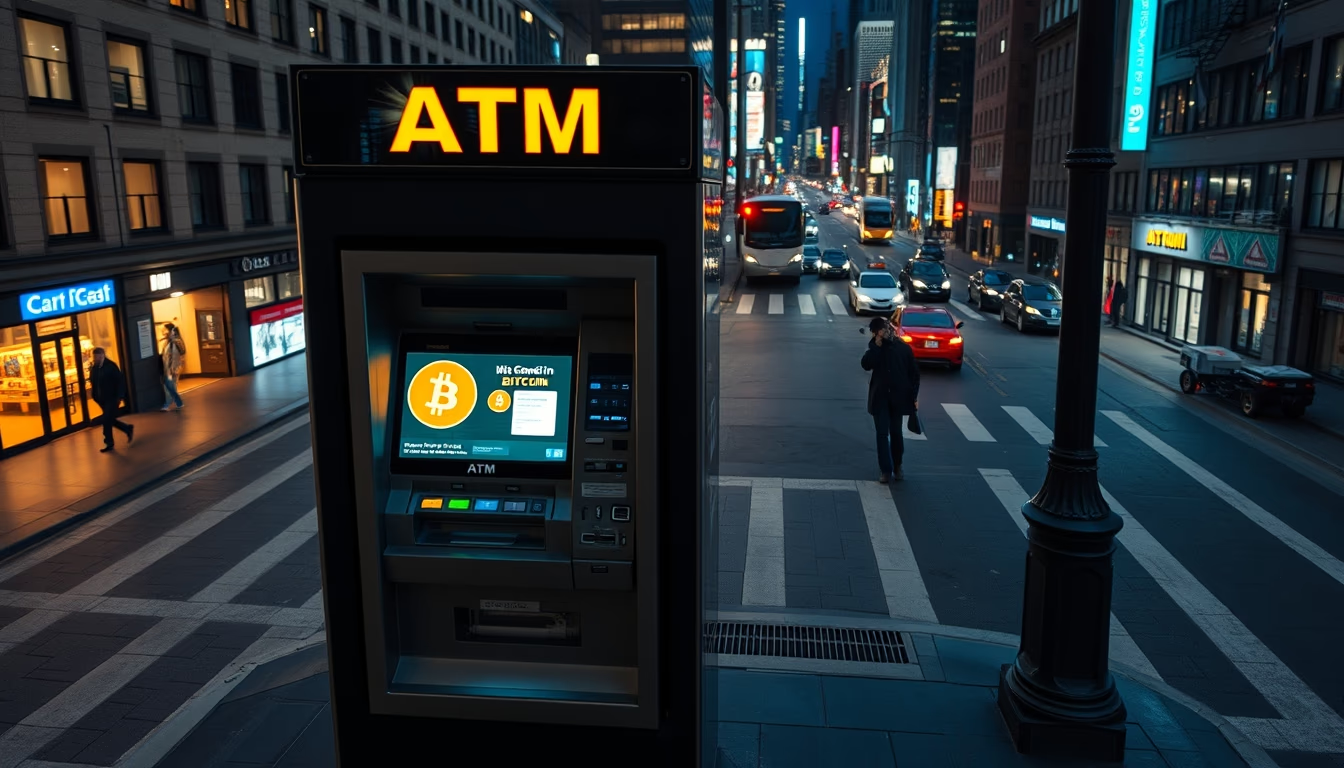
Bitcoin ATM on a nighttime city sidewalk, providing 24/7 access to cryptocurrency transactions.
About this subject
Bitcoin ATMs are physical kiosks that allow users to buy or sell bitcoins using cash or debit cards. Unlike traditional ATMs, they connect to a cryptocurrency exchange to process transactions. The first Bitcoin ATM was installed in 2013 in Vancouver, Canada, and since then the global count has grown to over 30,000 units, with strong presence in the United States, Canada, and Europe. In Brazil, there are estimated to be hundreds of these terminals, concentrated in capitals such as São Paulo, Rio de Janeiro, and Brasília, as well as inland cities with high crypto adoption.
The nighttime street scene is typical: the brightly lit ATM stands out on a busy sidewalk, often near convenience stores or subway stations. Artificial lighting and location security are critical for nighttime use, as transactions can involve significant amounts. Unlike a regular ATM requiring a card and PIN, a Bitcoin ATM usually only needs a phone number for verification and a digital wallet to receive the coins.
Regulation of these machines varies by country. In Brazil, the Central Bank has no specific rules yet, but operators must follow anti-money laundering guidelines. Some advanced models offer facial recognition and document scanning. Transaction fees can reach 10% or more, higher than online exchanges, but the convenience of in-person and anonymous service attracts users who prefer not to use digital platforms.
The proliferation of Bitcoin ATMs reflects the maturation of the cryptocurrency market, moving from purely virtual to physical spaces. In cities with heavy tourist traffic, these terminals serve as alternative currency exchange points, accepting US dollars, euros, and reais. Maintenance and refilling are handled by specialized companies, which reload the machines with banknotes and monitor internal temperature to prevent overheating.
Frequently Asked Questions
How does a Bitcoin ATM work?
The user inserts cash or a card, provides their phone number for verification, and sends bitcoins to their digital wallet. To sell, the process is reversed: the ATM scans the wallet's QR code and dispenses cash.
How much does it cost to use a Bitcoin ATM?
Fees range from 5% to 15% per transaction, depending on the operator and volume. Some terminals also charge an additional fixed fee. It is more expensive than online exchanges but offers anonymity and convenience.
Where can I find Bitcoin ATMs in Brazil?
They are located in capitals and mid-sized cities, often in malls, airports, gas stations, and convenience stores. Websites like CoinATMRadar list exact locations and availability.
Direct URL
https://pub-c7d6a6ea828543ac903a74a341ccb2e1.r2.dev/imagens/bitcoin-atm-machine-on-city-street-at-night-aerial-drone-shot-studio-professional-lighting.avifHow to credit
Include a visible link back to UtilizAí. Copy one of the snippets below:
<a href="https://xn--utiliza-eza.com/en/midia/imagens/bitcoin-atm-machine-on-city-street-at-night-aerial-drone-shot-studio-professional-lighting">Bitcoin atm machine on city street at night</a> by <a href="https://xn--utiliza-eza.com">UtilizAí</a>, licensed under <a href="https://creativecommons.org/licenses/by/4.0/">CC BY 4.0</a>.
[Bitcoin atm machine on city street at night](https://xn--utiliza-eza.com/en/midia/imagens/bitcoin-atm-machine-on-city-street-at-night-aerial-drone-shot-studio-professional-lighting) by [UtilizAí](https://xn--utiliza-eza.com), CC BY 4.0
License: CC-BY-4.0