Biometric scan finger
1344×768 · AVIF · CC BY 4.0
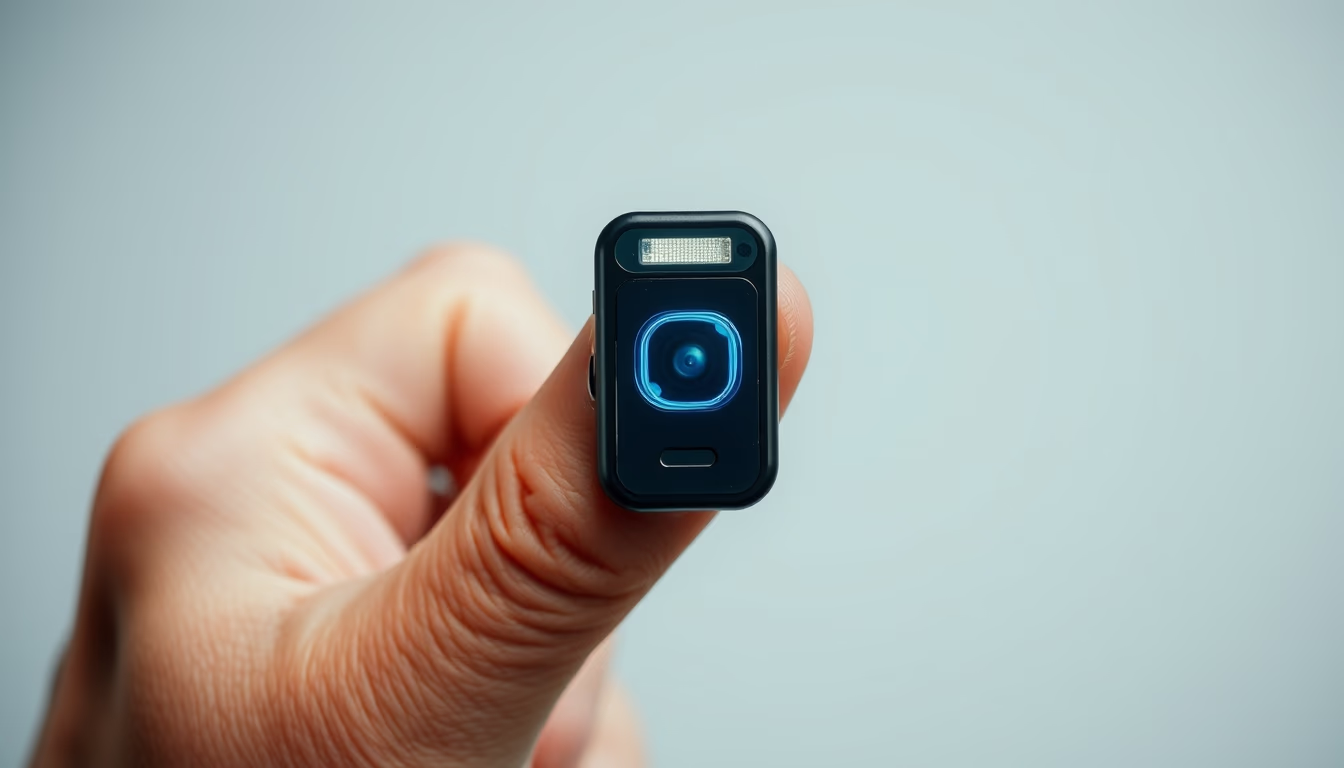
Fingerprint biometrics is one of the oldest and most reliable identification methods, used in smartphones, access control, and criminal investigations.
About this subject
Fingerprint reading, or papillary biometrics, relies on the unique ridges and valleys on each person's fingertips. Even identical twins have distinct patterns, making this method extremely reliable for authentication. The technology dates back to the late 19th century, when Francis Galton and Edward Henry developed classification systems that still inspire modern algorithms.
In Brazil, digital biometrics has been widely used in the electoral system since 2008, identifying over 120 million voters. Additionally, the Federal Police maintain the National Bank of Genetic Profiles and the AFIS (Automated Fingerprint Identification System), which can cross-reference fingerprints in seconds. On mobile devices, capacitive and ultrasonic sensors have made authentication fast and accessible, replacing passwords on millions of devices.
Curiously, the accuracy of fingerprint scanners can be affected by factors such as sweat, dirt, or scars. Modern systems therefore combine multiple sensors or integrate other biometric factors like facial recognition. Despite advances in iris and hand vein recognition, fingerprints remain the gold standard in cost-effectiveness and practicality for security applications.
The global biometrics market is expected to exceed US$60 billion by 2026, driven by mobile payments and border control. However, privacy and data storage concerns spark regulatory debates. On-device encryption, adopted by Apple and Google, aims to mitigate risks by processing biometrics locally without sending data to servers.
Frequently Asked Questions
Are fingerprints of identical twins the same?
No. Despite having identical DNA, twins develop different ridge patterns due to environmental factors in the womb, such as pressure and blood flow. Therefore, their fingerprints are unique.
Can a fingerprint be faked to trick sensors?
Yes, but it is difficult. Modern sensors use liveness detection (like blood flow or conductivity) to prevent attacks with gelatin or silicone molds. Ultrasonic systems are even more resistant to spoofing.
Is fingerprint biometrics safe for payments?
Yes, especially with on-device storage. Encryption and double verification (requiring a password after failed attempts) reduce risks. However, no system is 100% foolproof, and multi-factor authentication is recommended.
Direct URL
https://pub-c7d6a6ea828543ac903a74a341ccb2e1.r2.dev/imagens/biometric-scan-finger-lo-fi-disposable-camera-p3.avifHow to credit
Include a visible link back to UtilizAí. Copy one of the snippets below:
<a href="https://xn--utiliza-eza.com/en/midia/imagens/biometric-scan-finger-lo-fi-disposable-camera-p3">Biometric scan finger</a> by <a href="https://xn--utiliza-eza.com">UtilizAí</a>, licensed under <a href="https://creativecommons.org/licenses/by/4.0/">CC BY 4.0</a>.
[Biometric scan finger](https://xn--utiliza-eza.com/en/midia/imagens/biometric-scan-finger-lo-fi-disposable-camera-p3) by [UtilizAí](https://xn--utiliza-eza.com), CC BY 4.0
License: CC-BY-4.0