Biometric scan finger
1344×768 · AVIF · CC BY 4.0
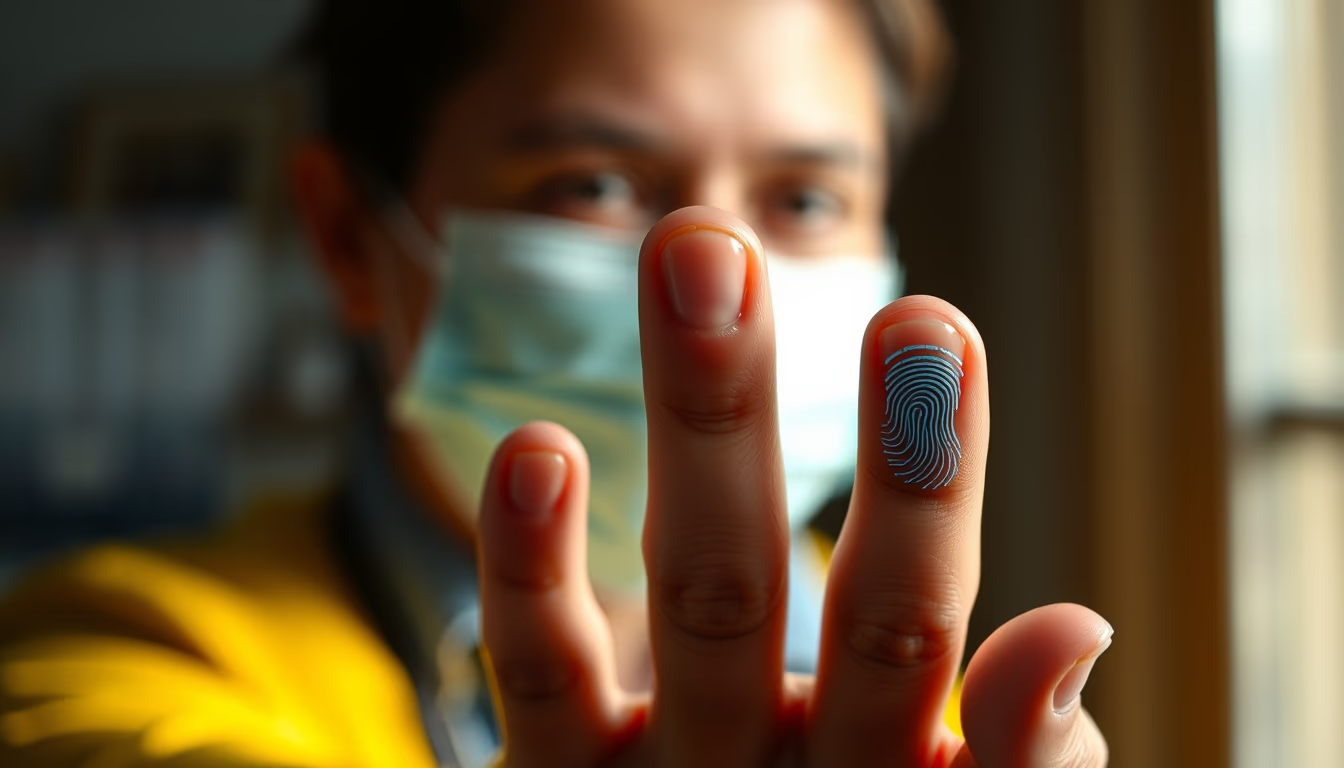
Biometric fingerprint scanning is an authentication technology that uses unique fingerprint patterns to verify identities, found in mobile devices, security systems, and border control.
About this subject
Fingerprint biometric scanning is one of the oldest and most widespread forms of biometric authentication. It captures the ridge and valley patterns of fingerprints, considered unique to each individual even among identical twins. This technology has become popular in devices such as smartphones, laptops, and tablets, replacing traditional passwords, and is also widely used in physical access control systems, like security doors in companies and airports.
From a technical standpoint, sensors can be optical (capturing an image of the fingerprint), capacitive (measuring electrical charge variations between ridges and valleys), or ultrasonic (using sound waves to map the skin's structure). Accuracy is high, with very low false positive and false negative rates, although factors like dirt, cuts, or moisture can affect reading. In Brazil, the technology is used in biometric voting machines, where over 120 million voters have had their fingerprints registered, helping to reduce fraud.
Culturally, biometrics raises privacy and data security concerns. By 2026, more devices are expected to adopt under-display sensors and multimodal systems (combining fingerprint, face, and iris). Interestingly, fingerprints are not the only unique characteristic: ridges and valleys form in the womb and remain unchanged throughout life, except for deep scars. Moreover, Francis Galton's 1892 fingerprint classification system still underpins many modern algorithms, which use minutiae points as key features.
Frequently Asked Questions
How does finger biometric scanning work?
The sensor captures the ridge and valley pattern of the fingerprint, converting it into a mathematical template. This template is then compared to the one stored in the device or system to authenticate the user.
Is fingerprint scanning secure?
Yes, it is considered secure due to the uniqueness of fingerprints. However, there are risks like spoofing with fake prints on older sensors. Modern sensors use liveness detection to mitigate this.
Which devices use this technology in Brazil?
Besides smartphones and laptops, the Brazilian electronic voting machine uses fingerprint biometrics to identify voters. It is also common in smart locks, electronic timekeeping systems, and access control in buildings.
Direct URL
https://pub-c7d6a6ea828543ac903a74a341ccb2e1.r2.dev/imagens/biometric-scan-finger-documentary-photography-p4.avifHow to credit
Include a visible link back to UtilizAí. Copy one of the snippets below:
<a href="https://xn--utiliza-eza.com/en/midia/imagens/biometric-scan-finger-documentary-photography-p4">Biometric scan finger</a> by <a href="https://xn--utiliza-eza.com">UtilizAí</a>, licensed under <a href="https://creativecommons.org/licenses/by/4.0/">CC BY 4.0</a>.
[Biometric scan finger](https://xn--utiliza-eza.com/en/midia/imagens/biometric-scan-finger-documentary-photography-p4) by [UtilizAí](https://xn--utiliza-eza.com), CC BY 4.0
License: CC-BY-4.0