Bike share station
1344×768 · AVIF · CC BY 4.0
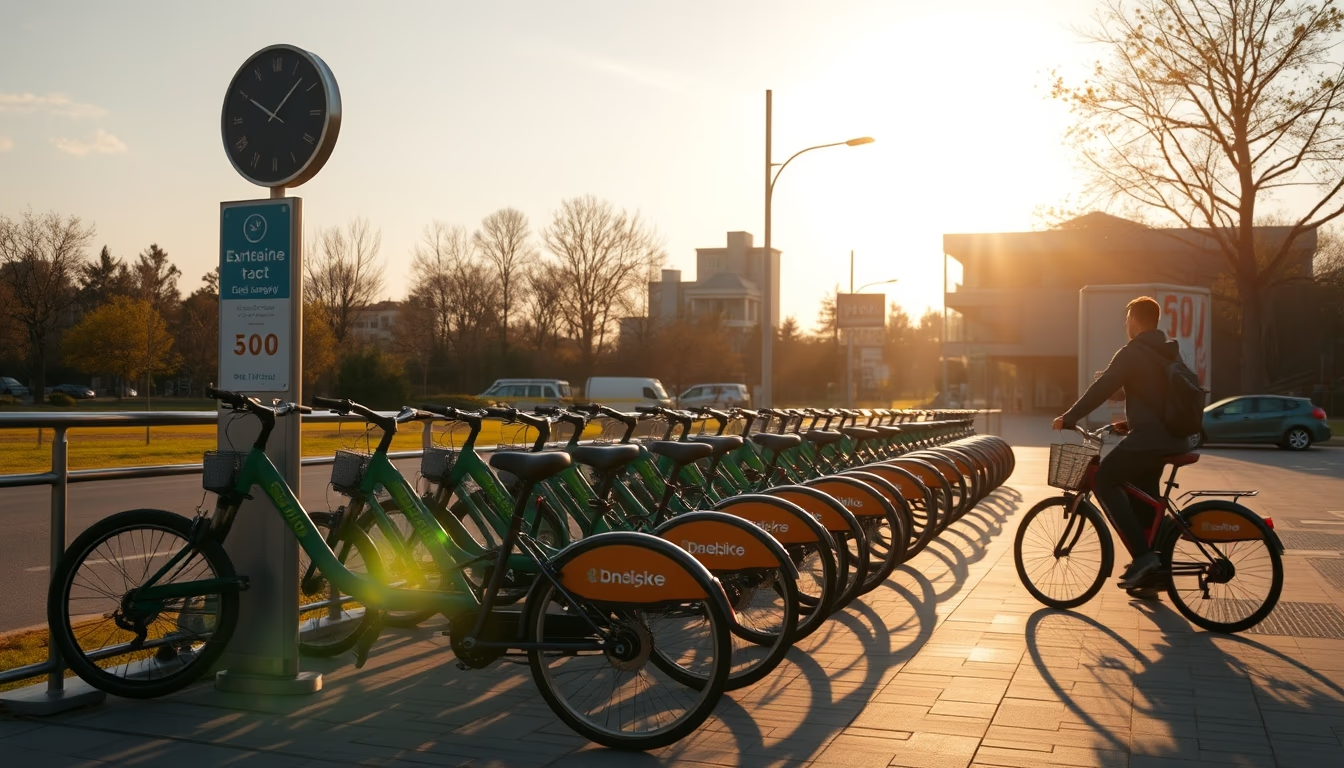
Bike share stations revolutionize urban mobility worldwide, providing sustainable and accessible transportation.
About this subject
Bike share systems have emerged as an efficient alternative to reduce traffic congestion and carbon emissions. The first modern program was launched in 1965 in Amsterdam with the so-called "white bikes," but the concept gained traction in the 2000s with automated stations and mobile apps. Today, over 2,000 cities worldwide have some form of bike sharing, from small communities to megacities like Paris, London, and Tokyo.
In Brazil, the system began to popularize in 2014 with Bike Rio in Rio de Janeiro, followed by initiatives in São Paulo, Belo Horizonte, and other capitals. Stations are typically installed at strategic points such as subway stations, parks, and commercial centers. The business model varies: some are public and subsidized, others operated by private companies with sponsorship. Usage is simple: users pick up a bicycle with a card or app and return it to any station in the network.
Beyond reducing pollution and encouraging physical activity, bike sharing contributes to integration with other transportation modes like buses and trains. Studies show that well-implemented systems can reduce motor vehicle traffic by up to 10% in central areas. A curious fact: in China, bike sharing once had over 200 million users but faced issues with disorderly parking, leading to stricter regulations. In cities like Copenhagen, bike sharing is an essential part of mobility culture, with stations offering even electric bicycles.
Frequently Asked Questions
How does a bike share station work?
Users register via an app or card, locate the nearest station, pick up a bicycle, and return it to any station after use. Payment is per minute, hour, or via monthly subscription.
What are the benefits of bike sharing for cities?
Reduced traffic congestion and pollution, encouragement of physical activity, integration with public transport, and less need for parking. It also democratizes active transportation.
Is bike sharing safe?
Yes, bicycles undergo regular maintenance. Many systems provide helmets and safety tips. Stations are often monitored by cameras in busy areas.
Direct URL
https://pub-c7d6a6ea828543ac903a74a341ccb2e1.r2.dev/imagens/bike-share-station-travel-photography-p3.avifHow to credit
Include a visible link back to UtilizAí. Copy one of the snippets below:
<a href="https://xn--utiliza-eza.com/en/midia/imagens/bike-share-station-travel-photography-p3">Bike share station</a> by <a href="https://xn--utiliza-eza.com">UtilizAí</a>, licensed under <a href="https://creativecommons.org/licenses/by/4.0/">CC BY 4.0</a>.
[Bike share station](https://xn--utiliza-eza.com/en/midia/imagens/bike-share-station-travel-photography-p3) by [UtilizAí](https://xn--utiliza-eza.com), CC BY 4.0
License: CC-BY-4.0