Bike share station
1344×768 · AVIF · CC BY 4.0
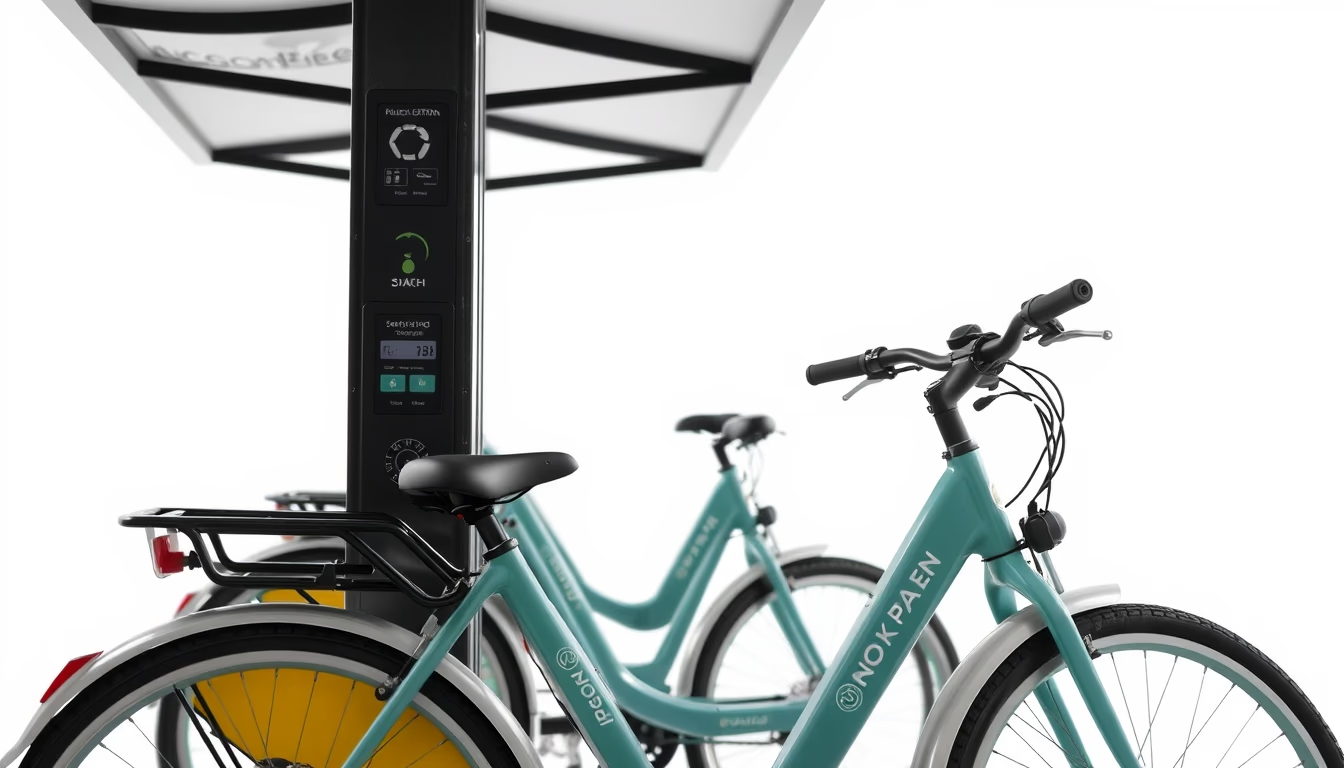
Bike share stations are public bicycle rental systems, present in over 2,000 cities worldwide, promoting sustainable urban mobility.
About this subject
Bike share stations, also known as public bicycle sharing systems, have revolutionized urban mobility over the past two decades. The first modern system was launched in 2007 in Paris with Vélib', inspiring networks worldwide. Today, cities like New York, London, Beijing, and Rio de Janeiro operate thousands of stations, offering a clean and affordable transportation alternative.
Bike share systems fall into two main categories: docked and dockless. In docked systems, bicycles are picked up and returned at fixed stations, while dockless systems allow users to leave bikes anywhere via GPS and apps. China dominates the dockless market, with companies like Mobike and Ofo operating millions of bikes at their peak. In Brazil, the most famous system is Bike Rio, with over 260 stations and 2,600 bikes, integrated with public transport.
Studies show that bike sharing reduces traffic congestion and carbon emissions. Research from the University of Berkeley estimates that in mature systems, up to 10% of trips are made via bike share. Additionally, it promotes physical health and economic savings, as per-trip costs are low. Effective stations require constant maintenance, bike redistribution, and efficient payment technology, such as cards and mobile apps.
Notably, Hangzhou, China, operates the largest bike share system globally, with over 86,000 bikes and 3,500 stations. Meanwhile, European cities like Copenhagen and Amsterdam, despite high private bicycle ownership, have relatively small bike share systems due to their unique cycling culture.
Frequently Asked Questions
How does a bike share station work?
Users register via an app or website, pick up a bike from a station, and return it to any station in the network. Payment is based on time (per minute, hour, or monthly subscription).
What are the benefits of bike sharing for cities?
It reduces traffic congestion, air pollution, promotes public health, and provides an affordable transport option that integrates with other modes like subway and bus.
What is the difference between docked and dockless systems?
Docked systems require bikes to be picked up and returned at fixed stations. Dockless systems allow parking anywhere via GPS, offering more flexibility but sometimes causing clutter or organizational challenges.
Direct URL
https://pub-c7d6a6ea828543ac903a74a341ccb2e1.r2.dev/imagens/bike-share-station-commercial-product-photography-p2.avifHow to credit
Include a visible link back to UtilizAí. Copy one of the snippets below:
<a href="https://xn--utiliza-eza.com/en/midia/imagens/bike-share-station-commercial-product-photography-p2">Bike share station</a> by <a href="https://xn--utiliza-eza.com">UtilizAí</a>, licensed under <a href="https://creativecommons.org/licenses/by/4.0/">CC BY 4.0</a>.
[Bike share station](https://xn--utiliza-eza.com/en/midia/imagens/bike-share-station-commercial-product-photography-p2) by [UtilizAí](https://xn--utiliza-eza.com), CC BY 4.0
License: CC-BY-4.0