Bean to bar workshop
1344×768 · AVIF · CC BY 4.0
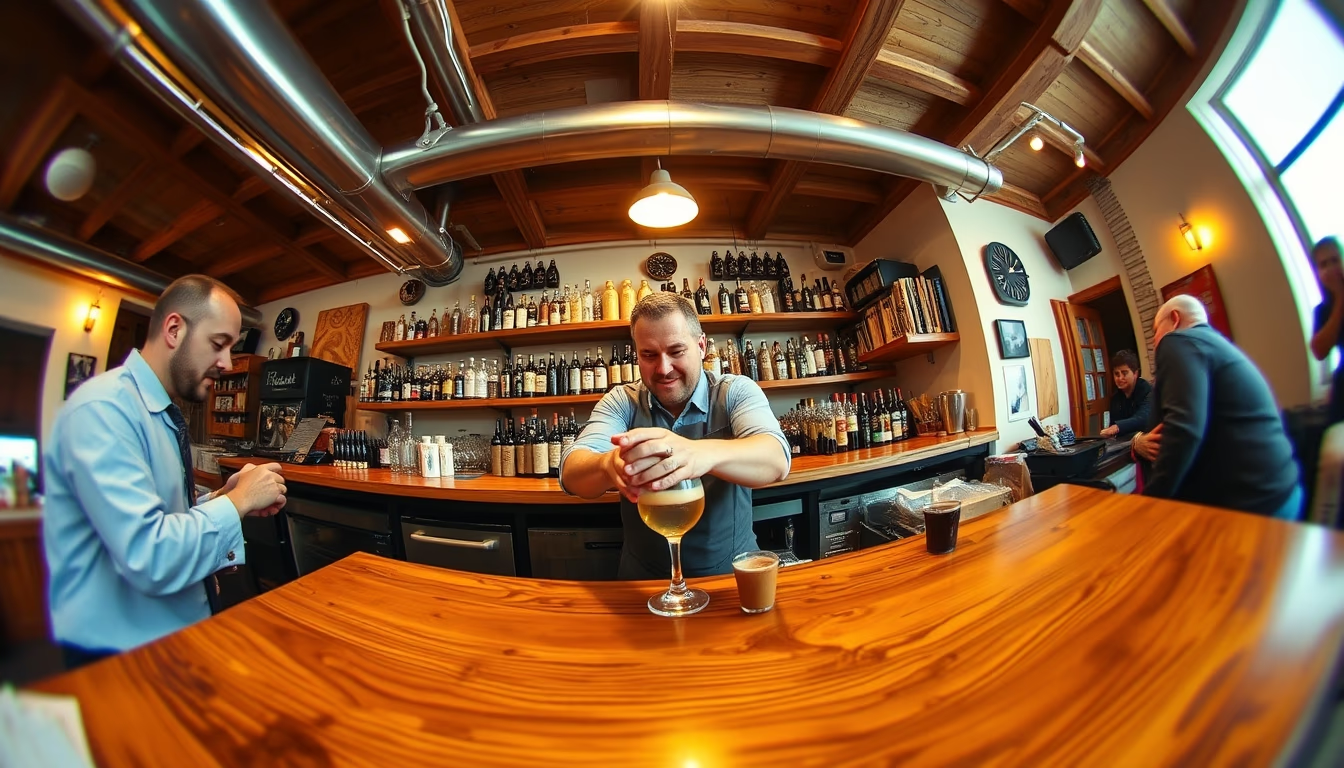
Bean to bar workshop teaches how to transform cocoa beans into artisan chocolate, from roasting to packaging.
About this subject
The bean to bar movement represents a craft approach to chocolate making, where the producer controls every step from selecting cocoa beans to the final bar. Originating in the United States in the early 2000s, the concept has gained global traction as a response to industrial chocolate production, which often blends beans from multiple origins and uses additives. In Brazil, a country with a strong cocoa tradition primarily in southern Bahia and Pará, bean to bar workshops have become popular among chefs and enthusiasts alike.
During a typical workshop, participants learn essential steps: roasting the beans to develop flavor; cracking and winnowing to remove shells; grinding in a stone mill for up to 72 hours to release cocoa butter; and finally tempering and molding. Roasting is critical, with temperatures between 120°C and 150°C for 20 to 30 minutes determining the sensory profile. Unlike industrial chocolate, which often adds vegetable oils and preservatives, bean to bar uses only cocoa mass, cocoa butter, and sugar, possibly including ingredients like milk powder or spices.
The cultural significance of bean to bar lies in highlighting cocoa's terroir, a concept similar to wine. Each batch of beans from a specific farm can yield fruity, floral, or nutty notes depending on soil and post-harvest processing. Workshops frequently cover fermentation and drying, which occur at the origin and drastically influence the final product. In Brazil, events like the International Chocolate Festival in Ilhéus showcase bean to bar producers, promoting sustainability and fair trade.
Interestingly, the movement also impacts local economies: by buying beans directly from cooperatives, artisan chocolate makers pay fairer prices than those in the commodity market. A workshop can last 3 to 8 hours, depending on depth, and usually results in bars that participants take home. Moreover, the practice educates consumers about the difference between quality cocoa and ultra-processed products, contributing to a more ethical supply chain.
Frequently Asked Questions
What does bean to bar mean?
Bean to bar is a term referring to the complete process of making artisan chocolate, starting from raw cocoa beans and ending with the finished bar, controlling all steps such as roasting, grinding, and tempering.
How long does a bean to bar workshop take?
Typically between 3 and 8 hours, depending on depth. Shorter workshops focus on fundamentals like roasting and tempering, while longer ones include fermentation, extended grinding, and comparative tasting.
What is the difference between bean to bar and industrial chocolate?
Bean to bar chocolate uses only cocoa mass, cocoa butter, sugar, and natural ingredients, without vegetable fats or preservatives. Industrial chocolate often adds lecithin, oils, and artificial flavors, blending beans from multiple origins to standardize flavor.
Direct URL
https://pub-c7d6a6ea828543ac903a74a341ccb2e1.r2.dev/imagens/bean-to-bar-workshop-fish-eye-wide-angle-fresh7.avifHow to credit
Include a visible link back to UtilizAí. Copy one of the snippets below:
<a href="https://xn--utiliza-eza.com/en/midia/imagens/bean-to-bar-workshop-fish-eye-wide-angle-fresh7">Bean to bar workshop</a> by <a href="https://xn--utiliza-eza.com">UtilizAí</a>, licensed under <a href="https://creativecommons.org/licenses/by/4.0/">CC BY 4.0</a>.
[Bean to bar workshop](https://xn--utiliza-eza.com/en/midia/imagens/bean-to-bar-workshop-fish-eye-wide-angle-fresh7) by [UtilizAí](https://xn--utiliza-eza.com), CC BY 4.0
License: CC-BY-4.0