Bean to bar workshop
1344×768 · AVIF · CC BY 4.0
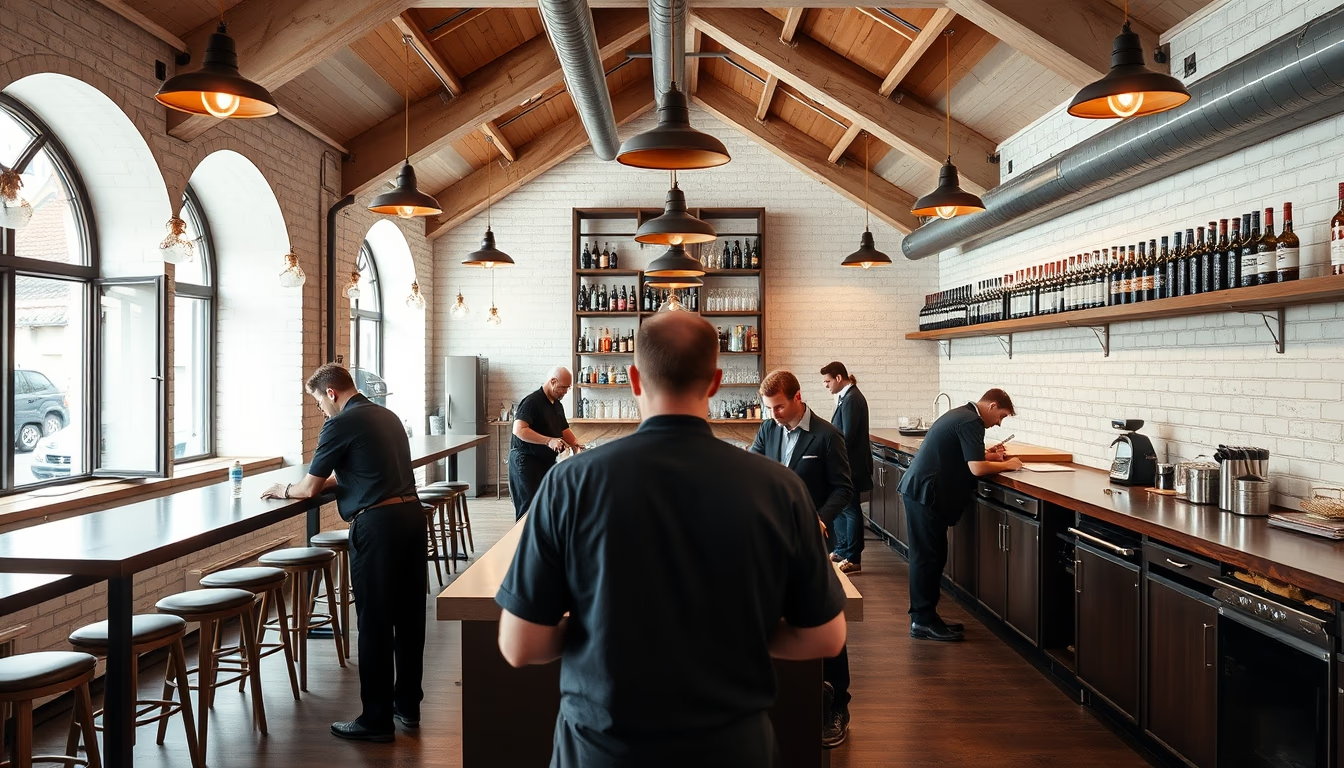
Bean to bar workshop teaches from cocoa bean selection to artisanal chocolate making, a growing practice in Brazil.
About this subject
The term "bean to bar" describes the complete process of making artisanal chocolate, starting from raw cocoa beans to the finished bar. In specialized workshops, participants learn to roast, crack, grind, and temper cocoa, controlling each step to produce chocolate with a unique sensory profile. This approach emphasizes the origin of the beans, often from small farmers or cooperatives, and allows exploring flavor nuances that vary according to terroir, fermentation, and drying.
In Brazil, one of the world's largest cocoa producers, the bean to bar movement has gained significant momentum over the past decade. Chocolatiers and enthusiasts organize courses in cities such as São Paulo, Rio de Janeiro, and Belém do Pará, often in partnership with farms in southern Bahia or Pará. This practice contrasts with industrial production, which blends different origins and adds extra cocoa butter, sugar, and emulsifiers. In bean to bar, the recipe is minimalist: only cocoa mass and sugar, sometimes with milk powder or natural flavors.
A curious fact is that Brazilian cocoa has distinct characteristics. For example, Amazonian varieties like Forastero and Criollo offer fruity, low-bitterness notes, while cocoa grown in Bahia tends to be more full-bodied. Participating in a bean to bar workshop allows understanding how each decision, from roasting temperature to conching time, affects the final outcome. Beyond the technical aspect, there is a social dimension: many courses promote fair trade and sustainability, connecting urban consumers to the realities of cocoa farmers.
Workshops typically last between three to six hours, and by the end each student takes home their own bars. Basic equipment includes an oven, stone grinder, thermometer, and molds. Although it seems simple, the process requires patience, incorrect roasting can bitter the chocolate, and improper tempering prevents shine and a crisp snap. For those wanting to start, home kits exist, but a hands-on experience with an experienced instructor is irreplaceable.
Frequently Asked Questions
What is the difference between bean to bar chocolate and industrial chocolate?
Bean to bar uses only cocoa beans and sugar, without additives or extra fats, preserving the original cocoa flavor. Industrial chocolate blends different origins and adds emulsifiers, extra cocoa butter, and more sugar.
Can I make bean to bar chocolate at home without professional equipment?
Yes, with a home oven for roasting, a food processor or grain grinder, and patience for tempering. Specific kits help, but the result may be more rustic. It is best to start with a workshop to learn the techniques.
Where can I find bean to bar workshops in Brazil?
There are options in São Paulo, Rio de Janeiro, Belo Horizonte, and Belém, often at cooking schools or artisanal chocolate shops. They also take place on cocoa farms in Bahia and Pará, combining rural tourism with learning.
Direct URL
https://pub-c7d6a6ea828543ac903a74a341ccb2e1.r2.dev/imagens/bean-to-bar-workshop-architectural-photography-fresh1.avifHow to credit
Include a visible link back to UtilizAí. Copy one of the snippets below:
<a href="https://xn--utiliza-eza.com/en/midia/imagens/bean-to-bar-workshop-architectural-photography-fresh1">Bean to bar workshop</a> by <a href="https://xn--utiliza-eza.com">UtilizAí</a>, licensed under <a href="https://creativecommons.org/licenses/by/4.0/">CC BY 4.0</a>.
[Bean to bar workshop](https://xn--utiliza-eza.com/en/midia/imagens/bean-to-bar-workshop-architectural-photography-fresh1) by [UtilizAí](https://xn--utiliza-eza.com), CC BY 4.0
License: CC-BY-4.0