Banker explaining interest rate to a client
1344×768 · AVIF · CC BY 4.0

A financial advisor explains the Selic rate to a client in a late afternoon meeting, highlighting its effects on investments and credit.
About this subject
The Selic rate, acronym for Special Settlement and Custody System, is Brazil's benchmark interest rate, set by the Monetary Policy Committee (Copom) of the Central Bank. It directly influences all other interest rates in the country, from savings account yields to the cost of loans and financing. When Copom changes the Selic, the impact spreads throughout the economy: a high Selic tends to curb inflation by making credit more expensive and encouraging savings, while a low Selic aims to stimulate consumption and productive investment.
In a late afternoon meeting, the financial advisor uses visual aids, such as charts and tables, to demonstrate how the Selic trajectory affects the profitability of different asset classes. For example, in a high Selic scenario, government bonds indexed to the CDI (which tracks the Selic) become attractive, while variable income may suffer from capital flight. In a downward cycle, sectors like construction and retail tend to benefit from lower interest rates.
For the client, understanding the Selic is crucial for making informed decisions about where to allocate their resources. The professional explains that the Selic also serves as a reference for calculating the real interest rate (adjusted for inflation), which measures the effective gain of an investment. Additionally, the Selic directly impacts the foreign exchange market, influencing the attractiveness of the Brazilian real against other currencies.
Interestingly, the Selic is called the "basic rate" precisely because it is the floor for other rates. In 2024, the Selic underwent gradual cuts, from 13.75% per year to 10.50%, reflecting improved inflation expectations. Monitoring Copom meetings, which occur every 45 days, is essential for investors seeking to anticipate market movements.
Frequently Asked Questions
What is the Selic rate and who sets it?
The Selic rate is Brazil's benchmark interest rate, set by the Monetary Policy Committee (Copom) of the Central Bank every 45 days.
How does the Selic affect investments?
The Selic influences the yield of government bonds, CDBs, savings accounts, and even stocks. When it rises, fixed-income investments become more attractive; when it falls, the stock market may benefit.
What is the relationship between the Selic and inflation?
Copom uses the Selic to control inflation: if inflation is high, it raises the Selic to cool the economy; if inflation is low, it lowers the Selic to stimulate consumption.
Direct URL
https://pub-c7d6a6ea828543ac903a74a341ccb2e1.r2.dev/imagens/banker-explaining-selic-rate-to-a-client-wide-late-afternoon-6.avifHow to credit
Include a visible link back to UtilizAí. Copy one of the snippets below:
<a href="https://xn--utiliza-eza.com/en/midia/imagens/banker-explaining-selic-rate-to-a-client-wide-late-afternoon-6">Banker explaining interest rate to a client</a> by <a href="https://xn--utiliza-eza.com">UtilizAí</a>, licensed under <a href="https://creativecommons.org/licenses/by/4.0/">CC BY 4.0</a>.
[Banker explaining interest rate to a client](https://xn--utiliza-eza.com/en/midia/imagens/banker-explaining-selic-rate-to-a-client-wide-late-afternoon-6) by [UtilizAí](https://xn--utiliza-eza.com), CC BY 4.0
License: CC-BY-4.0
Tags
Related images
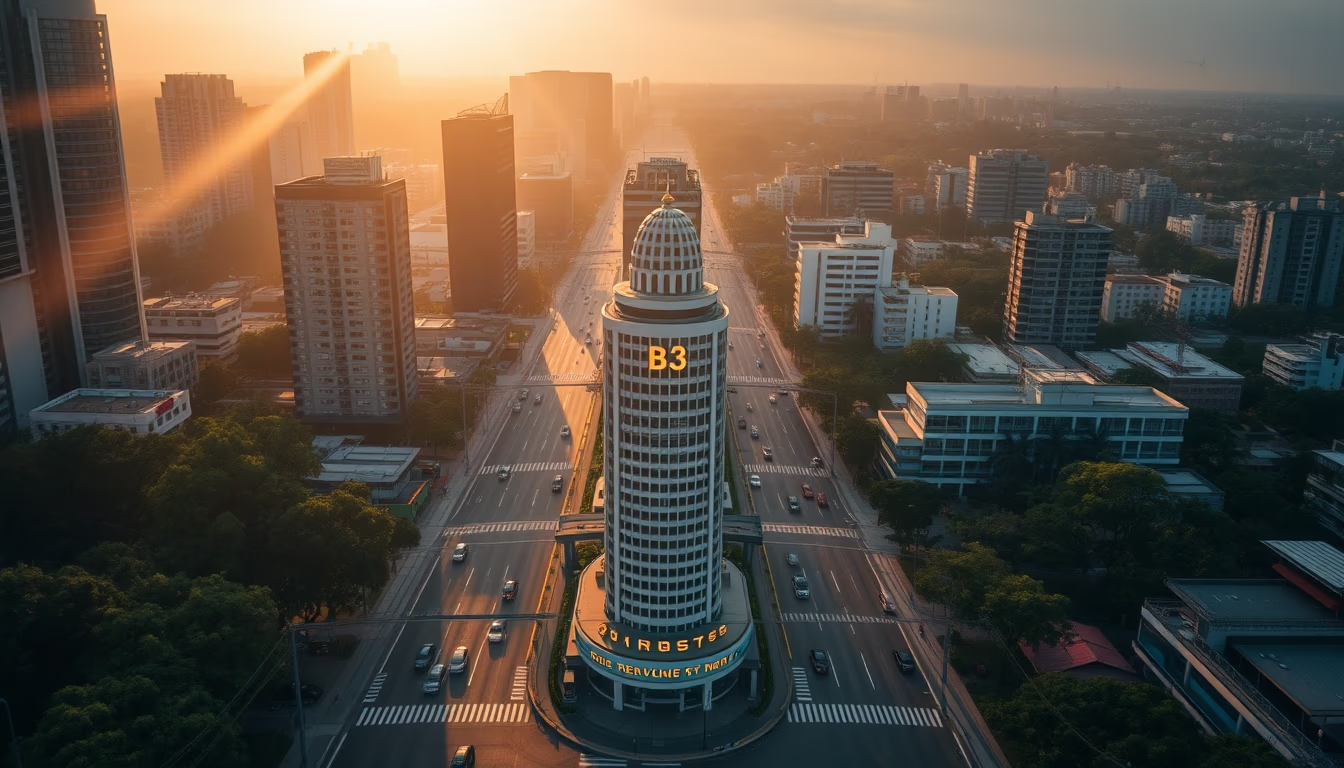 Aerial view of São Paulo financial district at golden hour with B3 building
 Aerial view of São Paulo financial district at golden hour with B3 building
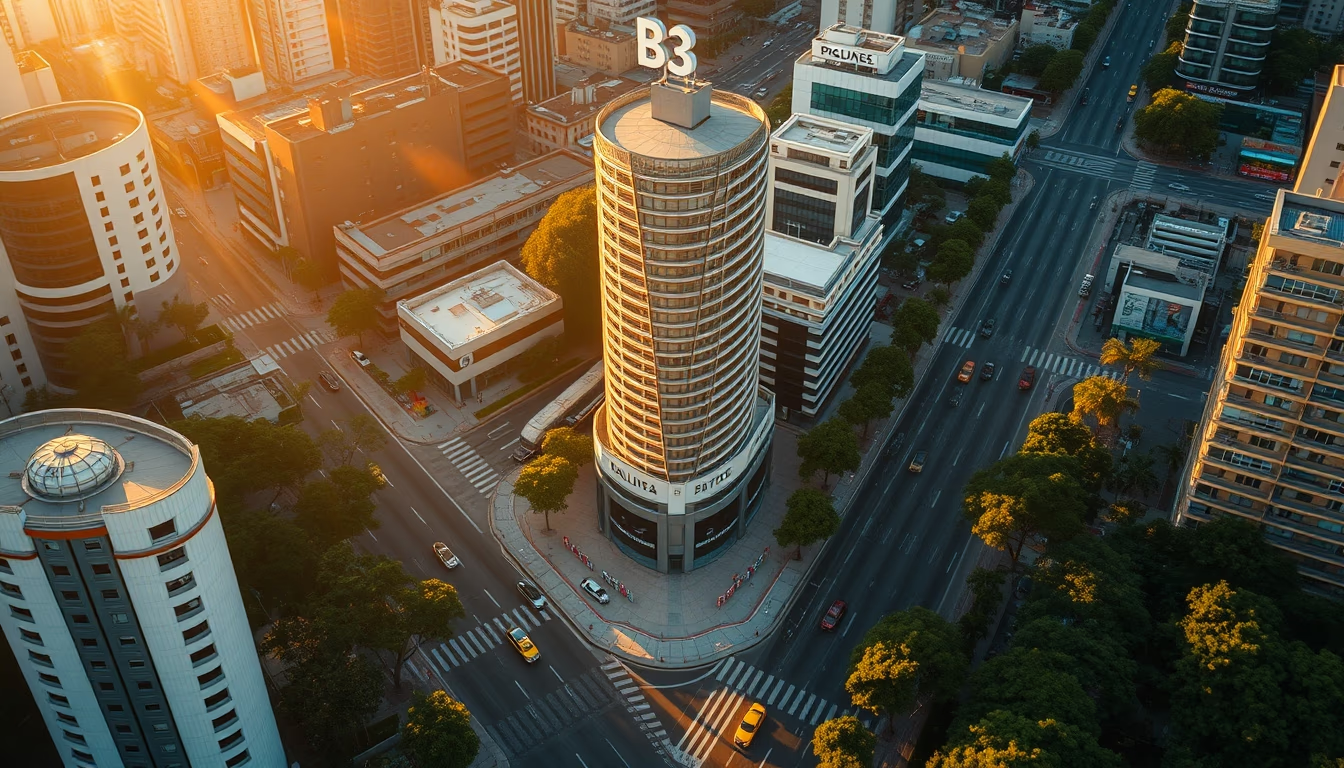 Aerial view of São Paulo financial district at golden hour with B3 building
 Aerial view of São Paulo financial district at golden hour with B3 building
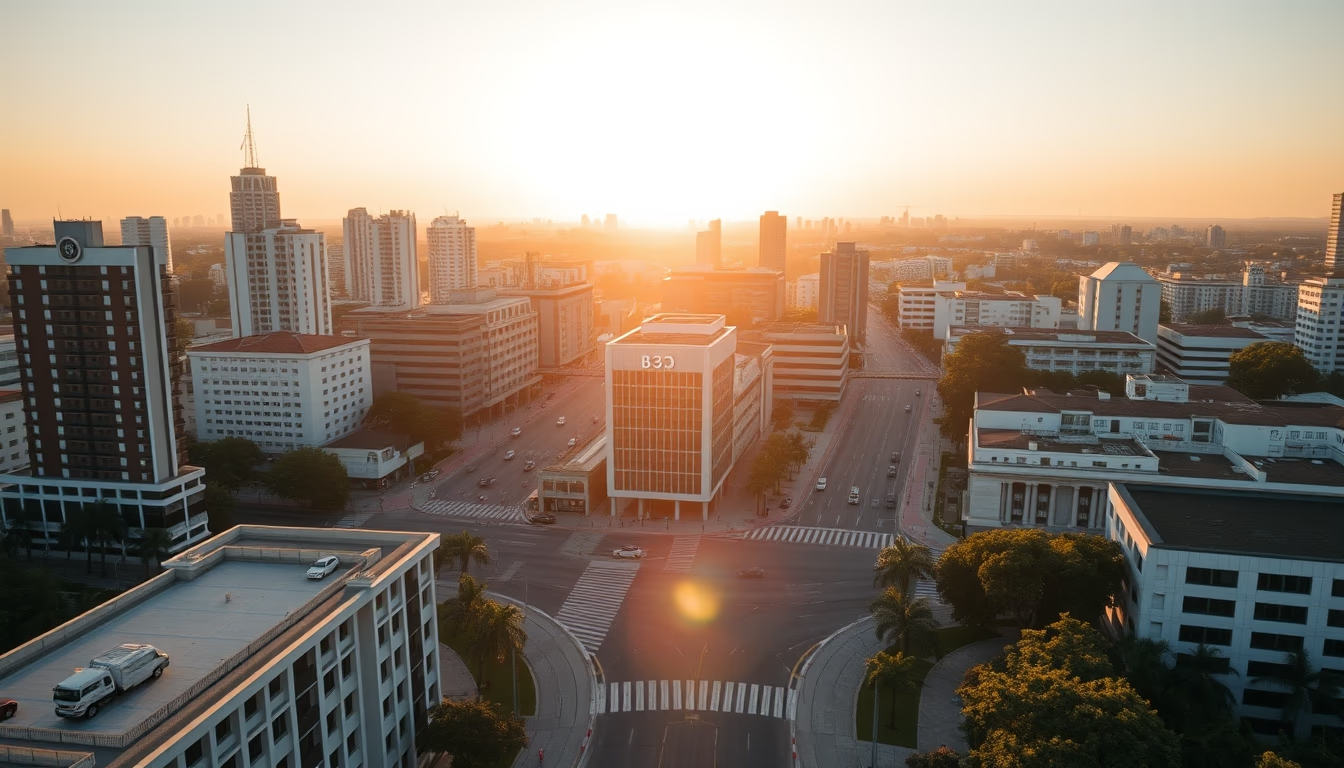 Aerial view of São Paulo financial district at golden hour with B3 building
 Aerial view of São Paulo financial district at golden hour with B3 building