Banker explaining interest rate to a client
1344×768 · AVIF · CC BY 4.0

Understand how the Selic rate impacts your investments and loans with a banker's explanation.
About this subject
The Selic rate, officially known as the Special System for Settlement and Custody, is Brazil's benchmark interest rate. Set by the Monetary Policy Committee (Copom) of the Central Bank, it directly influences credit costs, fixed-income investment returns, and inflation control. When Copom raises the Selic, the goal is to curb inflation by making credit more expensive and encouraging savings. Conversely, a lower Selic makes credit cheaper and can boost consumption and economic growth.
For investors, the Selic is a reference for instruments like Tesouro Selic, post-fixed CDBs, and DI funds. When the Selic is high, these investments tend to yield more, but the cost of mortgages and personal loans also rises. For borrowers, a high Selic means higher interest rates, making installment purchases and financing more expensive. Thus, understanding the Selic is crucial for making informed financial decisions, whether for investing or borrowing.
Historically, the Selic has reached extreme levels, such as 14.25% per year in 2015 and 2% per year in 2021, showing how monetary policy adapts to economic conditions. The Selic target is set at Copom meetings held every 45 days, and the rate is closely watched by analysts and investors. Clear communication about the Selic is essential for clients to understand how changes affect their daily finances, whether in investments or debts.
Frequently Asked Questions
What is the Selic rate and who sets it?
The Selic rate is Brazil's benchmark interest rate, set by the Monetary Policy Committee (Copom) of the Central Bank every 45 days.
How does the Selic affect my investments?
The Selic directly influences fixed-income investments like Tesouro Selic and post-fixed CDBs. When the Selic rises, these investments tend to yield more.
What is the relationship between the Selic and inflation?
Copom uses the Selic to control inflation. Raising the Selic reduces consumption and demand, helping to curb price increases. Lowering the Selic stimulates the economy but may pressure inflation.
Direct URL
https://pub-c7d6a6ea828543ac903a74a341ccb2e1.r2.dev/imagens/banker-explaining-selic-rate-to-a-client-symmetric-bright-midday.avifHow to credit
Include a visible link back to UtilizAí. Copy one of the snippets below:
<a href="https://xn--utiliza-eza.com/en/midia/imagens/banker-explaining-selic-rate-to-a-client-symmetric-bright-midday">Banker explaining interest rate to a client</a> by <a href="https://xn--utiliza-eza.com">UtilizAí</a>, licensed under <a href="https://creativecommons.org/licenses/by/4.0/">CC BY 4.0</a>.
[Banker explaining interest rate to a client](https://xn--utiliza-eza.com/en/midia/imagens/banker-explaining-selic-rate-to-a-client-symmetric-bright-midday) by [UtilizAí](https://xn--utiliza-eza.com), CC BY 4.0
License: CC-BY-4.0
Tags
Related images
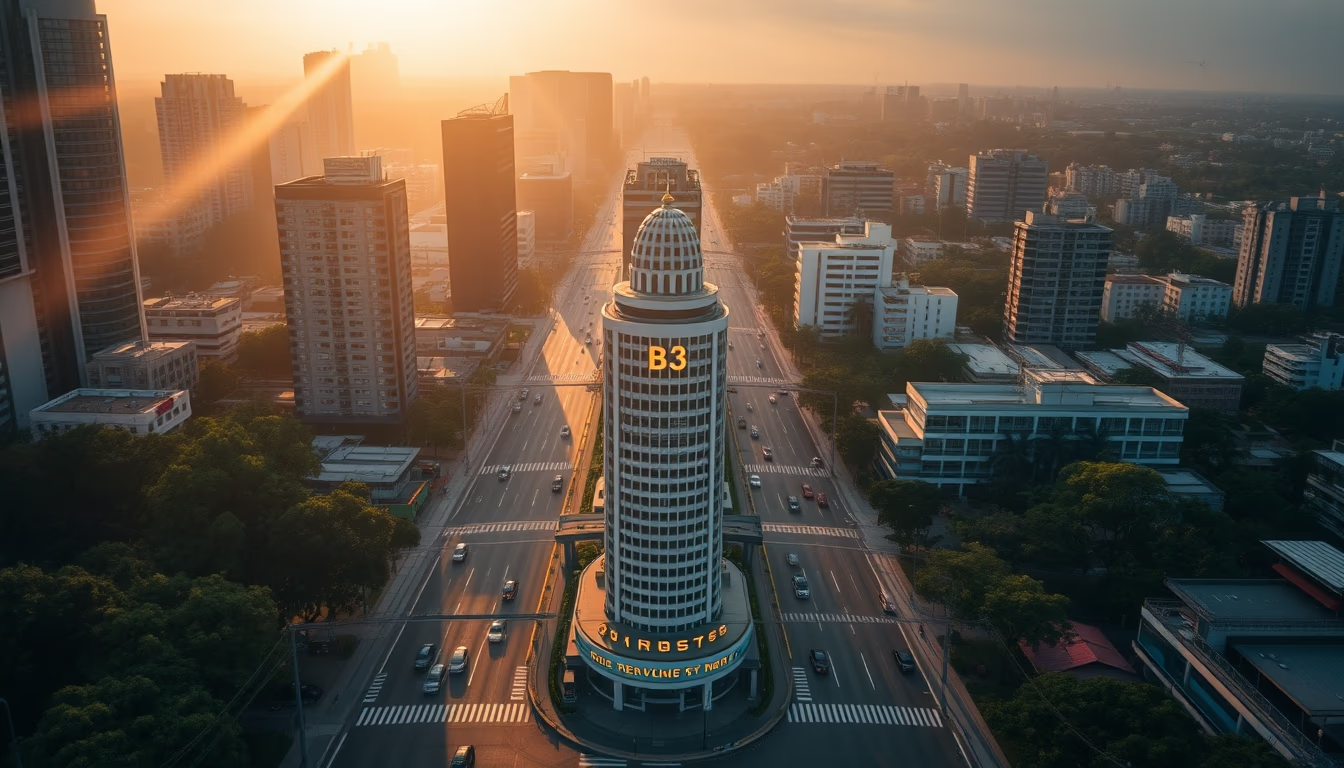 Aerial view of São Paulo financial district at golden hour with B3 building
 Aerial view of São Paulo financial district at golden hour with B3 building
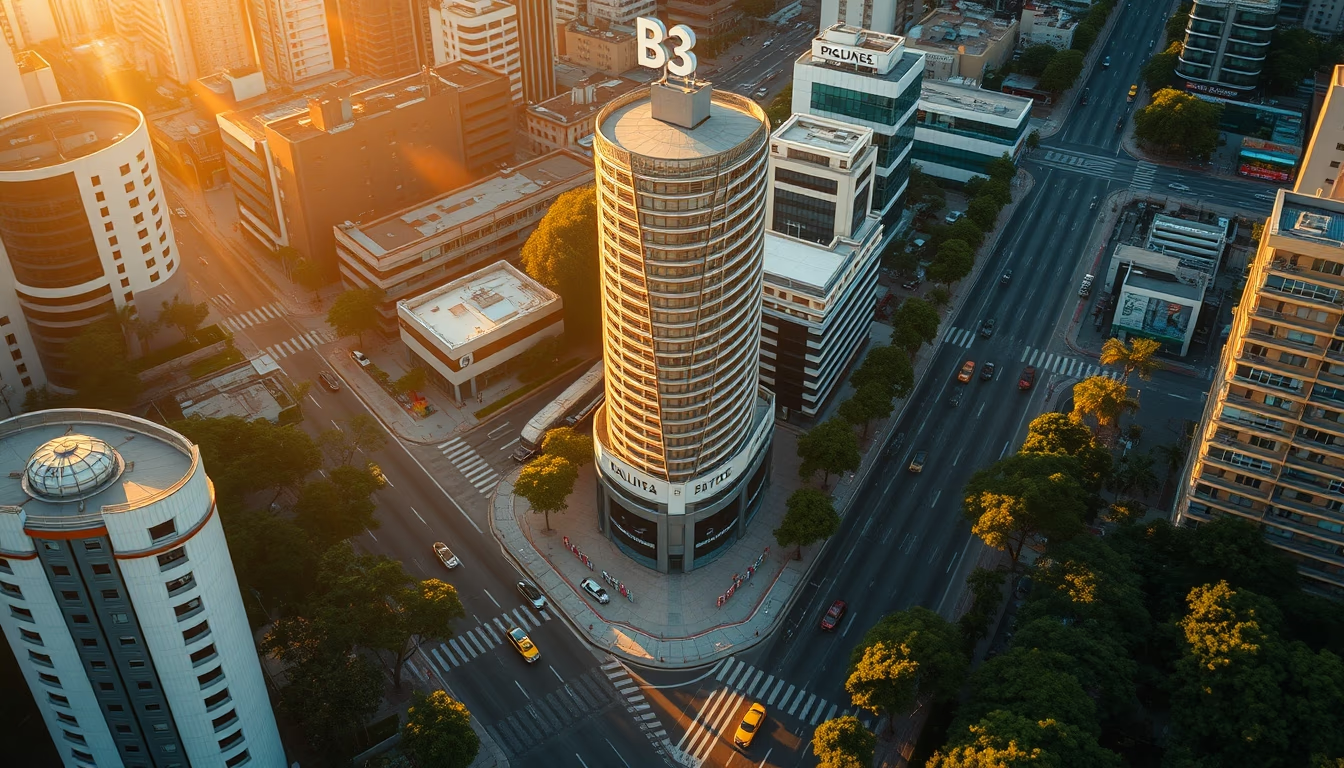 Aerial view of São Paulo financial district at golden hour with B3 building
 Aerial view of São Paulo financial district at golden hour with B3 building
 Aerial view of São Paulo financial district at golden hour with B3 building
 Aerial view of São Paulo financial district at golden hour with B3 building