Ballet shoes pointe pink
1344×768 · AVIF · CC BY 4.0
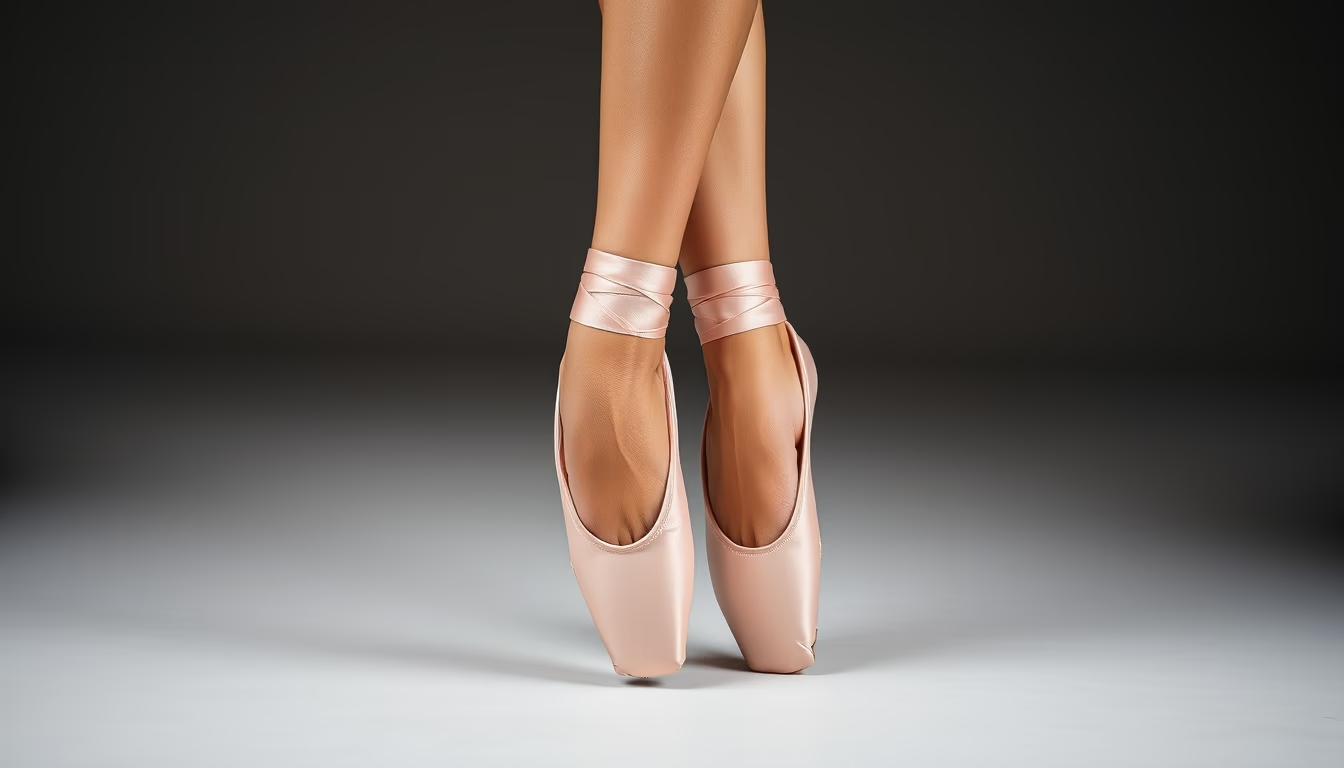
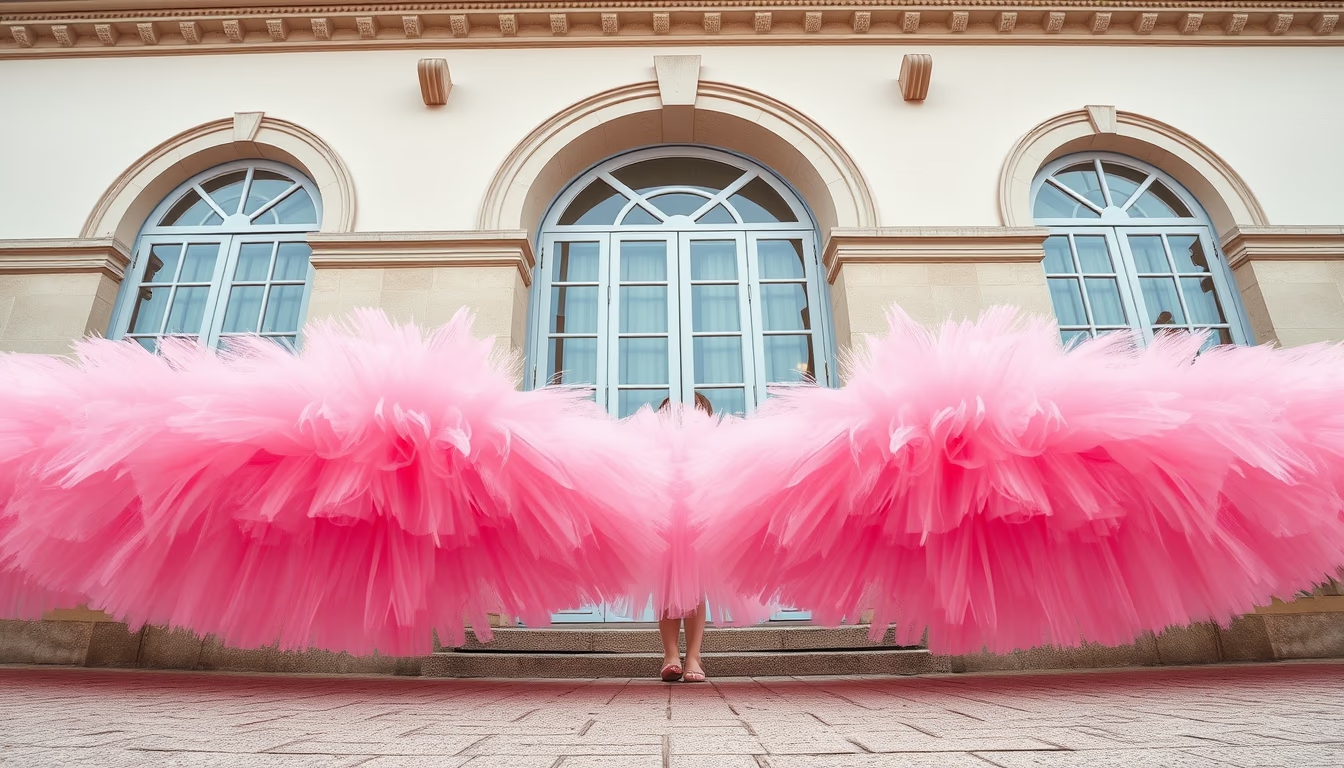
Pink pointe shoes are essential tools in classical ballet, blending tradition, technique, and craftsmanship to enable dancers to dance on the tips of their toes.
About this subject
Pink pointe shoes are an icon of classical ballet. Their origin dates back to the early 19th century, when Italian ballerina Marie Taglioni is said to have first danced on the tips of her toes in 1832, in the ballet La Sylphide. At that time, the shoes were padded only with cotton and sewn by hand. Over time, the technique evolved to include a plaster box (the rigid part encasing the toes) and a sole made of leather or reinforced cardboard, providing greater support and stability.
The traditional pink color has both practical and aesthetic reasons. Historically, pink dye resembled the skin tone of white European dancers, creating the illusion that bare feet were floating in the air. Today, many companies require pink shoes for uniformity, although variations exist for different skin tones, such as brown or caramel. The production of a single pointe shoe involves about 15 hours of manual labor, with over 100 steps. Each pair is custom-made for the dancer's foot, considering the arch, toe strength, and dance style.
Pointe shoes have a short lifespan, typically 10 to 20 hours of intense use. Professional ballerinas may go through dozens of pairs per season. Brands like Freed of London, Bloch, and Capezio dominate the market, with artisanal factories preserving century-old techniques. Dancing on pointe requires years of training and strengthens the feet, ankles, and calves. Injuries such as plantar fasciitis or stress fractures are common, but the passion for ballet overcomes the challenges.
Interestingly, not all pointe shoes are pink. In specific roles, such as in The Nutcracker, some variations match the costume colors. Despite innovations in synthetic materials, the traditional pointe shoe remains a symbol of discipline and art, immortalized on stage and in the popular imagination.
Frequently Asked Questions
Why are pointe shoes usually pink?
The traditional pink color dates back to the 19th century, when the shade resembled the skin of white ballerinas, giving the illusion of bare feet. Today, it's a matter of aesthetic tradition and uniformity in many companies.
How long do pointe shoes last?
On average, a pair lasts 10 to 20 hours of use in rehearsals and performances. Professional ballerinas may replace their shoes every two or three days of intense work.
How to choose the correct pointe shoe size?
You should measure the length and width of the foot, in addition to considering the arch and toe strength. It is best to try different brands and models with the guidance of a professional, as each foot has unique characteristics.
Direct URL
https://pub-c7d6a6ea828543ac903a74a341ccb2e1.r2.dev/imagens/ballet-shoes-pointe-pink-studio-editorial-portrait-fresh14.avifHow to credit
Include a visible link back to UtilizAí. Copy one of the snippets below:
<a href="https://xn--utiliza-eza.com/en/midia/imagens/ballet-shoes-pointe-pink-studio-editorial-portrait-fresh14">Ballet shoes pointe pink</a> by <a href="https://xn--utiliza-eza.com">UtilizAí</a>, licensed under <a href="https://creativecommons.org/licenses/by/4.0/">CC BY 4.0</a>.
[Ballet shoes pointe pink](https://xn--utiliza-eza.com/en/midia/imagens/ballet-shoes-pointe-pink-studio-editorial-portrait-fresh14) by [UtilizAí](https://xn--utiliza-eza.com), CC BY 4.0
License: CC-BY-4.0