Ballet shoes pointe pink
1344×768 · AVIF · CC BY 4.0
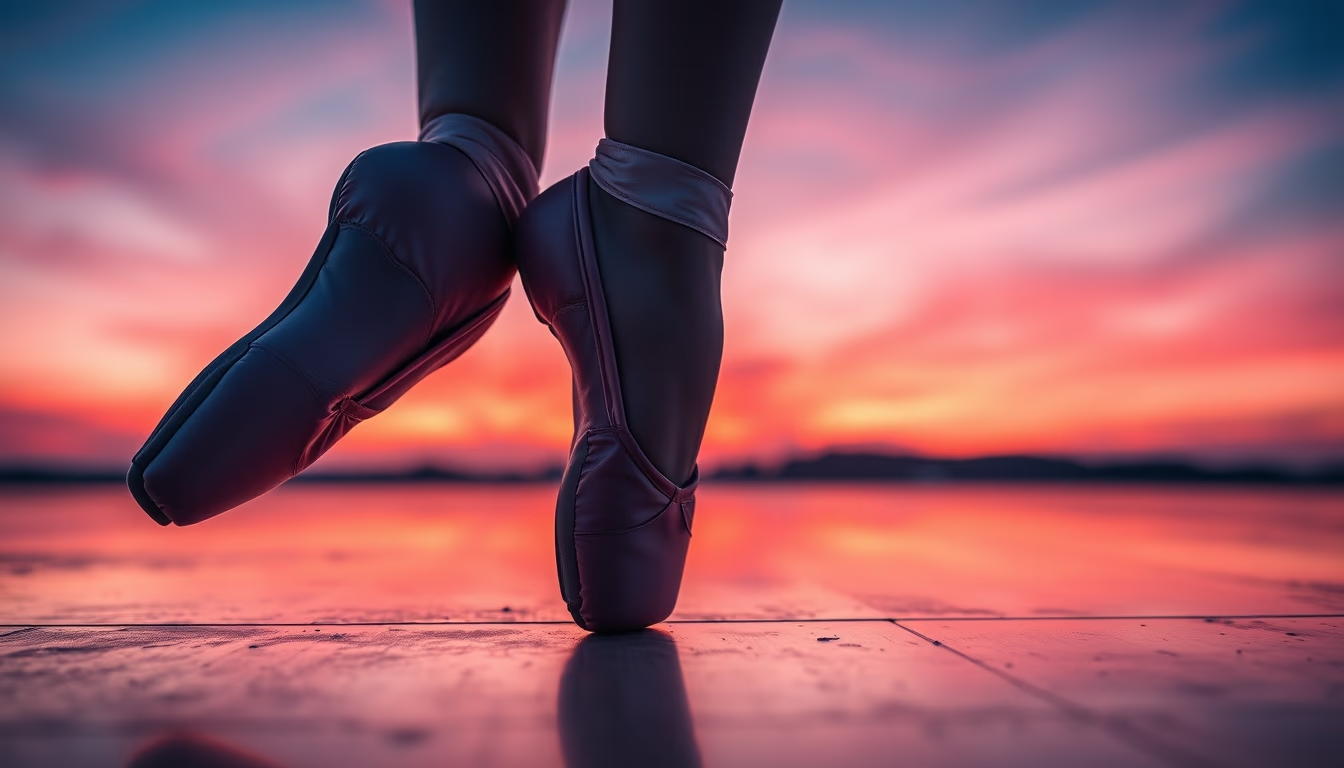
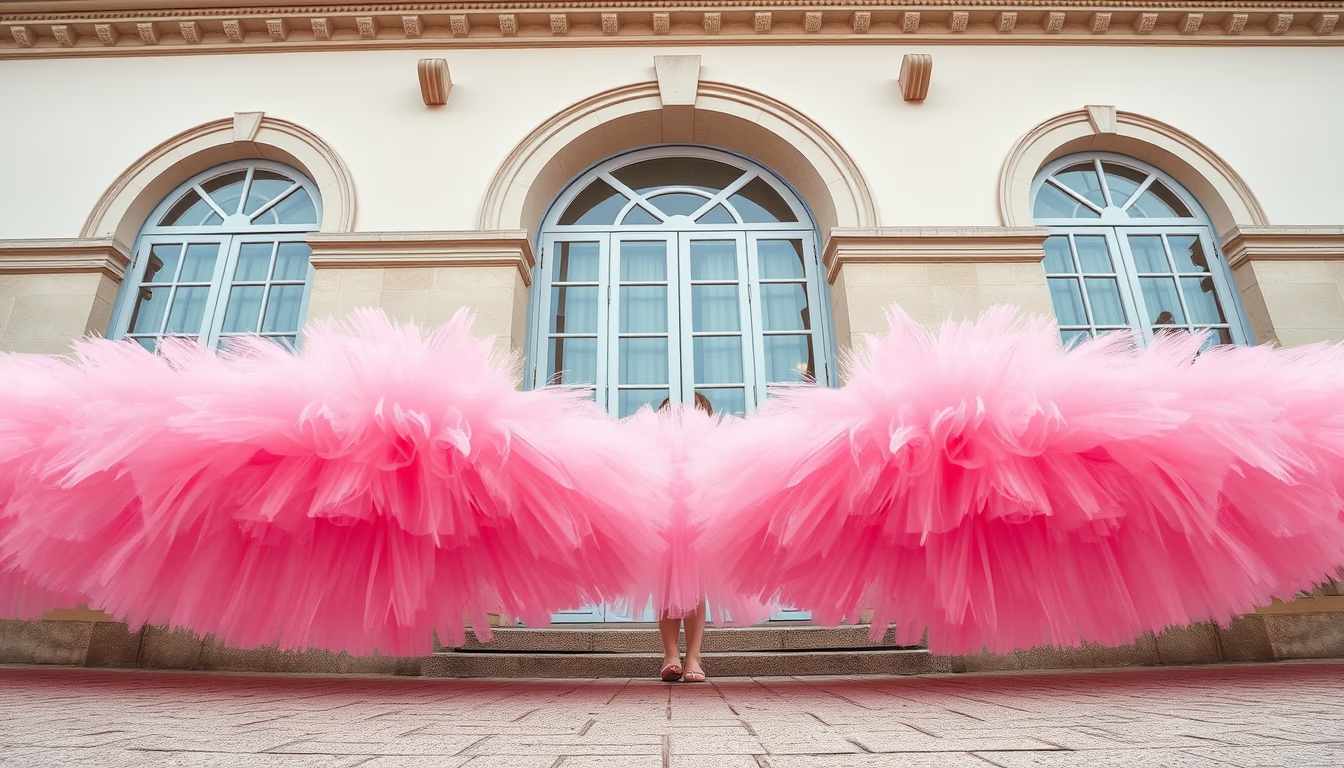
Pink pointe shoes are essential footwear in classical ballet, designed to support the dancer's weight on the tips of the toes during technical movements.
About this subject
Pointe shoes are one of the most iconic symbols of classical ballet, allowing dancers to dance on the tips of their toes with elegance and control. The origin of this footwear dates back to the 19th century, when Italian dancer Marie Taglioni is believed to have used reinforced shoes to perform the role of a sylph. Initially, pointe shoes were just leather slippers with a reinforced insole, but they evolved into modern models with a box (the rigid part encasing the toes) made of layers of fabric and glue, along with a steel or fiberglass shank that supports the arch of the foot.
Manufacturing a pointe shoe is a handmade process involving 20 to 30 steps. The shoes are typically made of pink satin, a traditional color associated with femininity in ballet, though other colors are used for different productions. Each pair is custom-fitted to the dancer's foot, considering width, length, and arch curvature. The break-in process is crucial: the dancer softens the box and shank manually or with body heat, adapting the shoe to their specific needs.
The durability of pointe shoes is surprisingly short. A professional ballerina may use 10 to 15 pairs per week, especially during intense rehearsals, as the box loses rigidity quickly from sweat and wear. The technique requires the dancer's weight to be distributed evenly over the flat tip of the shoe, not on the ends of the toes, as many assume. Renowned manufacturers such as Freed of London, Gaynor Minden, and Bloch are global references, each with designs that favor different foot types and dance styles.
Beyond the technical aspect, pointe shoes carry strong cultural symbolism. They represent discipline, sacrifice, and artistry, often seen as the culmination of years of training. The pink color is not merely aesthetic: historically, the light shade helped elongate the leg line on stage, and it is maintained by tradition today, though dancers with darker skin tones seek shades that match their natural skin to avoid artificial contrasts.
Frequently Asked Questions
Why are pointe shoes usually pink?
The traditional pink color dates back to the 19th century, when the light shade helped elongate the leg line on stage. Today, though still predominant, many dancers choose colors that match their skin tone to avoid an artificial contrast.
How long does a pair of pointe shoes last?
Durability varies, but a professional ballerina may use 10 to 15 pairs per week. On average, a pair lasts 1 to 3 hours of intense dancing, as the box and shank lose support from sweat and wear.
How are pointe shoes made?
Each pair is handmade in about 20 to 30 steps. The box is formed by layers of fabric and glue (or cardboard and glue in traditional models), and the shank is steel, fiberglass, or leather. The process includes molding, stitching, and hand finishing.
Direct URL
https://pub-c7d6a6ea828543ac903a74a341ccb2e1.r2.dev/imagens/ballet-shoes-pointe-pink-long-exposure-fresh7.avifHow to credit
Include a visible link back to UtilizAí. Copy one of the snippets below:
<a href="https://xn--utiliza-eza.com/en/midia/imagens/ballet-shoes-pointe-pink-long-exposure-fresh7">Ballet shoes pointe pink</a> by <a href="https://xn--utiliza-eza.com">UtilizAí</a>, licensed under <a href="https://creativecommons.org/licenses/by/4.0/">CC BY 4.0</a>.
[Ballet shoes pointe pink](https://xn--utiliza-eza.com/en/midia/imagens/ballet-shoes-pointe-pink-long-exposure-fresh7) by [UtilizAí](https://xn--utiliza-eza.com), CC BY 4.0
License: CC-BY-4.0