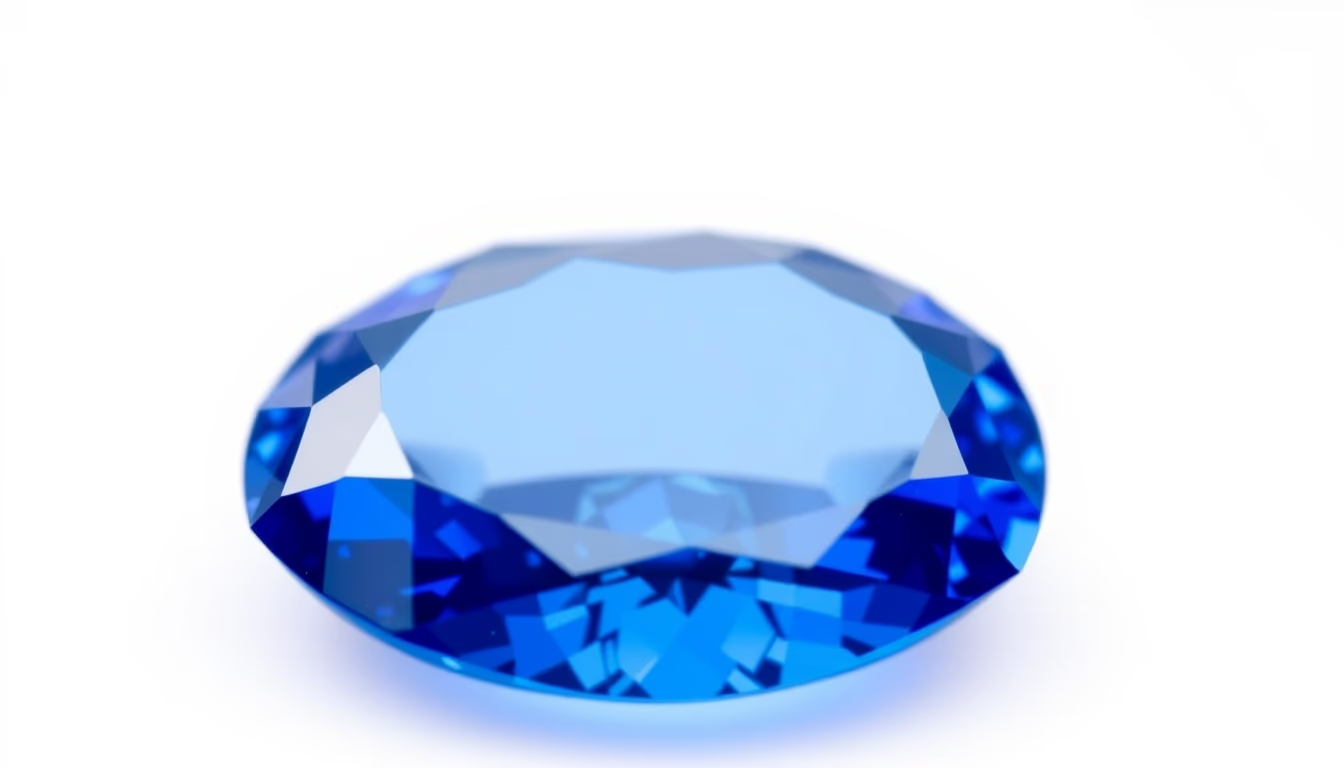
Azurite blue mineral
1344×768 · AVIF · CC BY 4.0
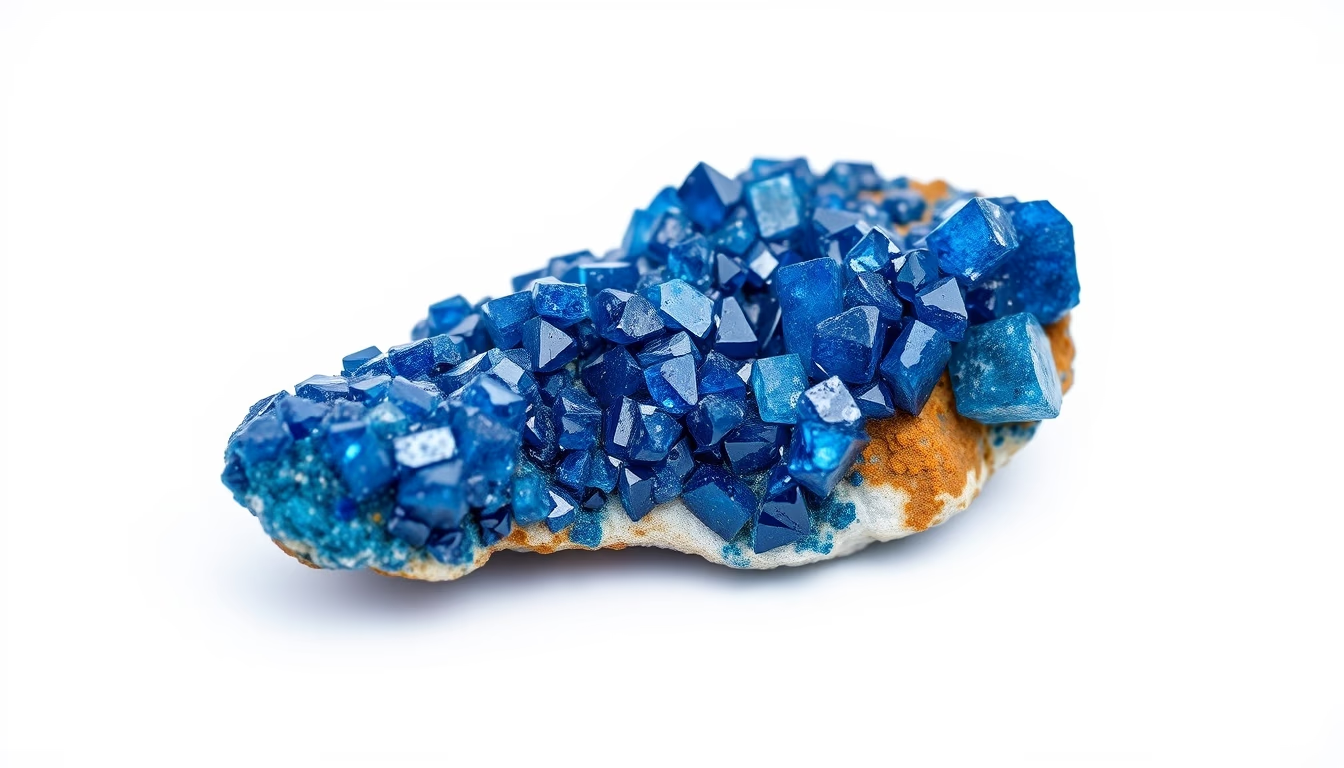
Azurite is a copper carbonate mineral with a deep blue color, used as a pigment since ancient times.
About this subject
Azurite is a secondary copper mineral composed of hydrated copper carbonate (Cu3(CO3)2(OH)2). Its intense blue color is due to the presence of copper in its crystal structure, which absorbs specific wavelengths of light. The mineral crystallizes in the monoclinic system, forming prismatic crystals or massive aggregates. Azurite occurs in the oxidized zones of copper deposits, often associated with malachite, its alteration product. Major sources include the Chessy region in France, Arizona in the United States, as well as Mexico, Chile, Namibia, and Morocco.
Historically, azurite was ground to produce a vibrant blue pigment used in murals and medieval illuminated manuscripts. During the Renaissance, it was known as “azurite” and employed in frescoes, although its chemical instability led to gradual transformation into green malachite over time. The name azurite derives from the Persian “lazhward,” meaning blue, and the mineral was often confused with lapis lazuli until the 19th century.
In terms of physical properties, azurite has a hardness between 3.5 and 4 on the Mohs scale, perfect cleavage, and conchoidal fracture. It exhibits weak pleochroism and fluoresces greenish under ultraviolet light. When exposed to air or moisture, it slowly degrades, acquiring a green patina of malachite. Thus, azurite specimens should be stored in dry, dark environments.
Today, azurite is prized by mineral collectors and cut into cabochons for jewelry, though its softness makes it more suitable for pendants and decorative items. It is also still used as a pigment in art restoration and as a secondary source of copper. Its characteristic blue color makes it one of the most recognizable and appreciated minerals in mineralogy.
Frequently Asked Questions
What is azurite?
Azurite is a hydrated copper carbonate mineral (Cu3(CO3)2(OH)2) known for its deep blue color. It forms in oxidized zones of copper deposits.
Where is azurite found?
Major deposits occur in France (Chessy), the United States (Arizona), Mexico, Chile, Namibia, and Morocco. It is often associated with malachite.
What is azurite used for?
Historically used as a blue pigment in paintings. Today it is valued by collectors and cut into cabochons for jewelry, though it is soft (hardness 3.5). It also serves as a secondary source of copper.
Direct URL
https://pub-c7d6a6ea828543ac903a74a341ccb2e1.r2.dev/imagens/azurite-blue-mineral-commercial-product-photography-p5.avifHow to credit
Include a visible link back to UtilizAí. Copy one of the snippets below:
<a href="https://xn--utiliza-eza.com/en/midia/imagens/azurite-blue-mineral-commercial-product-photography-p5">Azurite blue mineral</a> by <a href="https://xn--utiliza-eza.com">UtilizAí</a>, licensed under <a href="https://creativecommons.org/licenses/by/4.0/">CC BY 4.0</a>.
[Azurite blue mineral](https://xn--utiliza-eza.com/en/midia/imagens/azurite-blue-mineral-commercial-product-photography-p5) by [UtilizAí](https://xn--utiliza-eza.com), CC BY 4.0
License: CC-BY-4.0