Aztec calendar stone
1344×768 · AVIF · CC BY 4.0
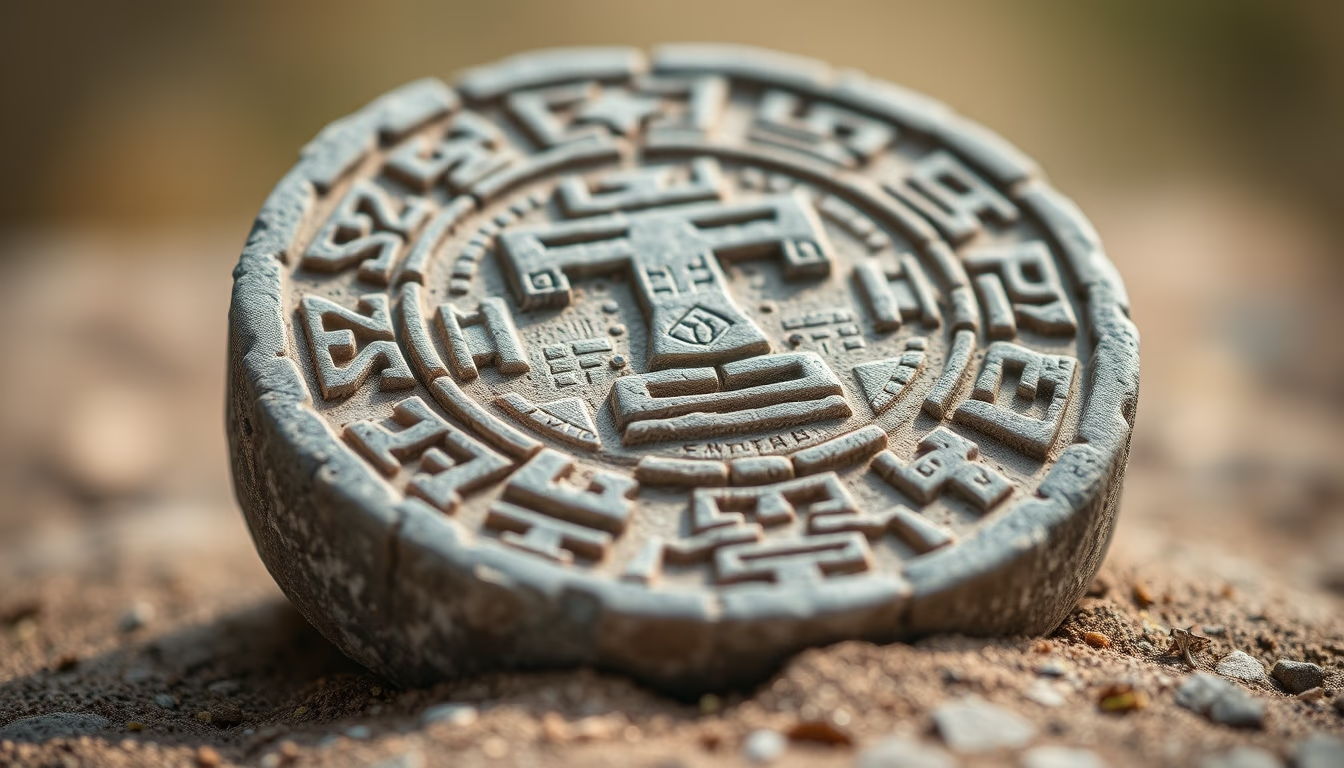
The Aztec Sun Stone, also known as the Aztec Calendar Stone, is a 3.6-meter-diameter basalt monolith representing Mexica cosmology.
About this subject
The Aztec Sun Stone, carved from basalt rock during the reign of Moctezuma II (1502-1520), was discovered in 1790 during construction work in Mexico City. Weighing 24 tons and measuring 3.6 meters in diameter, it was not a functional daily calendar but a ceremonial monument representing the Mexica view of time and the universe. The central disk depicts the face of Tonatiuh, the sun god, surrounded by glyphs recording the five cosmic eras, the current one being the fifth, under the sign of 4 Movement (Nahui Ollin).
Concentric rings contain symbols of the 20 days of the 260-day ritual calendar (tonalpohualli) and the 365 days of the solar year (xiuhpohualli). On the outer edge, two fire serpents (Xiuhcoatl) guide the sun across the sky. Although called the “Aztec calendar,” scholars note that the stone primarily served as an altar for sacrifices, where rituals were performed to ensure the continuity of the sun and life.
Today, the Sun Stone is displayed at the National Museum of Anthropology in Mexico City, being one of the most visited and studied artifacts of pre-Columbian Mexico. Its complex iconography continues to fascinate archaeologists and historians, who decipher its cosmological and political meanings. The piece demonstrates the high level of astronomical and artistic sophistication of the Mexica, who organized their time based on precise celestial observations.
Frequently Asked Questions
What was the actual purpose of the Aztec Sun Stone?
It was a ceremonial altar used in sacrifice rituals to ensure the sun's movement and the continuity of the universe, not a practical daily calendar.
Where is the Sun Stone displayed today?
It is on exhibit at the National Museum of Anthropology in Mexico City, in the Mexica Hall.
What does the central disk of the Sun Stone represent?
The face of Tonatiuh, the Mexica sun god, within the glyph 4 Movement (Nahui Ollin), which marks the fifth cosmic era.
Direct URL
https://pub-c7d6a6ea828543ac903a74a341ccb2e1.r2.dev/imagens/aztec-calendar-stone-tilt-shift-miniature-p6.avifHow to credit
Include a visible link back to UtilizAí. Copy one of the snippets below:
<a href="https://xn--utiliza-eza.com/en/midia/imagens/aztec-calendar-stone-tilt-shift-miniature-p6">Aztec calendar stone</a> by <a href="https://xn--utiliza-eza.com">UtilizAí</a>, licensed under <a href="https://creativecommons.org/licenses/by/4.0/">CC BY 4.0</a>.
[Aztec calendar stone](https://xn--utiliza-eza.com/en/midia/imagens/aztec-calendar-stone-tilt-shift-miniature-p6) by [UtilizAí](https://xn--utiliza-eza.com), CC BY 4.0
License: CC-BY-4.0