Aztec calendar stone
1344×768 · AVIF · CC BY 4.0
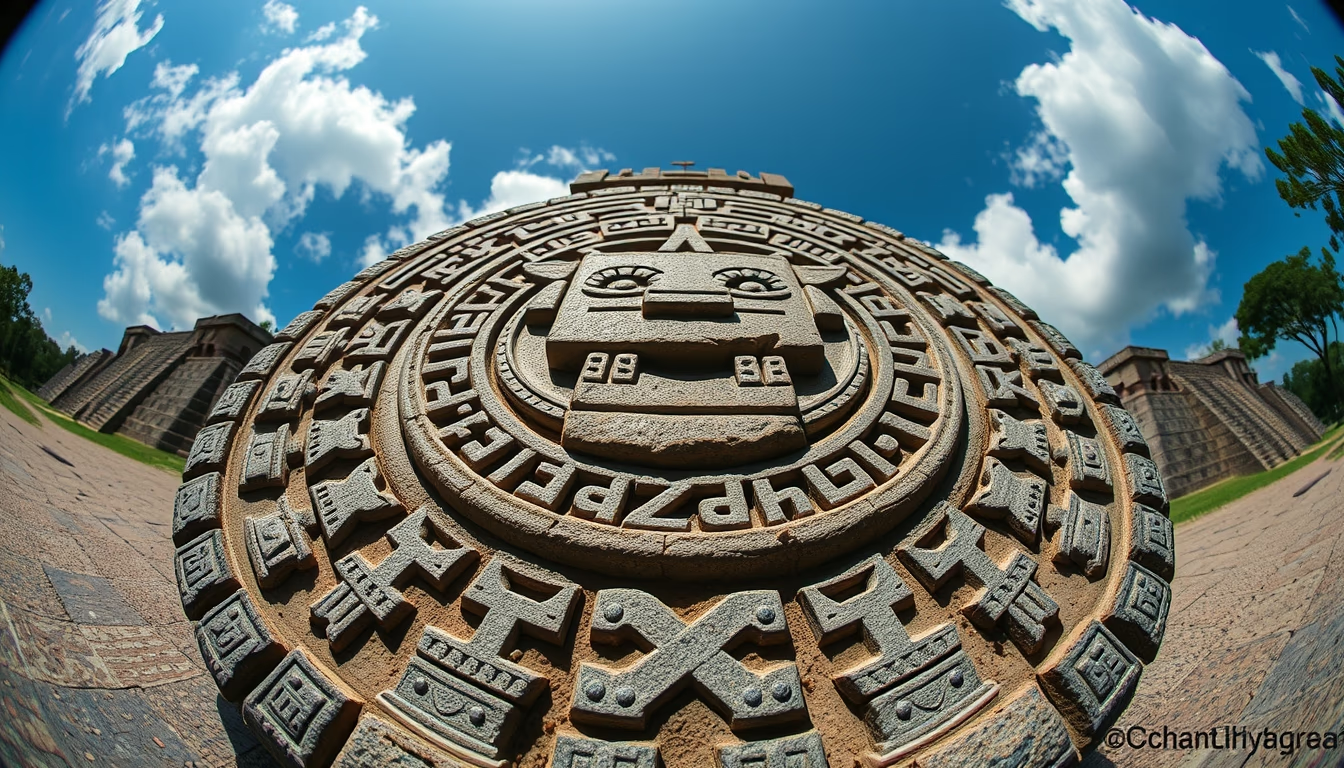
The Aztec Sun Stone, also known as the Aztec Calendar Stone, is a basalt monolith carved in the early 16th century representing Mexica cosmology.
About this subject
The Aztec Sun Stone, discovered in 1790 in Mexico City, is one of the most iconic artifacts of the Mexica civilization. Carved from volcanic basalt, it measures about 3.6 meters in diameter and weighs approximately 24 tons. It is believed to have been created between 1502 and 1521, during the reign of Moctezuma II. Contrary to its popular name, it is not a functional calendar but rather a ceremonial disc representing the five suns or cosmic eras of Aztec mythology.
At the center of the stone, the face of Tonatiuh, the sun god, is surrounded by symbols corresponding to the four previous suns: Jaguar, Wind, Rain, and Water. The outer circular band contains glyphs of the 20 days of the sacred calendar (tonalpohualli), while two fire serpents flank the piece, guiding the sun on its daily journey. The monolith was likely originally displayed horizontally, as a sacrificial altar, or vertically, adorning the Templo Mayor.
Today, the Sun Stone is housed at the National Museum of Anthropology in Mexico City, one of the most visited attractions. Its complex iconography has inspired studies by archaeologists like Eduardo Matos Moctezuma and continues to influence pop culture, from logos to tattoos. Despite its poor state of conservation due to centuries of outdoor exposure, the stone remains a powerful symbol of Mexico's pre-Hispanic heritage.
Frequently Asked Questions
Where was the Aztec Sun Stone found?
The Sun Stone was discovered on December 17, 1790, during leveling work in Mexico City's Plaza de la Constitución (Zócalo), near the Metropolitan Cathedral.
What is the meaning of the symbols at the center of the stone?
The center shows the face of Tonatiuh, the sun god, with an obsidian knife in his mouth. Surrounding it are four squares representing previous suns, each associated with a destroyed era: Jaguar, Wind, Rain, and Water.
Was the Sun Stone actually used as a calendar?
It was not a functional daily calendar. Although it contains glyphs of the 20 days of the tonalpohualli, its primary purpose was ceremonial, representing cosmology and the counting of eras.
Direct URL
https://pub-c7d6a6ea828543ac903a74a341ccb2e1.r2.dev/imagens/aztec-calendar-stone-fish-eye-wide-angle-p5.avifHow to credit
Include a visible link back to UtilizAí. Copy one of the snippets below:
<a href="https://xn--utiliza-eza.com/en/midia/imagens/aztec-calendar-stone-fish-eye-wide-angle-p5">Aztec calendar stone</a> by <a href="https://xn--utiliza-eza.com">UtilizAí</a>, licensed under <a href="https://creativecommons.org/licenses/by/4.0/">CC BY 4.0</a>.
[Aztec calendar stone](https://xn--utiliza-eza.com/en/midia/imagens/aztec-calendar-stone-fish-eye-wide-angle-p5) by [UtilizAí](https://xn--utiliza-eza.com), CC BY 4.0
License: CC-BY-4.0