Aztec calendar stone
1344×768 · AVIF · CC BY 4.0
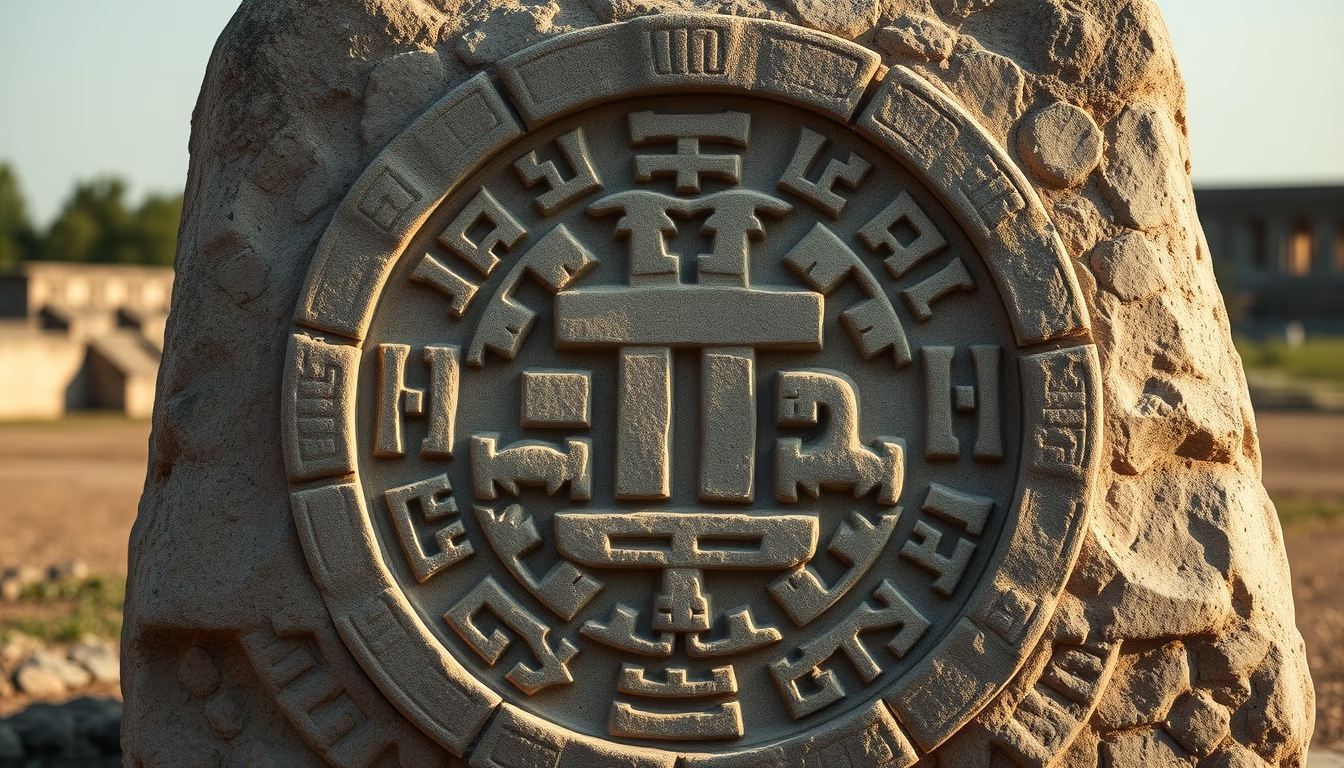
The Aztec Sun Stone, a 24-ton monolith carved in the 15th century, is one of the most iconic artifacts of the Mexica culture.
About this subject
The Aztec Sun Stone, often mistakenly called the Aztec Calendar, is a massive basalt monolith carved during the reign of Axayácatl (1469-1481), at the height of the Mexica Empire. Discovered on December 17, 1790, during construction in Mexico City, the stone measures 3.6 meters in diameter and weighs approximately 24 tons. Contrary to popular belief, it is not a functional calendar but a ceremonial monument representing Mexica cosmology, particularly the five suns or cosmic eras.
The central disk depicts the face of the sun god Tonatiuh, flanked by claws holding human hearts, symbolizing the necessity of sacrifice to sustain solar movement. Surrounding it, four squares represent previous eras: Jaguar (the previous sun), Wind (destroyed by hurricanes), Rain of Fire (volcanic rain), and Water (flood). The next ring contains the 20 day glyphs of the 260-day sacred calendar (tonalpohualli), while the outer ring shows fire serpents and star symbols.
Currently housed at the National Museum of Anthropology in Mexico City, it is one of the most visited artifacts. Archaeoastronomical studies indicate the stone was not used for timekeeping but as an altar for offerings and cosmic renewal rituals. Its complex iconography has inspired numerous interpretations, some erroneous, such as predictions of the world ending in 2012.
The bas-relief carving demonstrates the high technical skill of Mexica lapidaries, who worked without metal tools. The detailed surface required years of labor using stone and obsidian instruments. Despite centuries buried and exposed to the elements, the stone's preservation allows scholars to continue deciphering new meanings within its symbols.
Frequently Asked Questions
Where is the Aztec Sun Stone currently displayed?
The Sun Stone is exhibited at the National Museum of Anthropology in Mexico City, located in Chapultepec Park. It is a centerpiece of the Mexica Hall in the museum.
Does the Sun Stone actually predict the end of the world?
No. The belief that it predicted the end of the world in 2012 was a popular misconception. The monument represents cosmic cycles but contains no apocalyptic prophecies.
What are the exact weight and diameter of the Sun Stone?
The monolith measures approximately 3.6 meters in diameter and weighs about 24 tons. It was carved from a single block of volcanic basalt.
Direct URL
https://pub-c7d6a6ea828543ac903a74a341ccb2e1.r2.dev/imagens/aztec-calendar-stone-documentary-photography-p7.avifHow to credit
Include a visible link back to UtilizAí. Copy one of the snippets below:
<a href="https://xn--utiliza-eza.com/en/midia/imagens/aztec-calendar-stone-documentary-photography-p7">Aztec calendar stone</a> by <a href="https://xn--utiliza-eza.com">UtilizAí</a>, licensed under <a href="https://creativecommons.org/licenses/by/4.0/">CC BY 4.0</a>.
[Aztec calendar stone](https://xn--utiliza-eza.com/en/midia/imagens/aztec-calendar-stone-documentary-photography-p7) by [UtilizAí](https://xn--utiliza-eza.com), CC BY 4.0
License: CC-BY-4.0