Aztec calendar stone
1344×768 · AVIF · CC BY 4.0
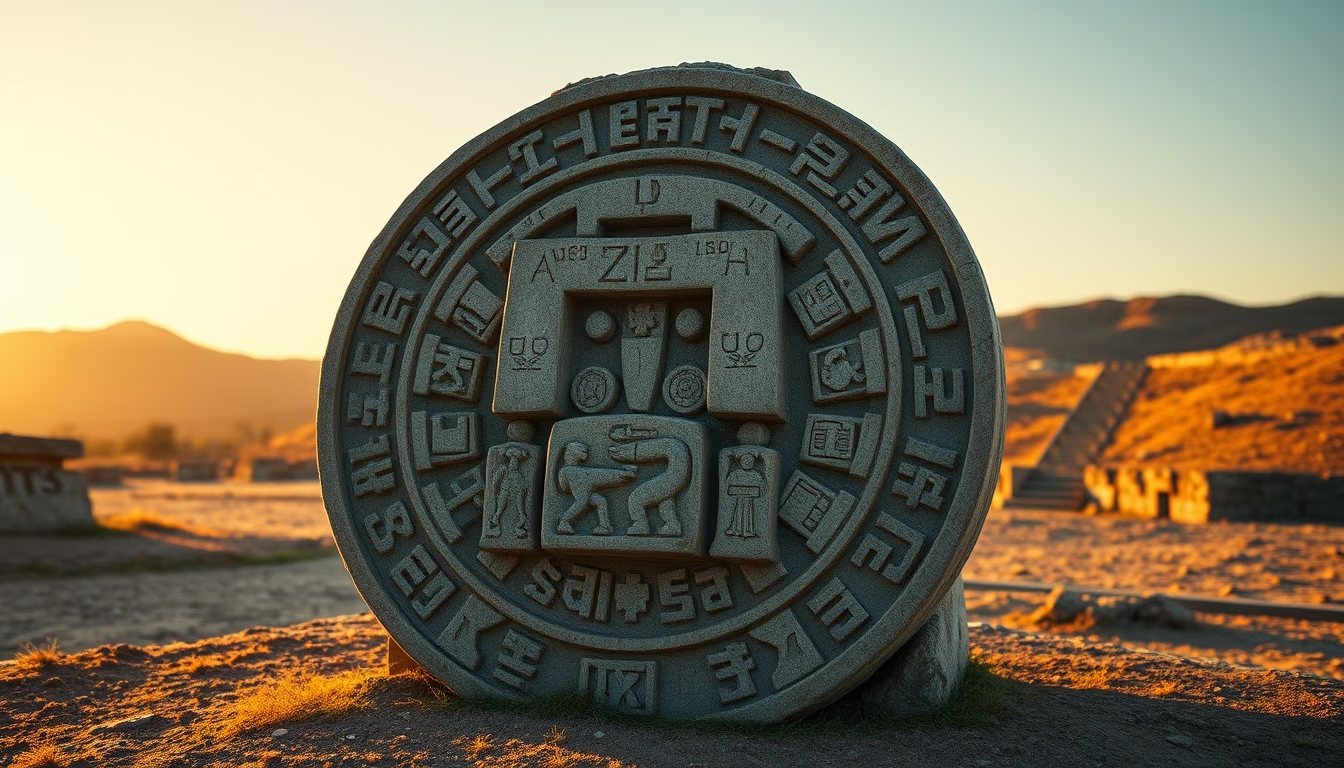
The Aztec Sun Stone, also known as the Aztec Calendar Stone, is one of the most iconic monuments of the Mexica civilization, carved from basalt and weighing over 24 tons.
About this subject
The Aztec Sun Stone, officially known as the Piedra del Sol, is a colossal monolithic basalt sculpture measuring 3.6 meters in diameter and 1.22 meters thick. It was discovered on December 17, 1790, during repair work in the Plaza Mayor of Mexico City, buried at shallow depth. Initially believed to serve as a calendar, later research indicates it represents Aztec cosmogony, with the sun god Tonatiuh at its center. The piece dates from the late Postclassic period, likely during the reign of Moctezuma II (1502-1520).
The carved disk contains intricate glyphs and symbols reflecting the Mexica worldview. At the center, Tonatiuh's face is surrounded by four squares representing the previous suns (cosmogonic eras) in Aztec mythology: the suns of jaguar, wind, fire rain, and water. Around this, a band displays the 20 day signs of the 260-day ritual calendar (Tonalpohualli), while an outer edge shows fire serpents that guide the sun across the sky. Each element holds astronomical and religious meaning, demonstrating the advanced mathematical and astronomical knowledge of the Aztecs.
Despite its common name, the Sun Stone was not used for timekeeping but likely served as a sacrificial altar or ceremonial monument. Its deep and detailed carving required sophisticated stone sculpting techniques using only obsidian and sandstone tools. The piece has suffered damage over centuries, including cracks and erosion, but has been restored and is now a centerpiece of the National Museum of Anthropology in Mexico City, drawing millions of visitors annually.
The Sun Stone is a powerful symbol of Mexican cultural heritage, featured on coins, flags, and logos. Its image is often associated with national identity and indigenous resistance. Moreover, it has inspired academic studies on calendar precision and mythological complexity of the Aztecs, solidifying its status as a global icon of Mesoamerican archaeology.
Frequently Asked Questions
What was the true function of the Aztec Sun Stone?
Despite being popularly called the Aztec calendar stone, the Sun Stone was not used for timekeeping. It likely served as a sacrificial altar or ceremonial monument representing cosmogony and the solar cycle.
Where is the Sun Stone currently located?
The Sun Stone is on display at the National Museum of Anthropology in Mexico City, in the Mexica Hall, as one of the museum's most important pieces.
What is the meaning of the symbols carved on the Sun Stone?
The symbols represent the five suns or cosmogonic eras of Aztec mythology, the 20 day signs of the ritual calendar (Tonalpohualli), and fire serpents. Each element holds astronomical, religious, and cosmological significance.
Direct URL
https://pub-c7d6a6ea828543ac903a74a341ccb2e1.r2.dev/imagens/aztec-calendar-stone-cinematic-wide-shot-p8.avifHow to credit
Include a visible link back to UtilizAí. Copy one of the snippets below:
<a href="https://xn--utiliza-eza.com/en/midia/imagens/aztec-calendar-stone-cinematic-wide-shot-p8">Aztec calendar stone</a> by <a href="https://xn--utiliza-eza.com">UtilizAí</a>, licensed under <a href="https://creativecommons.org/licenses/by/4.0/">CC BY 4.0</a>.
[Aztec calendar stone](https://xn--utiliza-eza.com/en/midia/imagens/aztec-calendar-stone-cinematic-wide-shot-p8) by [UtilizAí](https://xn--utiliza-eza.com), CC BY 4.0
License: CC-BY-4.0