Aurora over snow lake
1344×768 · AVIF · CC BY 4.0
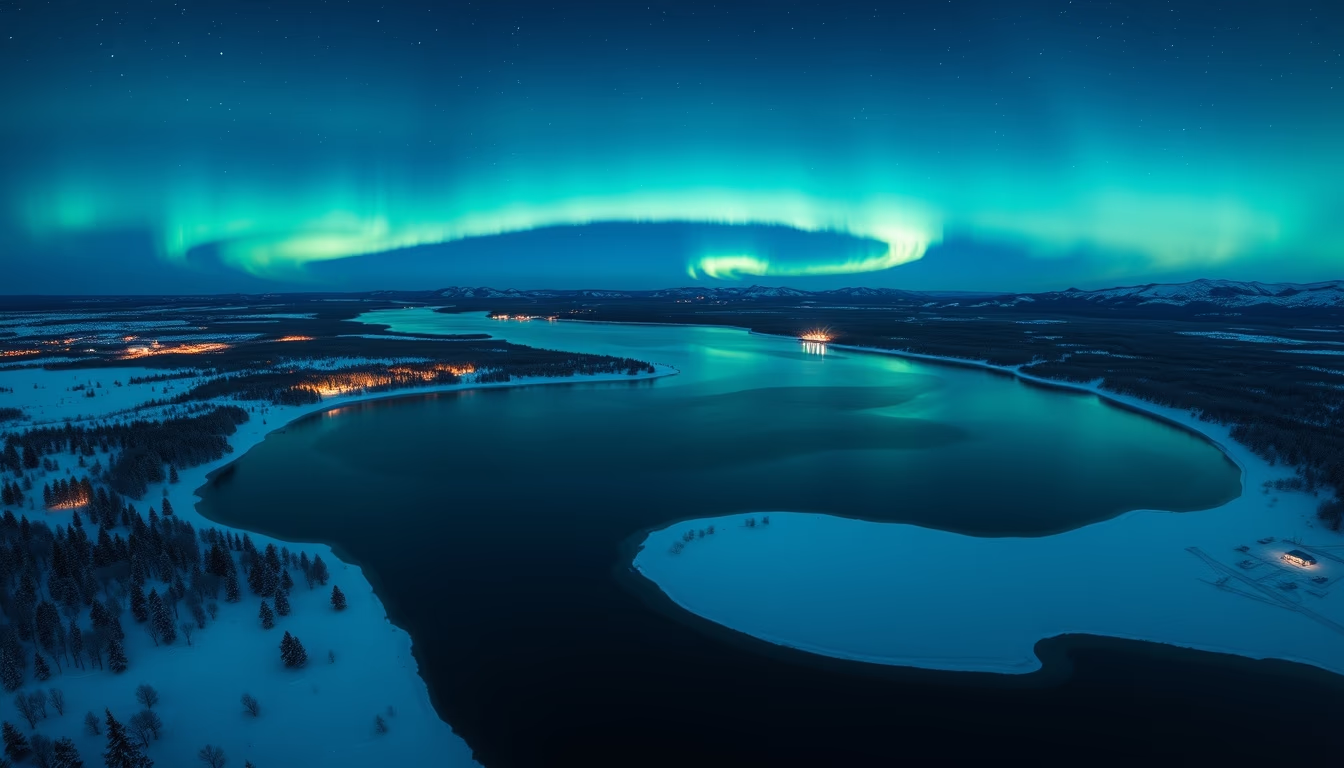
Auroras over frozen lakes create one of the most mesmerizing natural spectacles on Earth, combining dancing lights with isolated winter landscapes.
About this subject
The aurora borealis, also known as the northern lights, occurs when charged particles from the solar wind interact with Earth's magnetic field, exciting atoms in the upper atmosphere and producing colorful bands of green, red, and violet light. This phenomenon is most intense in high-latitude regions such as Scandinavia, Canada, Alaska, and northern Russia, where frozen lakes and vast snow-covered expanses act as natural mirrors, amplifying the brightness of the colors in the sky.
Frozen lakes, like those found in Abisko National Park in Sweden or Great Slave Lake in Canada, offer ideal viewing conditions: still, icy waters reflect the auroras, creating a symmetrical effect that doubles the visual intensity. The smooth surface of the ice, often free of ripples, serves as a perfect reflector, turning the horizon into a spectacle of duplicated light. These locations are especially sought after by photographers and amateur astronomers between September and March, when nights are longer and solar activity peaks during the Sun's 11-year cycle.
Beyond aesthetic beauty, auroras hold deep cultural significance for indigenous Arctic peoples. The Sámi of Scandinavia believe the lights are the souls of ancestors dancing, while the Inuit of Canada see them as spirits playing football with walrus skulls. Scientifically, studying auroras helps understand space weather and the effects of solar storms on Earth, such as disruptions to satellites and power grids. In 2024 and 2025, increased solar activity has made auroras visible at lower latitudes than usual, surprising observers in temperate regions.
For those wishing to witness the phenomenon, it is advisable to avoid light pollution, choose moonless nights, and dress appropriately for subzero temperatures. Apps like My Aurora Forecast & Alerts help predict the intensity of the lights based on solar wind data. Above all, seeing an aurora reflected in a frozen lake is a reminder of the grandeur and mystery of the universe, uniting science, culture, and natural beauty in a single moment.
Frequently Asked Questions
What is the best time of year to see auroras over frozen lakes?
The best time is between September and March, when nights are longer and darker. Peak months of solar activity, which follows an 11-year cycle, also increase the chances of intense sightings.
Why are frozen lakes good places to observe auroras?
The smooth ice surface reflects the sky lights, doubling the apparent brightness and creating a mirrored effect. Additionally, frozen lake locations often have low light pollution and open horizons.
Can auroras be seen worldwide?
Usually they are restricted to high latitudes (between 60° and 75° North), but during intense solar storms, such as those in 2024-2025, they can be visible in more southern regions, like the northern US and central Europe.
Direct URL
https://pub-c7d6a6ea828543ac903a74a341ccb2e1.r2.dev/imagens/aurora-over-snow-lake-aerial-drone-shot-p6.avifHow to credit
Include a visible link back to UtilizAí. Copy one of the snippets below:
<a href="https://xn--utiliza-eza.com/en/midia/imagens/aurora-over-snow-lake-aerial-drone-shot-p6">Aurora over snow lake</a> by <a href="https://xn--utiliza-eza.com">UtilizAí</a>, licensed under <a href="https://creativecommons.org/licenses/by/4.0/">CC BY 4.0</a>.
[Aurora over snow lake](https://xn--utiliza-eza.com/en/midia/imagens/aurora-over-snow-lake-aerial-drone-shot-p6) by [UtilizAí](https://xn--utiliza-eza.com), CC BY 4.0
License: CC-BY-4.0