Aurora borealis green sky
1344×768 · AVIF · CC BY 4.0
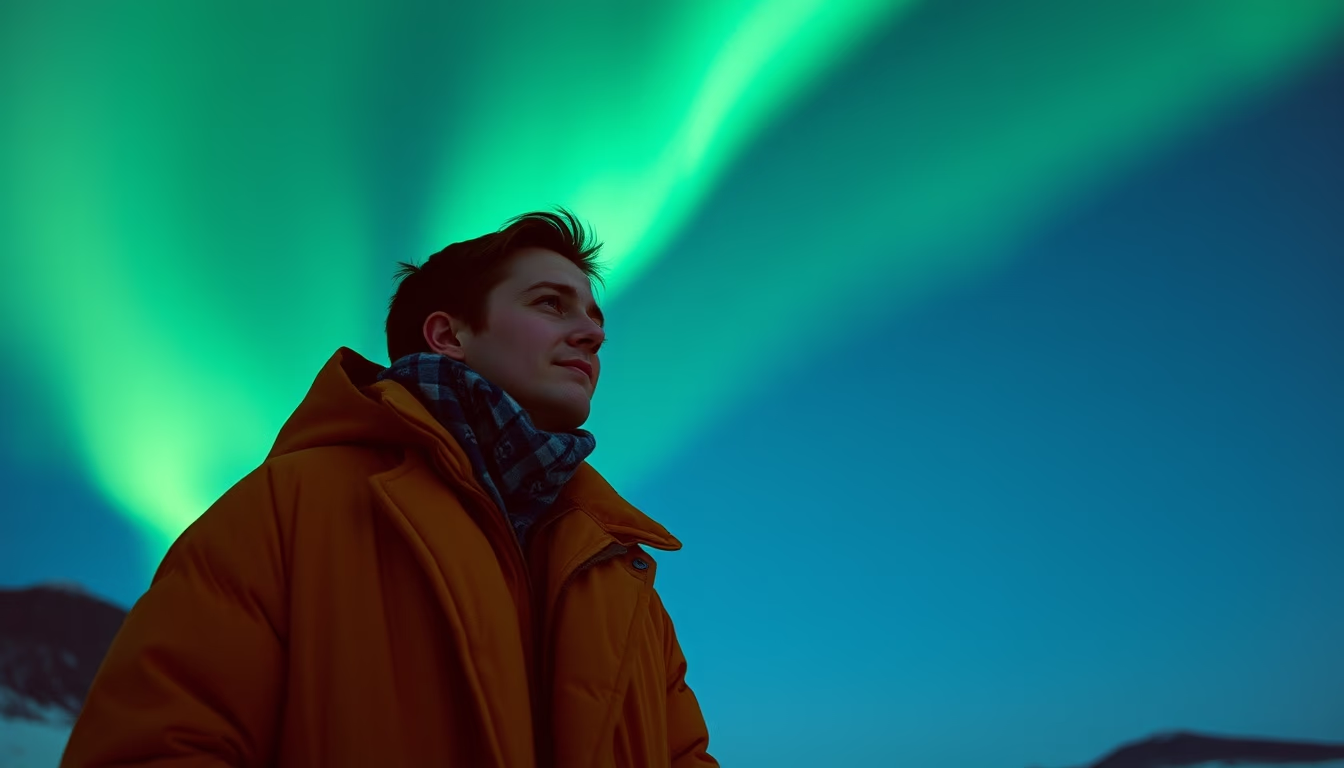
The aurora borealis is a natural phenomenon that occurs in polar regions, displaying green curtains of light in the night sky.
About this subject
The aurora borealis, also known as the northern lights, is a luminous spectacle that occurs primarily at high latitudes in the northern hemisphere, such as Norway, Sweden, Finland, Iceland, Canada, and Alaska. The phenomenon is caused by the interaction of charged particles from the solar wind with Earth's magnetosphere. These particles are channeled by the magnetic poles and collide with atoms and molecules in the atmosphere, exciting them and causing them to emit light. The most common color, green, results from oxygen excitation at altitudes of about 100 to 200 kilometers. At higher altitudes, oxygen can emit red light, and nitrogen produces blue or purple hues.
The intensity and visibility of the aurora vary with solar activity, measured by the approximately 11-year solar cycle. During solar maximum, solar flares are more frequent, increasing sighting chances. Locations like Tromsø in Norway and Yellowknife in Canada are famous for high observation probability. Traditionally, many indigenous cultures, such as the Sami in Scandinavia and the Inuit in the Arctic, viewed the aurora with reverence, associating it with spirits or omens. The Latin name "aurora borealis" was coined by Galileo in 1619, combining Aurora, the Roman goddess of dawn, with Boreas, the Greek god of the north wind.
To photograph the aurora, cameras with manual long-exposure settings are recommended, but the human eye can also appreciate the fluid movement of green curtains. The film grain aesthetic evokes a retro and authentic look, reminiscent of analog photographs from the 20th century. The contrast between vibrant green and dark sky creates a dramatic composition, ideal for representing the grandeur of this natural phenomenon.
Frequently Asked Questions
What is the best time to see the aurora borealis?
The best time is during winter in the northern hemisphere, from September to March, when nights are longer and darker. Increased solar activity also improves chances.
Why is the aurora borealis green?
The green color comes from excited atomic oxygen at altitudes between 100 and 200 km. It is the most common color due to the abundance of oxygen in the upper atmosphere.
Can the aurora borealis be seen on other planets?
Yes, auroras have been observed on Jupiter, Saturn, Uranus, and Neptune, where magnetic fields and atmospheres interact with solar particles or volcanic moon plumes.
Direct URL
https://pub-c7d6a6ea828543ac903a74a341ccb2e1.r2.dev/imagens/aurora-borealis-green-sky-film-grain-authentic-p4.avifHow to credit
Include a visible link back to UtilizAí. Copy one of the snippets below:
<a href="https://xn--utiliza-eza.com/en/midia/imagens/aurora-borealis-green-sky-film-grain-authentic-p4">Aurora borealis green sky</a> by <a href="https://xn--utiliza-eza.com">UtilizAí</a>, licensed under <a href="https://creativecommons.org/licenses/by/4.0/">CC BY 4.0</a>.
[Aurora borealis green sky](https://xn--utiliza-eza.com/en/midia/imagens/aurora-borealis-green-sky-film-grain-authentic-p4) by [UtilizAí](https://xn--utiliza-eza.com), CC BY 4.0
License: CC-BY-4.0