Atomic clock laboratory
1344×768 · AVIF · CC BY 4.0
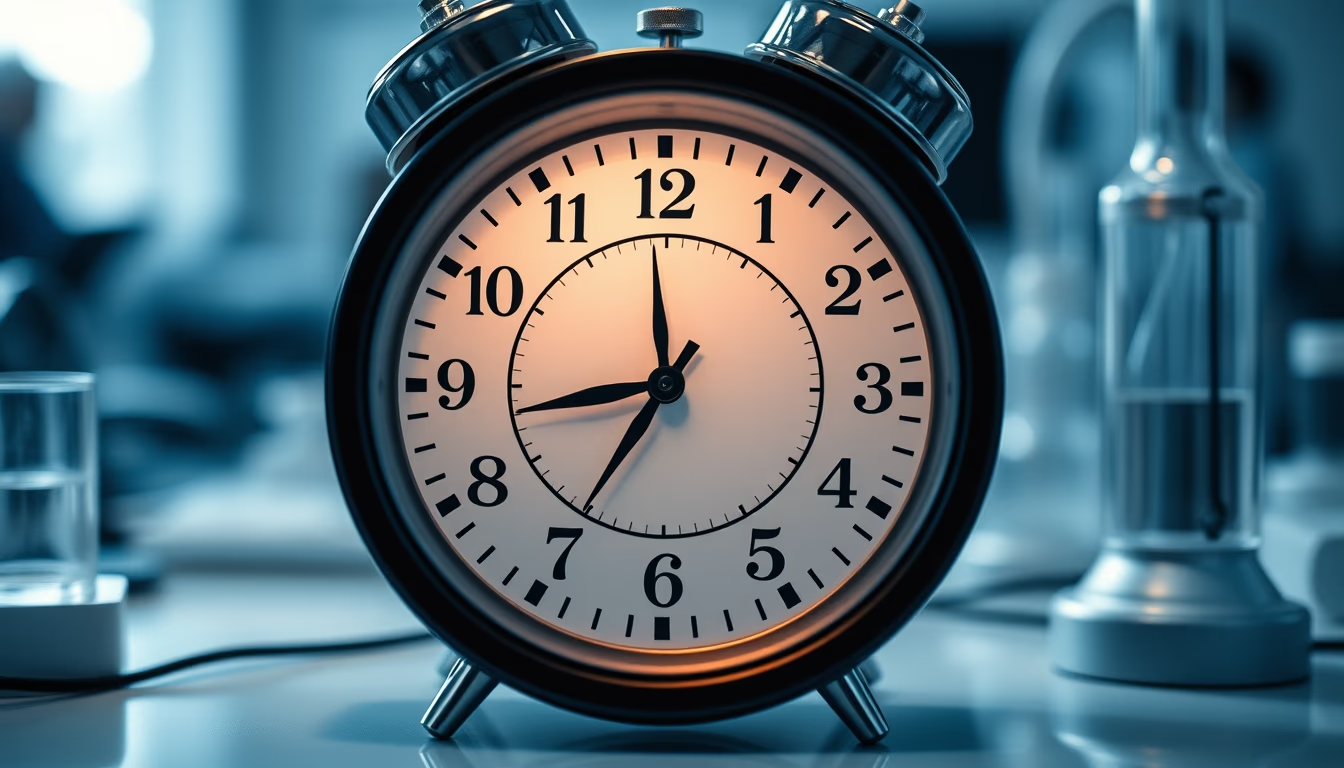
Atomic clock laboratories are the foundation of precise timekeeping, essential for GPS, telecommunications, and fundamental physics.
About this subject
Atomic clocks are devices that measure time based on the frequency of transitions between energy levels of atoms, such as cesium-133 or rubidium. The second, the base unit of the International System, has been defined since 1967 as the duration of 9,192,631,770 oscillations of the radiation emitted in the transition between two hyperfine levels of the cesium atom. This precision is on the order of 1 second in 30 million years, enabling global synchronization.
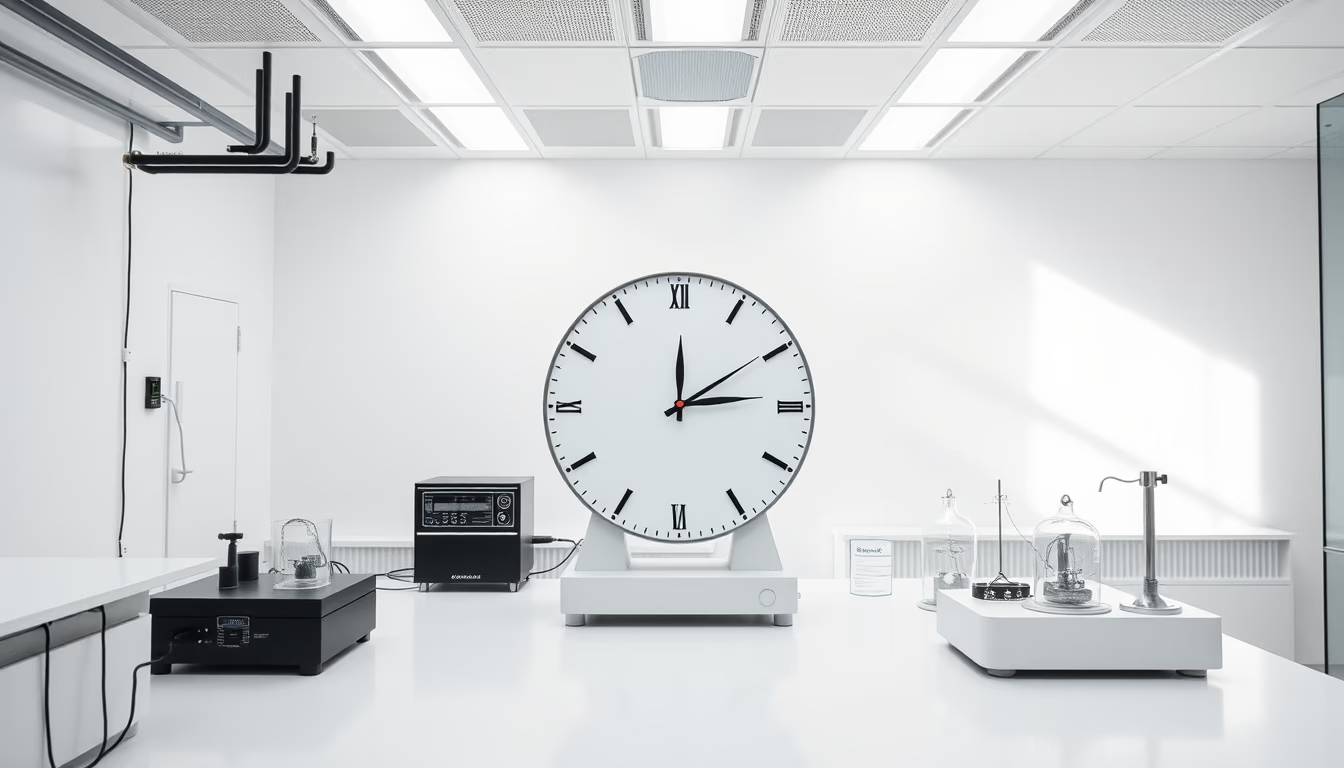
These laboratories house complex equipment: vacuum chambers, lasers, cooling systems, and electronic controls. The National Institute of Standards and Technology (NIST) in the USA operates the NIST-F2, one of the primary standards. In Brazil, the Observatório Nacional in Rio de Janeiro maintains a cesium atomic standard, contributing to Coordinated Universal Time (UTC). Precise time dissemination occurs via radio signals, such as the WWV system in the USA.
Applications go beyond timekeeping: GPS requires nanosecond synchronization among satellites; 5G networks depend on precise timing for base station coordination; physics experiments, like gravitational wave detection, use atomic clocks to measure infinitesimal time differences. Optical atomic clocks, based on strontium or ytterbium ions, already achieve precision of 1 second in 15 billion years, opening possibilities to redefine the second and test fundamental theories.
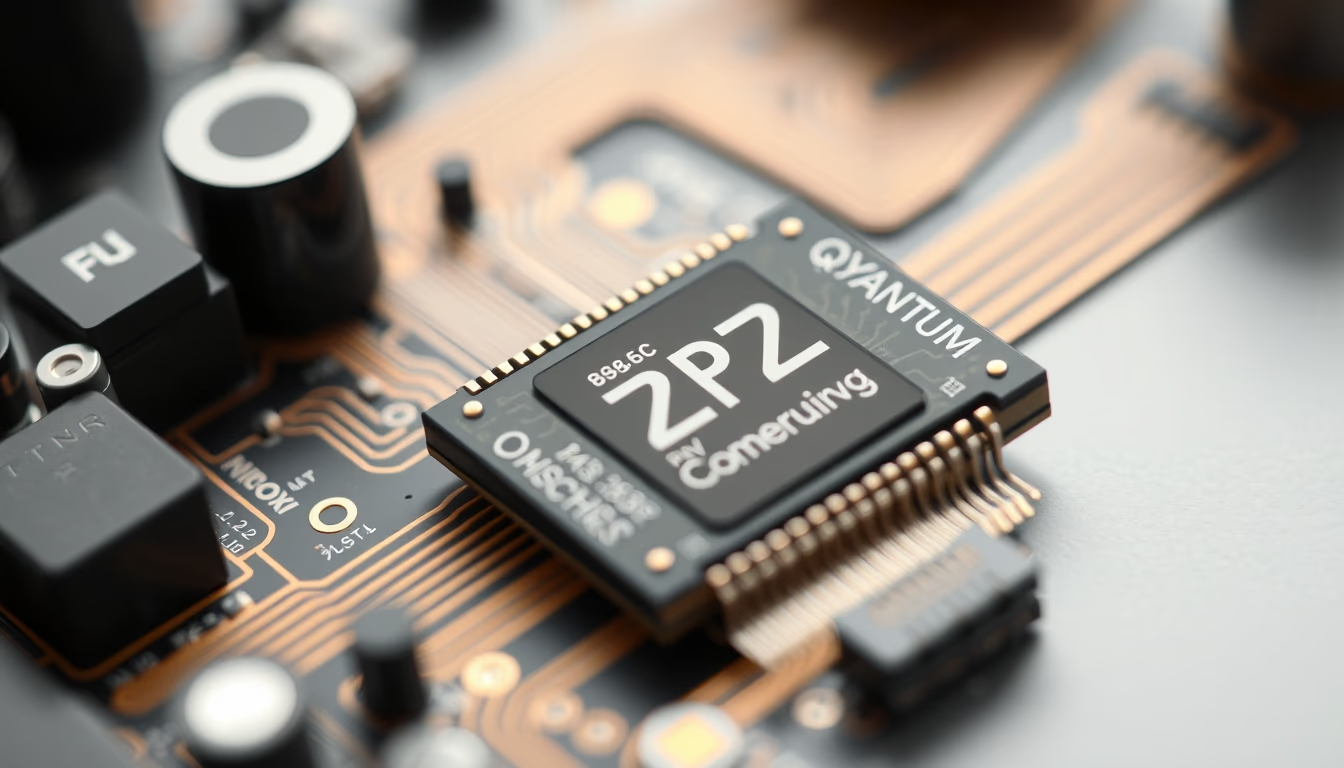
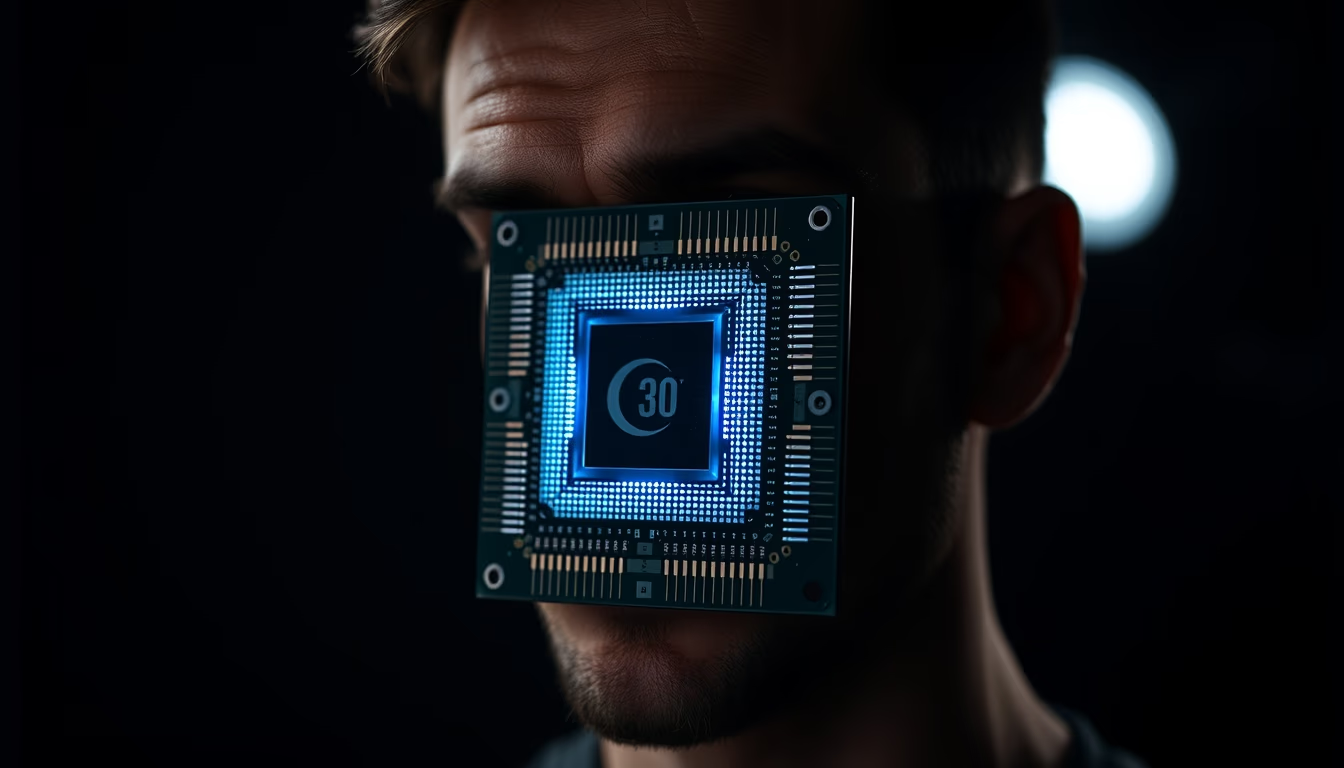
Fun fact: the first demonstration of an atomic clock was in 1949 by Harold Lyons at NIST, using ammonia. Since then, evolution has driven semiconductor technology and miniaturization, allowing atomic chips to fit into portable devices. Laboratories like the BIPM (International Bureau of Weights and Measures) in France coordinate the comparison of standards across countries, ensuring all time zones are aligned.
Frequently Asked Questions
How does an atomic clock work?
It uses the transition between energy levels of atoms (like cesium or rubidium) as a reference. A microwave oscillator is tuned to exactly the transition frequency, creating an extremely stable time standard.
Why are atomic clocks important for GPS?
GPS calculates distances by measuring signal travel time from satellites. A 1 microsecond error leads to 300 meters of inaccuracy. Atomic clocks ensure nanosecond precision, essential for reliable navigation.
What is the difference between a cesium atomic clock and an optical one?
Cesium clocks operate in the microwave range (9.2 GHz). Optical clocks use visible light frequencies (~10^14 Hz), enabling higher precision. They are about 100 times more accurate but are still under development.
Direct URL
https://pub-c7d6a6ea828543ac903a74a341ccb2e1.r2.dev/imagens/atomic-clock-laboratory-tilt-shift-miniature-p6.avifHow to credit
Include a visible link back to UtilizAí. Copy one of the snippets below:
<a href="https://xn--utiliza-eza.com/en/midia/imagens/atomic-clock-laboratory-tilt-shift-miniature-p6">Atomic clock laboratory</a> by <a href="https://xn--utiliza-eza.com">UtilizAí</a>, licensed under <a href="https://creativecommons.org/licenses/by/4.0/">CC BY 4.0</a>.
[Atomic clock laboratory](https://xn--utiliza-eza.com/en/midia/imagens/atomic-clock-laboratory-tilt-shift-miniature-p6) by [UtilizAí](https://xn--utiliza-eza.com), CC BY 4.0
License: CC-BY-4.0