Atomic clock laboratory
1344×768 · AVIF · CC BY 4.0
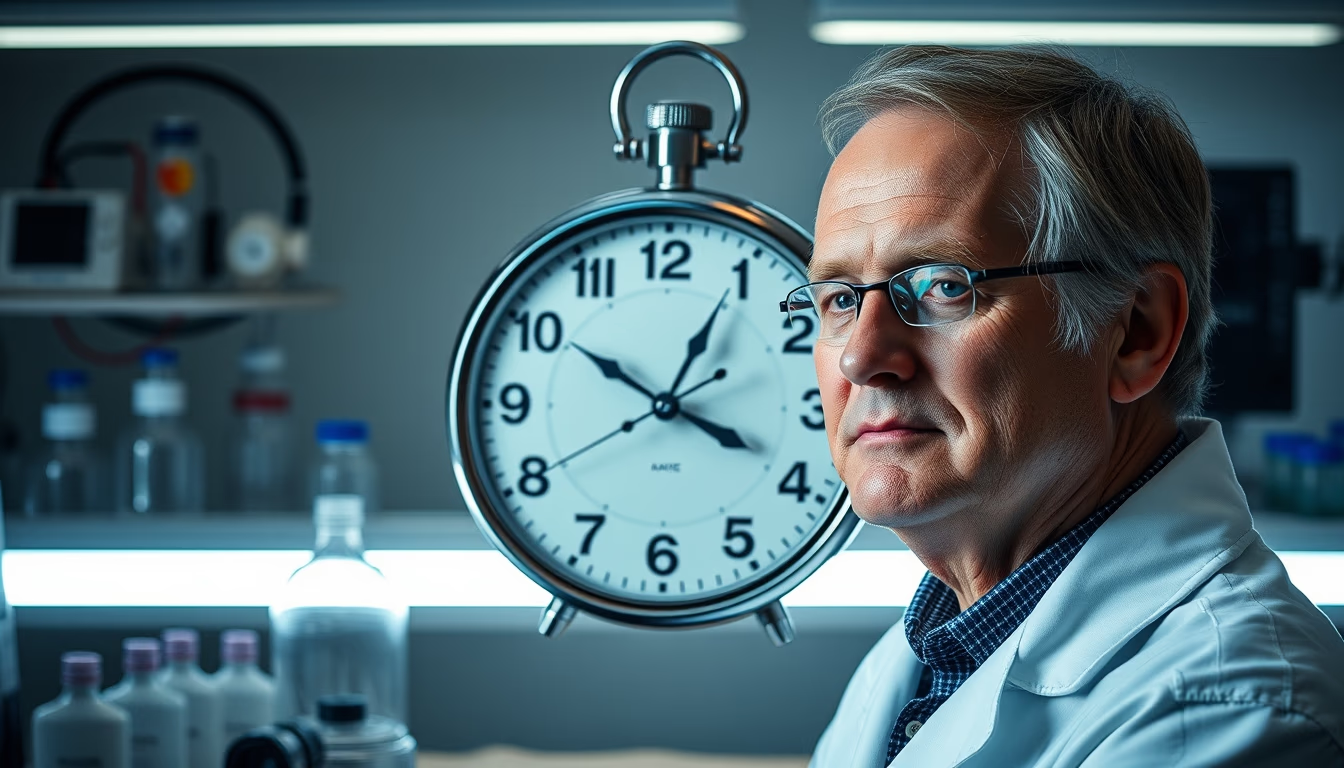
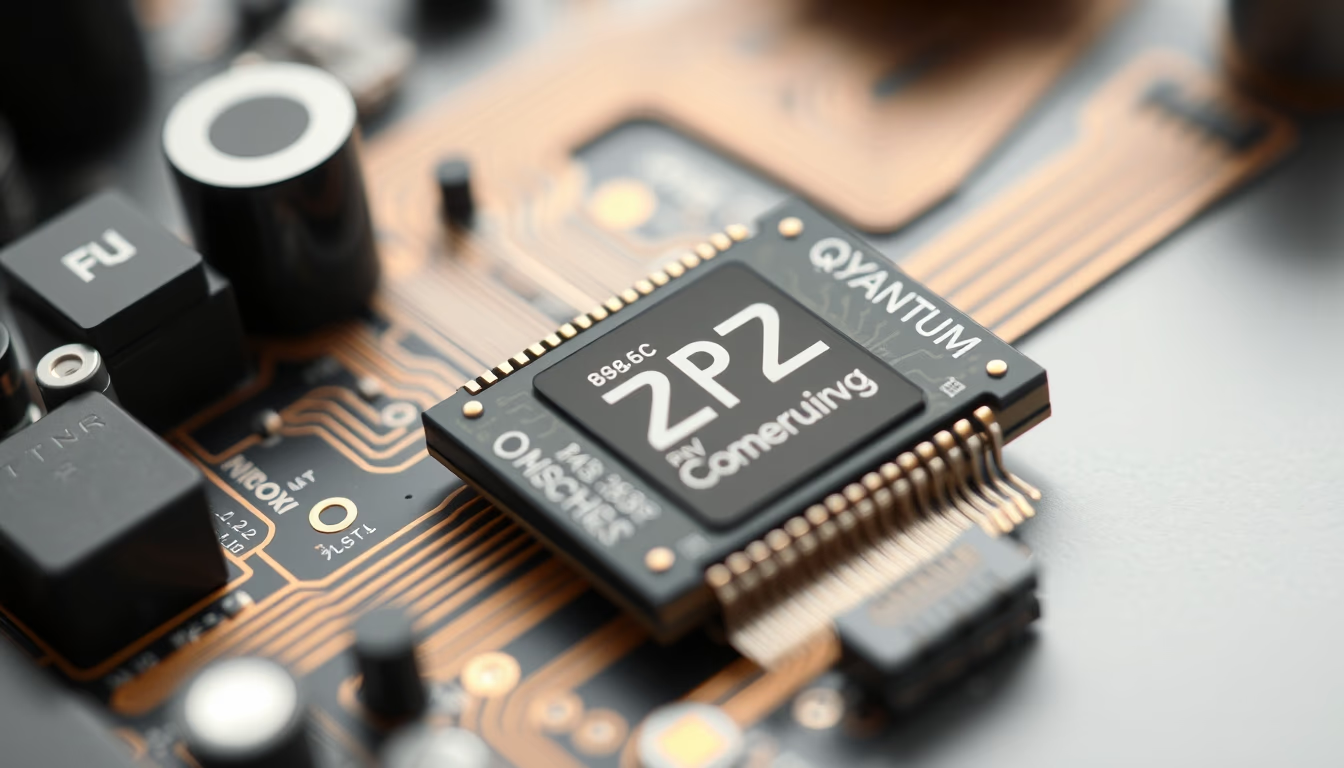
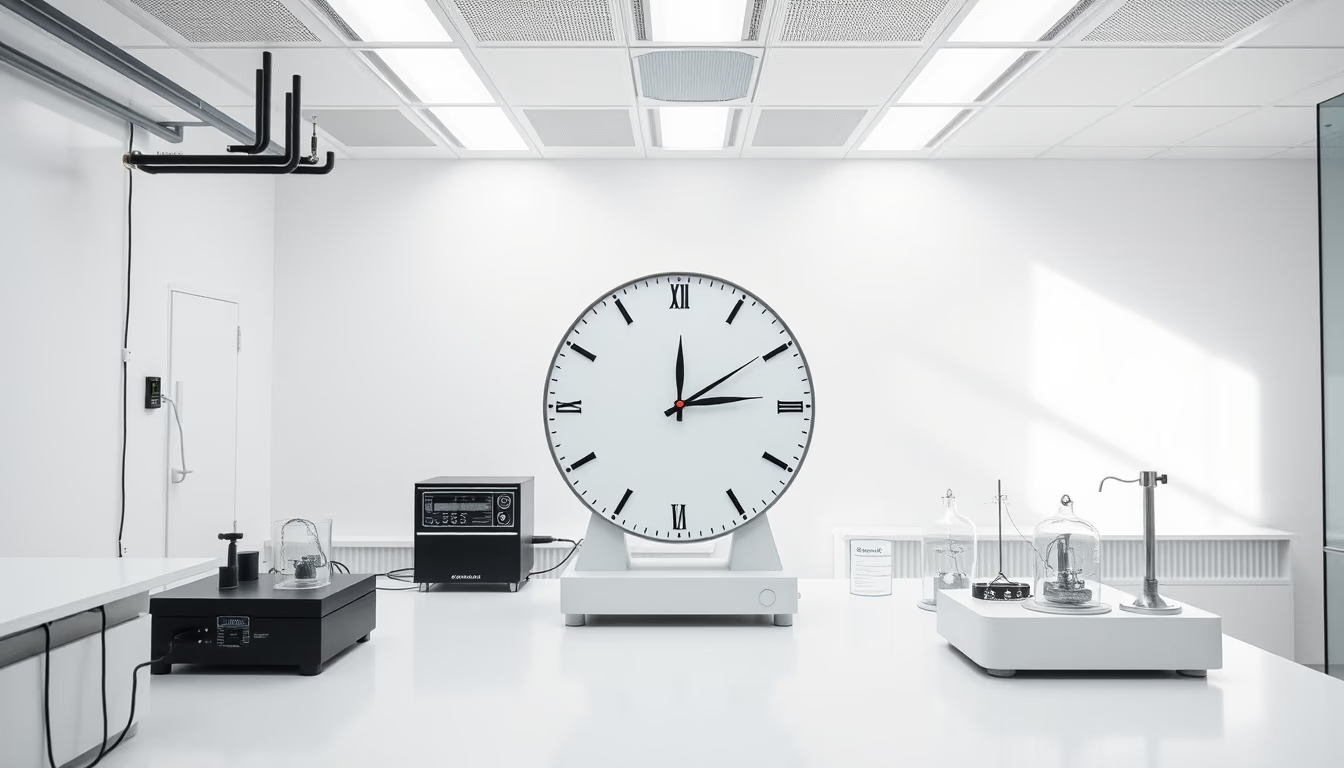
Atomic clock laboratories are high-precision centers that define the international time standard, based on quantum transitions of atoms.
About this subject
An atomic clock laboratory houses devices that measure time with extreme precision, using the frequency of radiation emitted by atoms, typically cesium. The second, the base unit of the International System, is defined by 9,192,631,770 oscillations of the transition between two hyperfine levels of cesium-133. Institutions like the National Institute of Standards and Technology (NIST) in the United States, the Physikalisch-Technische Bundesanstalt (PTB) in Germany, and the National Observatory in Brazil maintain these standards. The uncertainty of these clocks is on the order of 10^-15, meaning an error of only one second every 300 million years.
The importance of these laboratories extends beyond metrology. They are the backbone of systems requiring global synchronization, such as GPS, telecommunications networks, financial data transmission, and fundamental physics experiments. International Atomic Time (TAI) and Coordinated Universal Time (UTC) are derived from a weighted average of hundreds of atomic clocks worldwide. Without this precision, technologies like 5G and the Internet of Things would be unfeasible.
Interestingly, the first atomic clock was built in 1949 at NIST, using ammonia. Since then, advances have led to optical clocks, which operate at visible light frequencies and are even more precise. For example, strontium clocks can achieve precision of 10^-18. Brazil, through the National Observatory, contributes to generating the Brazilian Legal Time and participates in international collaborations to improve time standards. Atomic clocks are also used in relativity tests, such as detecting the time dilation predicted by Einstein.
Frequently Asked Questions
How does an atomic clock work?
It measures the frequency of radiation emitted when an atom, usually cesium, transitions between two energy levels. This frequency is extremely stable and defines the second.
Where are the main atomic clock laboratories located?
The most famous are NIST (USA), PTB (Germany), BIPM (France), and the National Observatory (Brazil), among others.
What are the practical applications of atomic clocks in daily life?
They are essential for GPS, telecommunications networks, power grids, and synchronization of financial transactions.
Direct URL
https://pub-c7d6a6ea828543ac903a74a341ccb2e1.r2.dev/imagens/atomic-clock-laboratory-studio-editorial-portrait-p9.avifHow to credit
Include a visible link back to UtilizAí. Copy one of the snippets below:
<a href="https://xn--utiliza-eza.com/en/midia/imagens/atomic-clock-laboratory-studio-editorial-portrait-p9">Atomic clock laboratory</a> by <a href="https://xn--utiliza-eza.com">UtilizAí</a>, licensed under <a href="https://creativecommons.org/licenses/by/4.0/">CC BY 4.0</a>.
[Atomic clock laboratory](https://xn--utiliza-eza.com/en/midia/imagens/atomic-clock-laboratory-studio-editorial-portrait-p9) by [UtilizAí](https://xn--utiliza-eza.com), CC BY 4.0
License: CC-BY-4.0