Atomic clock laboratory
1344×768 · AVIF · CC BY 4.0
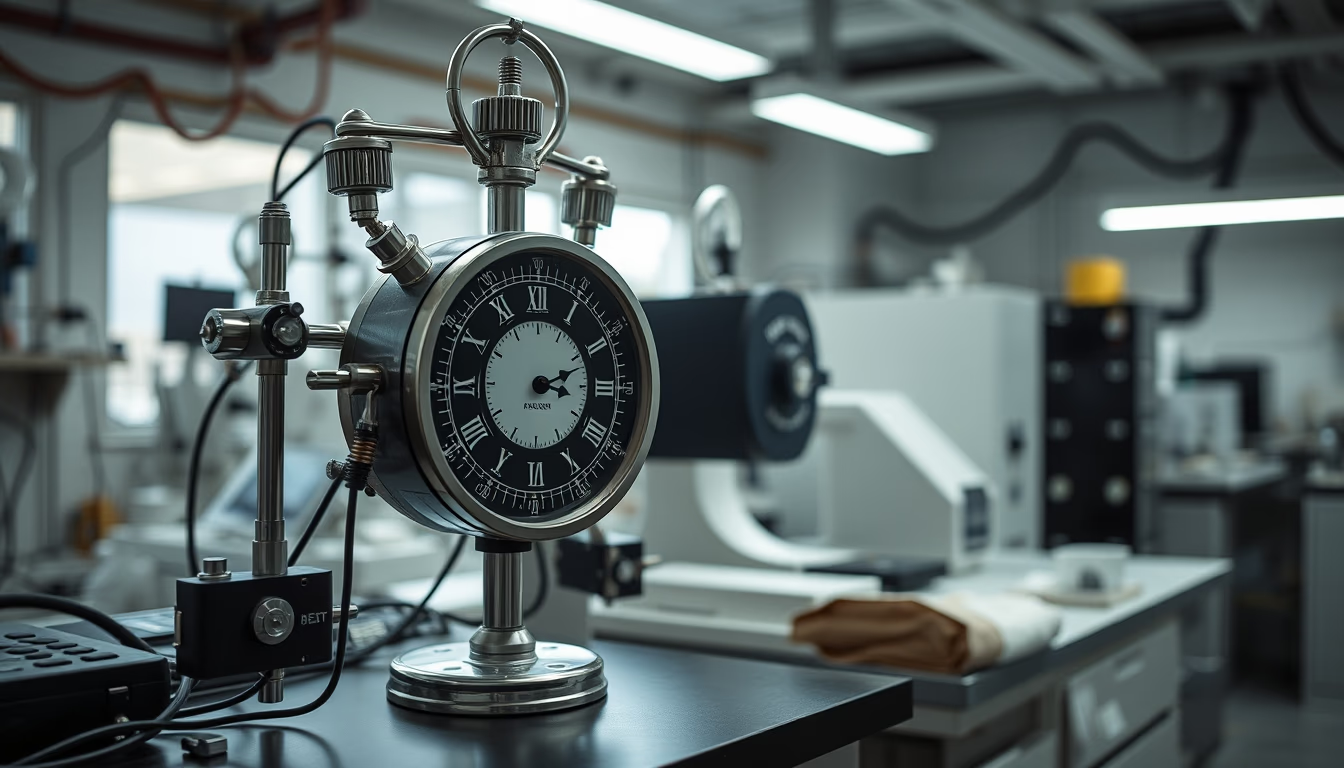
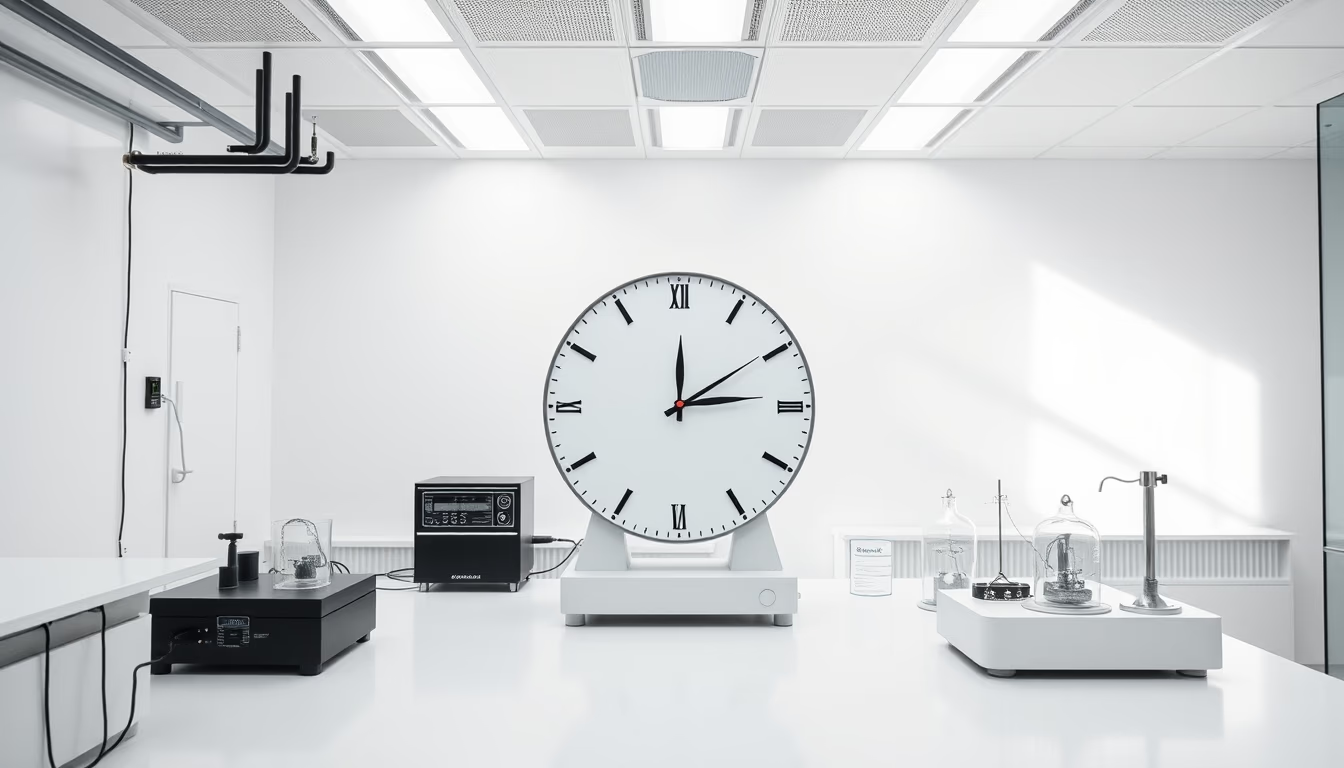
Atomic clock laboratories are scientific facilities that maintain the world's most precise time, essential for GPS and telecommunications.
About this subject
Atomic clock laboratories are specialized facilities that house the most accurate timekeeping devices ever created. These clocks measure time based on the oscillations of atoms, typically cesium or rubidium, achieving precision of one second in millions of years. They are critical for Global Positioning Systems (GPS), telecommunications networks, and fundamental scientific research. The National Institute of Standards and Technology (NIST) in the United States operates the NIST-F2, one of the world's most precise atomic clocks.
In Brazil, the Observatório Nacional in Rio de Janeiro maintains the Legal Hour Service, synchronized with cesium atomic clocks to ensure the country's official time is accurate and traceable to Coordinated Universal Time (UTC). The concept of atomic clocks dates back to the 1940s, when physicist Isidor Rabi proposed using magnetic resonance to measure atomic frequencies.
The working principle involves the transition between energy levels of an atom, which emits radiation at an extremely stable frequency. This frequency serves as a reference to generate electrical pulses that count time. Laboratories house complex systems of vacuum chambers, magnetic shields, and temperature controls to isolate atoms from external interference.
Beyond timekeeping, atomic clocks are essential in tests of general relativity, defining the meter, and synchronizing power grids. Ongoing developments include optical atomic clocks, which could lose less than one second over the entire age of the universe, promising even greater accuracy for future technologies.
Frequently Asked Questions
How accurate is a typical atomic clock?
A standard cesium atomic clock is accurate to about 1 second in 100 million years. Newer models like NIST-F2 achieve 1 second in 300 million years.
Where are atomic clocks used in everyday life?
They are crucial for GPS, which relies on precise satellite synchronization. They are also used in telecommunications networks, financial transactions, and electrical power grid synchronization.
How does an atomic clock work?
It measures the frequency of radiation emitted when electrons in atoms (such as cesium) change energy levels. This frequency serves as a reference to count time with extreme precision.
Direct URL
https://pub-c7d6a6ea828543ac903a74a341ccb2e1.r2.dev/imagens/atomic-clock-laboratory-documentary-photography-p7.avifHow to credit
Include a visible link back to UtilizAí. Copy one of the snippets below:
<a href="https://xn--utiliza-eza.com/en/midia/imagens/atomic-clock-laboratory-documentary-photography-p7">Atomic clock laboratory</a> by <a href="https://xn--utiliza-eza.com">UtilizAí</a>, licensed under <a href="https://creativecommons.org/licenses/by/4.0/">CC BY 4.0</a>.
[Atomic clock laboratory](https://xn--utiliza-eza.com/en/midia/imagens/atomic-clock-laboratory-documentary-photography-p7) by [UtilizAí](https://xn--utiliza-eza.com), CC BY 4.0
License: CC-BY-4.0