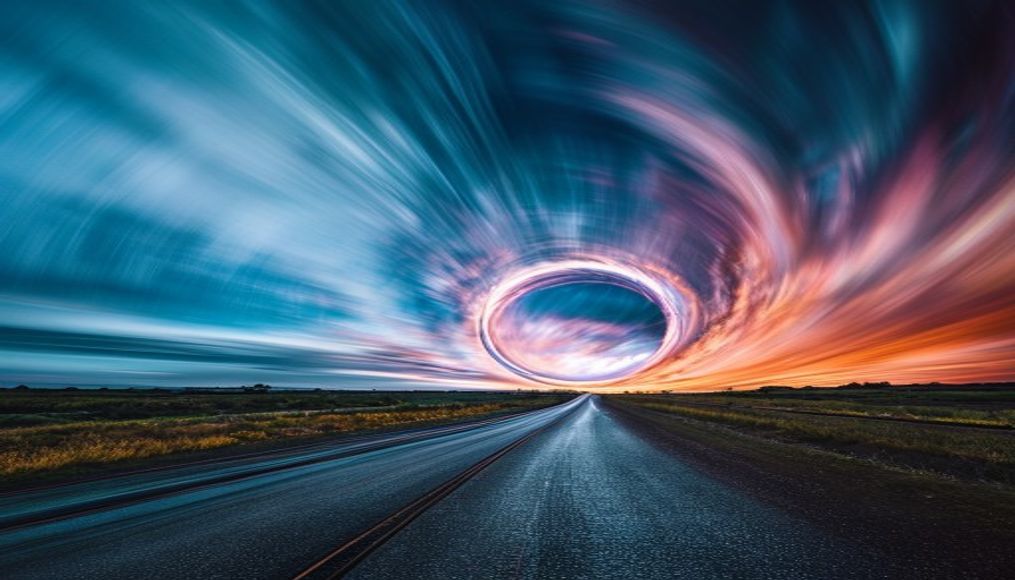
Asteroid belt artistic
1344×768 · AVIF · CC BY 4.0
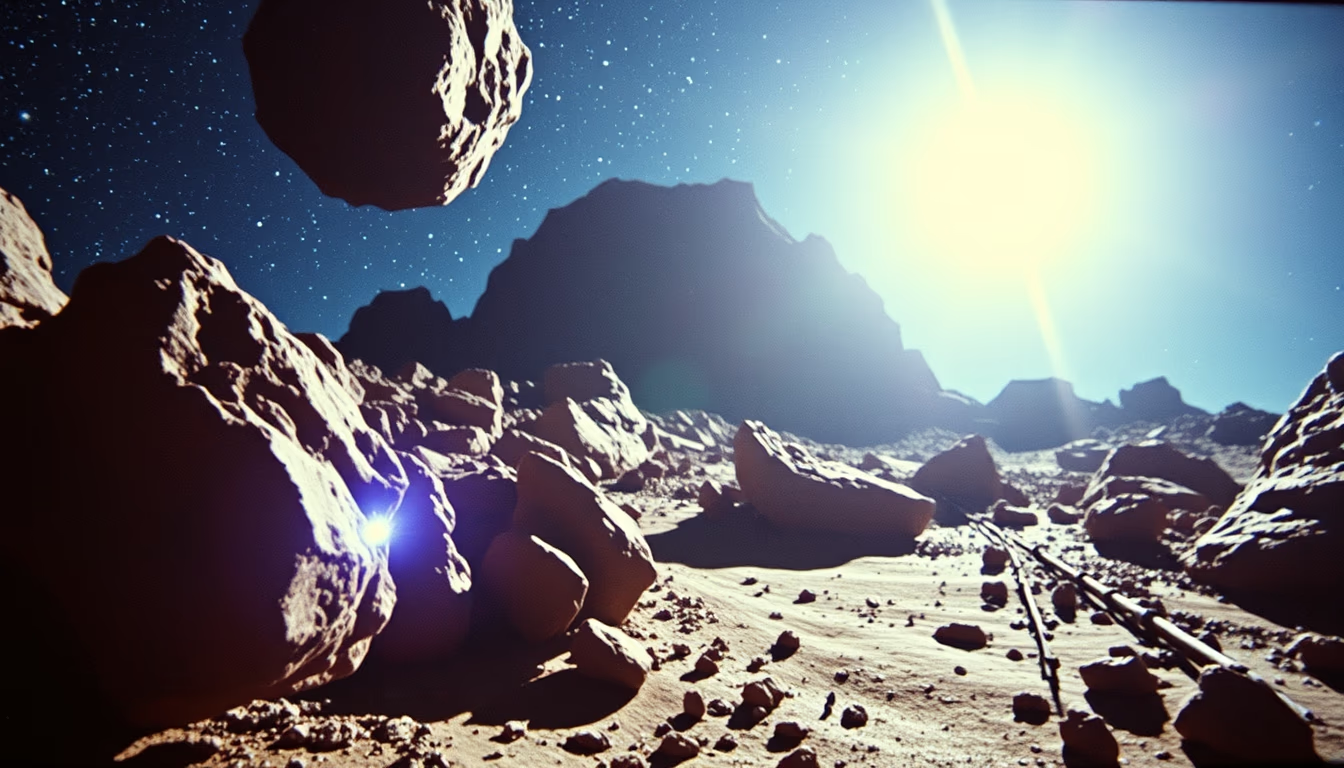
The asteroid belt between Mars and Jupiter contains millions of rocky and icy bodies, remnants of the Solar System's formation.
About this subject
The asteroid belt is a region of the Solar System located between the orbits of Mars and Jupiter, roughly 2.2 to 3.2 astronomical units from the Sun. It is estimated to contain over 1.9 million asteroids larger than 1 km in diameter, plus tens of millions of smaller fragments. The total mass of the belt is small, about 4% of the Moon's mass, with the four largest objects, Ceres, Vesta, Pallas, and Hygiea, accounting for about half of that. Ceres, at 940 km in diameter, is classified as a dwarf planet.
The belt's origin dates back to the early Solar System, about 4.6 billion years ago. It is believed that asteroids are material that never coalesced into a planet due to Jupiter's gravitational influence, which stirred up their orbits and prevented accretion. Thus, the belt serves as a natural laboratory to study the primitive composition of the planetary system.
Asteroids are divided into three main types: carbonaceous (C-type, carbon-rich, the most common), silicaceous (S-type), and metallic (M-type, rich in iron and nickel). Space missions like NASA's Dawn visited Vesta and Ceres, revealing surfaces with craters, geological faults, and possible ice deposits. The belt also supplies meteorites that fall to Earth, providing clues about its composition.
Beyond scientific interest, the belt has attracted economic attention due to potential mining of precious metals and water. Private companies and space agencies study missions to extract resources from near-Earth asteroids, though large-scale exploitation remains a technological and financial challenge.
Frequently Asked Questions
What is the asteroid belt?
It is a region of the Solar System between Mars and Jupiter that contains millions of asteroids of various sizes, remnants of planetary formation.
Do asteroids in the belt pose a collision risk to Earth?
Most are in stable orbits and do not threaten Earth. Only near-Earth asteroids (NEAs) have potential impact risk, and they are monitored by planetary defense programs.
Is there a dwarf planet in the asteroid belt?
Yes, Ceres is the only recognized dwarf planet in the belt. It has water ice and possibly a subsurface ocean.
Direct URL
https://pub-c7d6a6ea828543ac903a74a341ccb2e1.r2.dev/imagens/asteroid-belt-artistic-lo-fi-disposable-camera-p11.avifHow to credit
Include a visible link back to UtilizAí. Copy one of the snippets below:
<a href="https://xn--utiliza-eza.com/en/midia/imagens/asteroid-belt-artistic-lo-fi-disposable-camera-p11">Asteroid belt artistic</a> by <a href="https://xn--utiliza-eza.com">UtilizAí</a>, licensed under <a href="https://creativecommons.org/licenses/by/4.0/">CC BY 4.0</a>.
[Asteroid belt artistic](https://xn--utiliza-eza.com/en/midia/imagens/asteroid-belt-artistic-lo-fi-disposable-camera-p11) by [UtilizAí](https://xn--utiliza-eza.com), CC BY 4.0
License: CC-BY-4.0