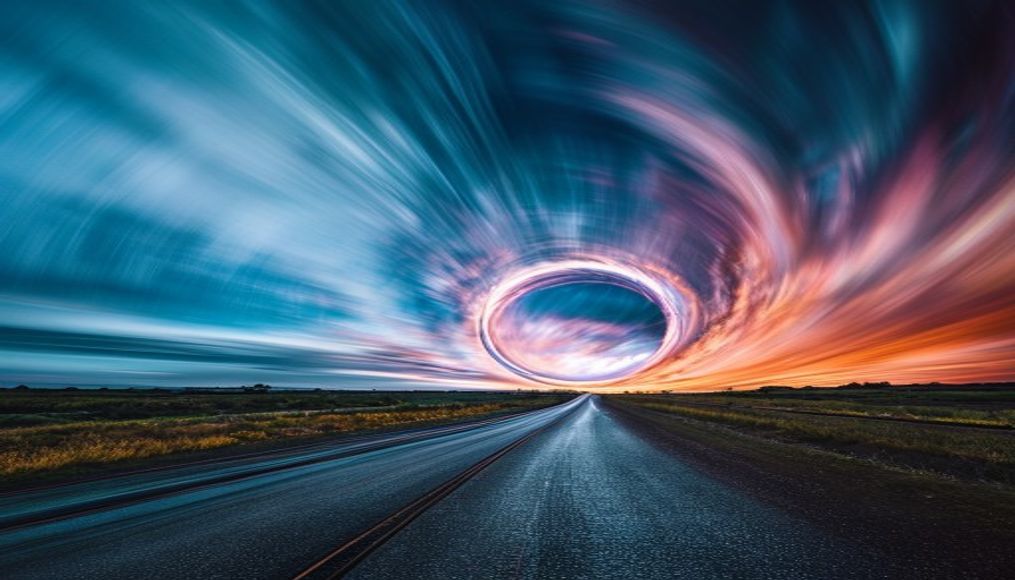
Asteroid belt artistic
1344×768 · AVIF · CC BY 4.0
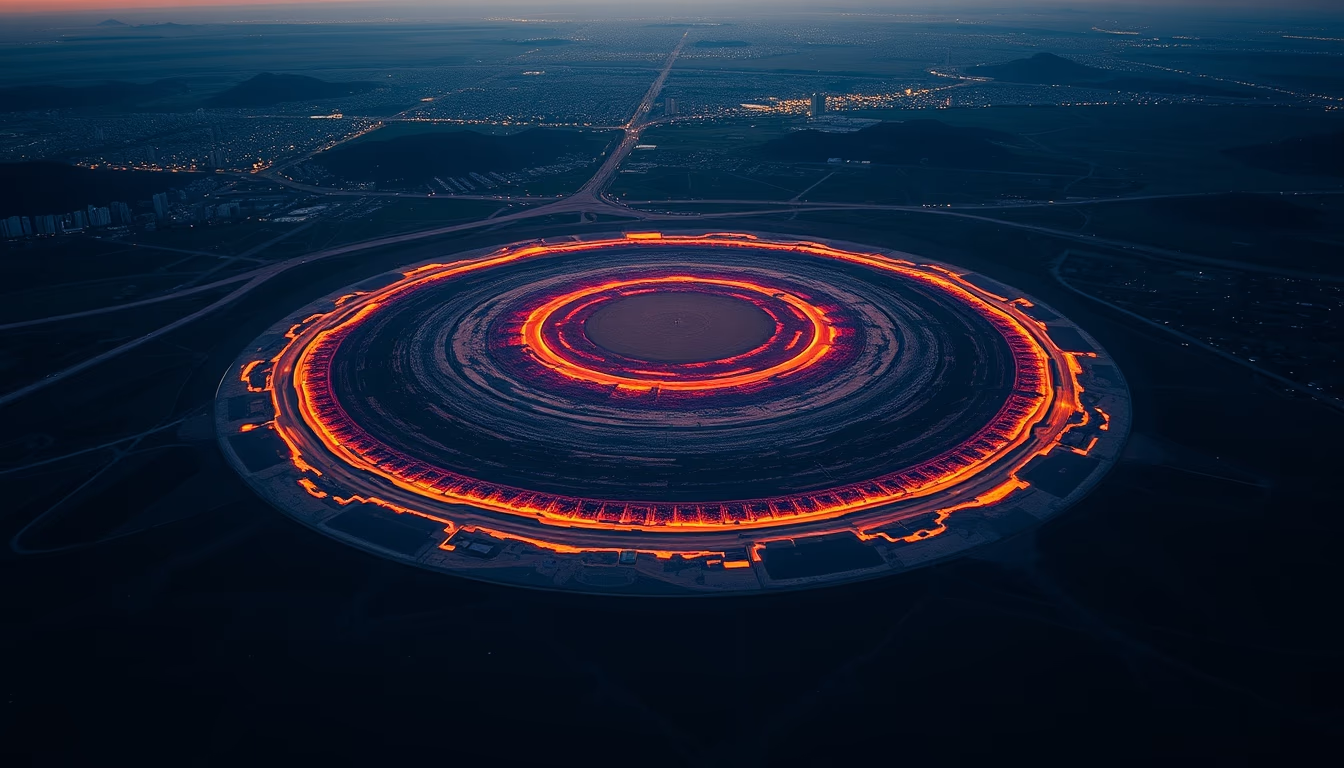
The asteroid belt, a region filled with rocky bodies between Mars and Jupiter, represents the remnants of the Solar System's formation.
About this subject
Located between the orbits of Mars and Jupiter, the asteroid belt hosts millions of rocky objects, from tiny fragments to bodies like Ceres, which has a diameter of 940 km and is classified as a dwarf planet. The total mass of the belt is estimated to be only about 4% of the Moon's mass, spread over an immense volume. Most asteroids are composed of silicates and metals, reflecting the primitive composition of the Solar System.
The belt's origin dates back 4.6 billion years, when planetary accretion was halted by Jupiter's gravitational influence. This prevented the formation of a full planet, leaving behind asteroids as cosmic fossils. Studying these bodies provides crucial clues about the early conditions of the Solar System and the processes that led to planet formation.
Missions such as NASA's Dawn, which orbited Vesta and Ceres, revealed complex surfaces with craters, mountains, and possible ice deposits. Additionally, the belt is the source of meteorites that fall to Earth, enabling direct laboratory analysis. Despite its apparent density, the average distance between asteroids is about 1 million kilometers, making collisions rare for spacecraft.
The asteroid belt has also inspired cultural depictions, such as in science fiction works, where it is often portrayed as a dense, hazardous field. In reality, it is a vast, largely undisturbed environment essential for understanding the evolution of our planetary system.
Frequently Asked Questions
What is the asteroid belt?
It is a region of the Solar System between Mars and Jupiter, containing millions of rocky and metallic bodies of various sizes, remnants from planetary formation.
Are asteroids a threat to Earth?
Most orbit far from Earth, but some near-Earth objects may pose a risk. Agencies like NASA monitor them to prevent impacts.
What is the largest asteroid in the belt?
Ceres, about 940 km in diameter, is the largest and is classified as a dwarf planet. Vesta and Pallas are the next largest.
Direct URL
https://pub-c7d6a6ea828543ac903a74a341ccb2e1.r2.dev/imagens/asteroid-belt-artistic-aerial-drone-shot-p0.avifHow to credit
Include a visible link back to UtilizAí. Copy one of the snippets below:
<a href="https://xn--utiliza-eza.com/en/midia/imagens/asteroid-belt-artistic-aerial-drone-shot-p0">Asteroid belt artistic</a> by <a href="https://xn--utiliza-eza.com">UtilizAí</a>, licensed under <a href="https://creativecommons.org/licenses/by/4.0/">CC BY 4.0</a>.
[Asteroid belt artistic](https://xn--utiliza-eza.com/en/midia/imagens/asteroid-belt-artistic-aerial-drone-shot-p0) by [UtilizAí](https://xn--utiliza-eza.com), CC BY 4.0
License: CC-BY-4.0