Art nouveau klimt gold
1344×768 · AVIF · CC BY 4.0
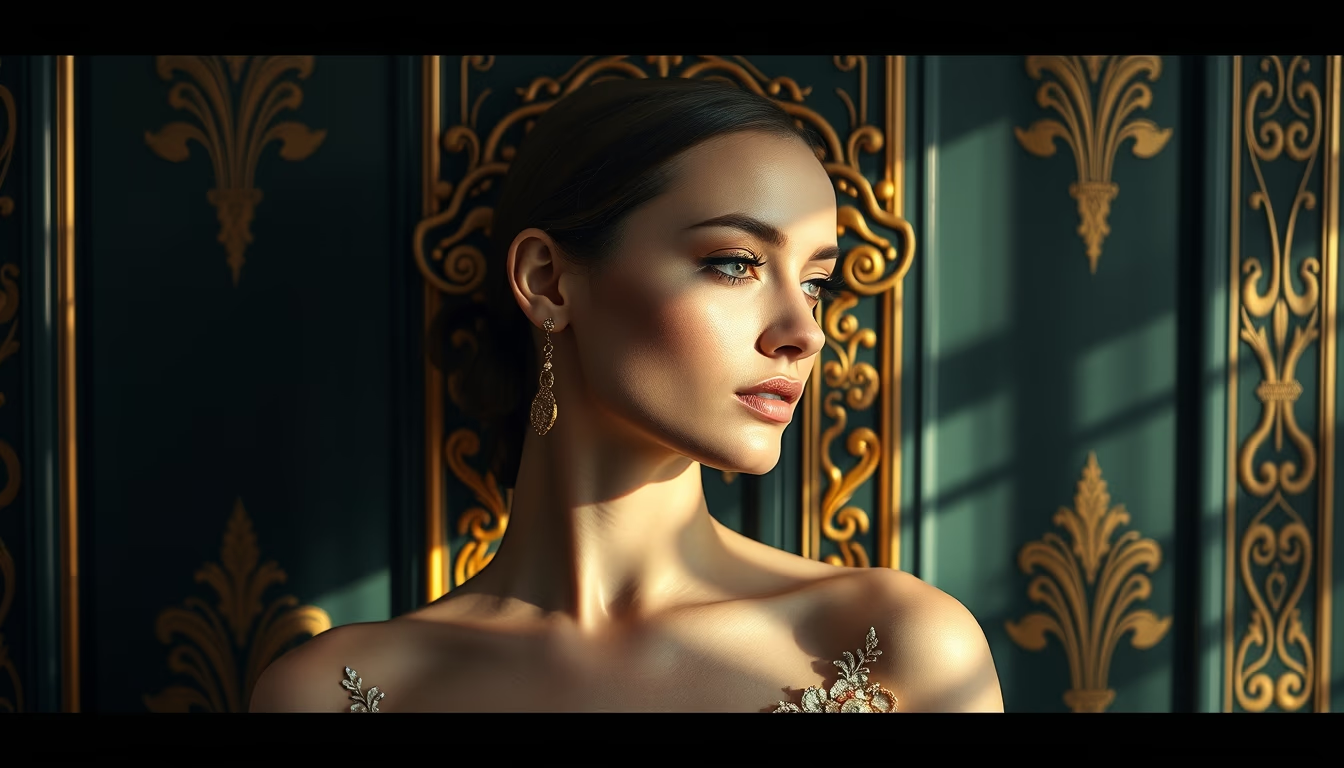
Gustav Klimt, master of Art Nouveau, used gold and ornamental patterns to create works blending eroticism, symbolism, and decorative luxury.
About this subject
Gustav Klimt (1862-1918) was a leading figure of the Art Nouveau movement in Austria, renowned for his gold-laden paintings and highly symbolic compositions. His golden phase, including masterpieces like 'The Kiss' (1907-1908) and 'Portrait of Adele Bloch-Bauer I' (1907), was inspired by Byzantine art and Venetian mosaics he studied in Ravenna, Italy. In these works, Klimt applied genuine gold leaf to the canvas, producing a luminous effect that echoes religious iconography but is subverted by profane and erotic themes.
Klimt was a founding member of the Vienna Secession, a group that broke away from conservative academism to promote modern art. His works often delve into the female psyche, sexuality, and the cycle of life and death, featuring sensual female figures draped in geometric robes. Klimt's technique combined oil painting with precious metal applications, resulting in textured surfaces that play with light uniquely, influencing contemporary book illuminators and designers.
Gold for Klimt was not merely decorative but symbolized the divine and eternal, contrasting with the human mortality of his figures. His ornamental style also incorporated Egyptian, Greek, and Japanese influences, creating a unique vocabulary that transcends Art Nouveau, bordering on Symbolism and Expressionism. Despite criticism during his lifetime for explicit content, Klimt is now celebrated as one of the most iconic artists of the turn of the century.
Frequently Asked Questions
What technique did Klimt use to apply gold in his paintings?
Klimt used genuine gold leaf, applied with a special adhesive over a gesso-prepared canvas. He then polished and engraved details, creating shiny surfaces that reflect light uniquely.
Why did Klimt paint so many gilded female figures?
Klimt saw women as muses and symbols of eroticism and life. Gold represented the divine and eternal, contrasting with human mortality. Together, gold and female figures expressed the fusion of the sacred and the profane.
What is Klimt's Golden Phase?
The Golden Phase (c. 1901-1909) was the period when Klimt most used gold and ornamentation, influenced by Byzantine art. It includes masterpieces such as 'The Kiss', 'The Tree of Life', and 'Portrait of Adele Bloch-Bauer I'.
Direct URL
https://pub-c7d6a6ea828543ac903a74a341ccb2e1.r2.dev/imagens/art-nouveau-klimt-gold-magazine-editorial-fresh8.avifHow to credit
Include a visible link back to UtilizAí. Copy one of the snippets below:
<a href="https://xn--utiliza-eza.com/en/midia/imagens/art-nouveau-klimt-gold-magazine-editorial-fresh8">Art nouveau klimt gold</a> by <a href="https://xn--utiliza-eza.com">UtilizAí</a>, licensed under <a href="https://creativecommons.org/licenses/by/4.0/">CC BY 4.0</a>.
[Art nouveau klimt gold](https://xn--utiliza-eza.com/en/midia/imagens/art-nouveau-klimt-gold-magazine-editorial-fresh8) by [UtilizAí](https://xn--utiliza-eza.com), CC BY 4.0
License: CC-BY-4.0