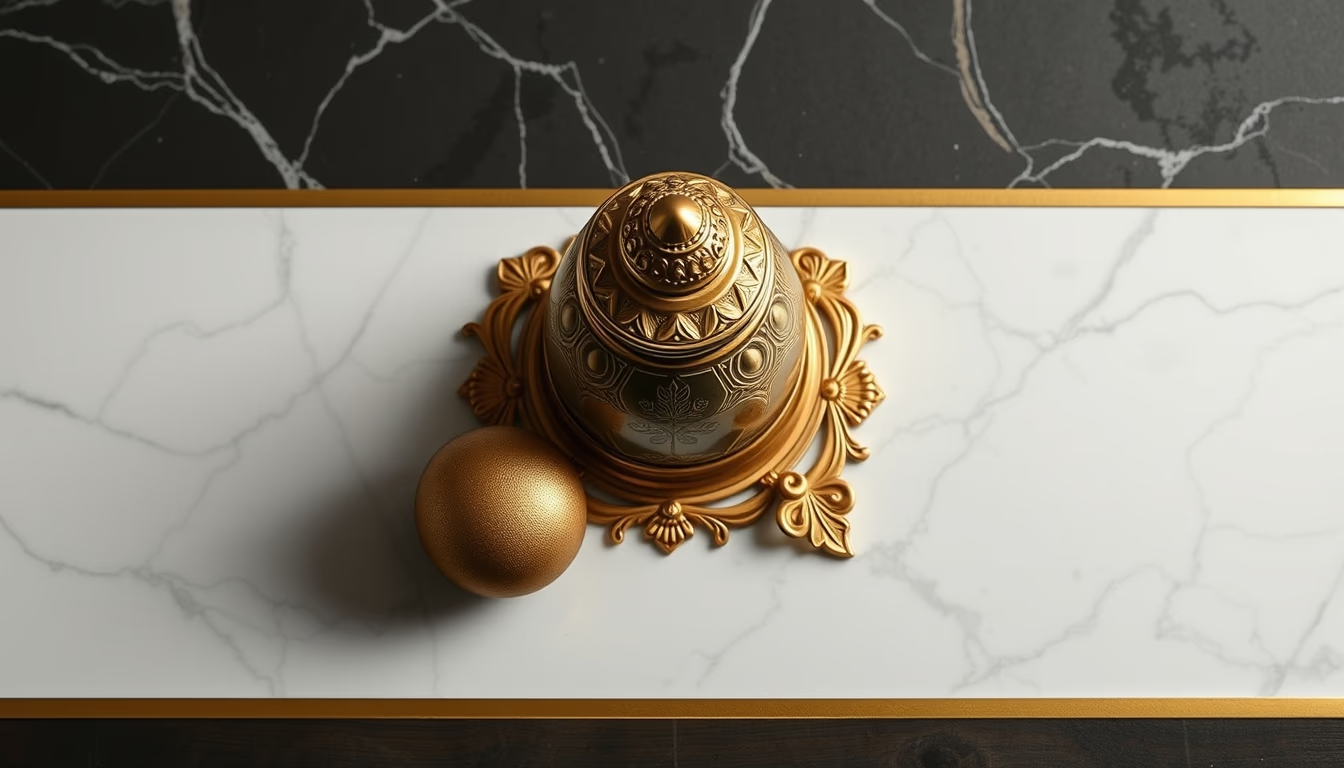
Art nouveau klimt gold
1344×768 · AVIF · CC BY 4.0

Gustav Klimt, a leading figure of Art Nouveau, revolutionized art with extensive use of gold leaf in works like 'The Kiss'.
About this subject
Gustav Klimt (1862, 1918) was an Austrian symbolist painter and one of the foremost figures of Art Nouveau (or Jugendstil) in Europe. His golden phase, known as the 'Golden Period', began around 1900 and was characterized by the abundant use of gold leaf in paintings such as 'The Kiss' (1907, 1908) and 'Portrait of Adele Bloch-Bauer I' (1907). This technique, inspired by Byzantine mosaics and goldsmithing, gave the works a metallic luster and a unique sense of preciousness. Klimt also incorporated geometric patterns, spirals, and organic motifs typical of Art Nouveau, a style that sought to integrate art and craftsmanship.
Art Nouveau, which flourished between 1890 and 1910, was an international movement encompassing architecture, graphic design, furniture, and jewelry. It was characterized by sinuous lines, natural forms (flowers, leaves, insects), and influences from symbolism. In Vienna, Klimt led the Vienna Secession, a group of artists who broke away from academicism and promoted innovative exhibitions. 'The Kiss' is perhaps the most famous example: an embracing couple wrapped in a robe adorned with rectangular and circular patterns against a golden background. The painting is housed in the Belvedere Gallery in Vienna.
Despite his popularity, Klimt faced controversy. His murals for the University of Vienna (1900, 1907) were criticized for their erotic content and somber allegories, and were destroyed during World War II. The use of gold also sparked debate: some critics found it too opulent, while others saw it as a quest for transcendental beauty. Today, Klimt's works are among the most valuable in the world; in 2006, 'Portrait of Adele Bloch-Bauer I' was sold for $135 million. Klimt's style has influenced fashion, interior design, and even pop culture, with references in films and contemporary design.
Interestingly, Klimt's gold technique revives ancient traditions, such as Byzantine religious icons and medieval illuminated manuscripts. By combining the glow of gold with modern, sensual subject matter, he created a unique synthesis of the sacred and the profane. His work continues to fascinate, representing the peak of Art Nouveau and a milestone in the transition to modern art in the 20th century.
Frequently Asked Questions
What is the significance of gold in Gustav Klimt's paintings?
The gold in Klimt's works evokes Byzantine and medieval traditions, symbolizing the sacred and eternal. It also adds a luxurious sheen that contrasts with erotic, modern themes, creating a fusion of spirituality and sensuality.
Where are Klimt's major works located?
Most are in Vienna, Austria, mainly at the Belvedere Gallery ('The Kiss') and the Leopold Museum ('Judith I'). 'Portrait of Adele Bloch-Bauer I' is at the Neue Galerie in New York.
How did Art Nouveau influence fields beyond painting?
Art Nouveau influenced architecture (e.g., Antoni Gaudí's works), furniture design, jewelry, posters, and typography. Its emphasis on organic lines and integration of arts impacted modern design.
Direct URL
https://pub-c7d6a6ea828543ac903a74a341ccb2e1.r2.dev/imagens/art-nouveau-klimt-gold-film-grain-authentic-fresh13.avifHow to credit
Include a visible link back to UtilizAí. Copy one of the snippets below:
<a href="https://xn--utiliza-eza.com/en/midia/imagens/art-nouveau-klimt-gold-film-grain-authentic-fresh13">Art nouveau klimt gold</a> by <a href="https://xn--utiliza-eza.com">UtilizAí</a>, licensed under <a href="https://creativecommons.org/licenses/by/4.0/">CC BY 4.0</a>.
[Art nouveau klimt gold](https://xn--utiliza-eza.com/en/midia/imagens/art-nouveau-klimt-gold-film-grain-authentic-fresh13) by [UtilizAí](https://xn--utiliza-eza.com), CC BY 4.0
License: CC-BY-4.0