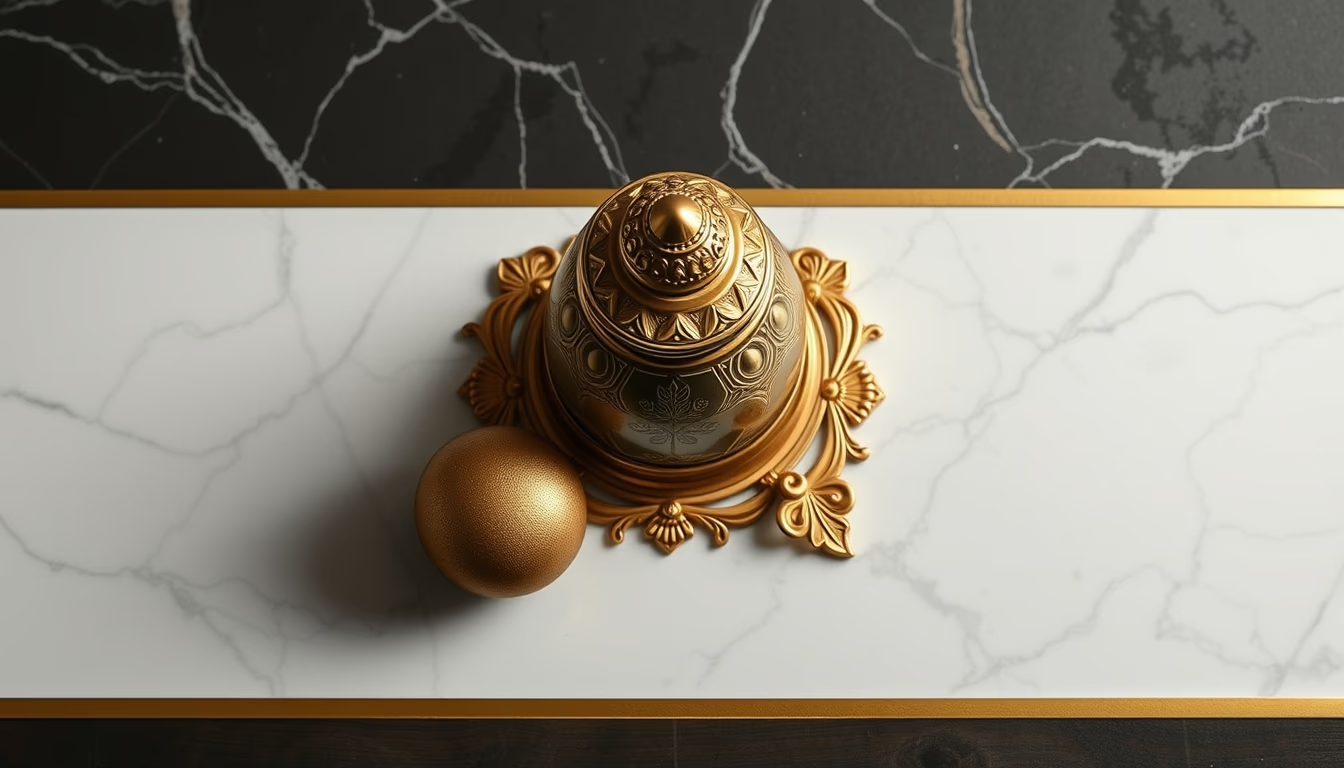
Art nouveau klimt gold
1344×768 · AVIF · CC BY 4.0

Explore the fusion between Art Nouveau and Gustav Klimt's gold, a style that marked art history with elegance and symbolism.
About this subject
Art Nouveau, an artistic movement that flourished between 1890 and 1910, is characterized by curved lines, organic forms, and a pursuit of integrating the arts. Gustav Klimt, an Austrian painter and one of the movement's exponents, is particularly known for his Golden Phase, roughly from 1901 to 1909. During this period, Klimt incorporated gold leaf into his works, a technique inspired by Byzantine and Venetian mosaics he encountered in Ravenna, Italy. The use of the precious metal not only added a luxurious glow to the canvases but also carried symbolic meanings, such as transcendence and the divine.
Klimt was a founding member of the Vienna Secession, a group that broke away from traditional academicism and promoted Art Nouveau in the Austrian context, known as Jugendstil. His most famous works from this phase include 'The Kiss' (1907-1908) and 'Portrait of Adele Bloch-Bauer I' (1907), both rich in gold and ornamental patterns. The technique involved applying gold leaf over gesso and then working with oil paint, creating unique textures and reflections. Klimt's influence extends beyond painting, impacting architecture, interior design, and fashion, with his style frequently replicated in prints and decorations.
Klimt's use of gold was not merely decorative; it reflected the cultural context of fin-de-siècle Vienna, a time of intellectual and artistic effervescence, but also of uncertainties. Gold symbolized both wealth and the transience of life. Despite being controversial in his time, Klimt is now celebrated as one of the greatest artists of Art Nouveau, and his works achieve record prices at auctions. The 'Art Nouveau Klimt Gold' style has become iconic, synonymous with elegance and sophistication, inspiring everything from posters to tattoos.
Frequently Asked Questions
What is the difference between Art Nouveau and Klimt?
Art Nouveau is a broad artistic movement encompassing architecture, design, and decorative arts, while Gustav Klimt was a painter associated with this movement, specifically the Austrian variant called Jugendstil. Klimt is famous for his golden phase, a particular expression within Art Nouveau.
Why did Klimt use so much gold in his paintings?
Klimt was influenced by Byzantine mosaics he saw in Ravenna, Italy. Gold symbolized transcendence, divinity, and luxury, and created a luminous, decorative effect. He applied gold leaf over gesso and then painted with oil, a technique that gave depth and brilliance to his works.
What are Klimt's most famous gold works?
The most iconic works from Klimt's golden phase include 'The Kiss' (1907-1908), 'Portrait of Adele Bloch-Bauer I' (1907), and 'Judith I' (1901). These paintings combine human figures with ornamental patterns and extensive use of gold leaf.
Direct URL
https://pub-c7d6a6ea828543ac903a74a341ccb2e1.r2.dev/imagens/art-nouveau-klimt-gold-aerial-drone-shot-fresh4.avifHow to credit
Include a visible link back to UtilizAí. Copy one of the snippets below:
<a href="https://xn--utiliza-eza.com/en/midia/imagens/art-nouveau-klimt-gold-aerial-drone-shot-fresh4">Art nouveau klimt gold</a> by <a href="https://xn--utiliza-eza.com">UtilizAí</a>, licensed under <a href="https://creativecommons.org/licenses/by/4.0/">CC BY 4.0</a>.
[Art nouveau klimt gold](https://xn--utiliza-eza.com/en/midia/imagens/art-nouveau-klimt-gold-aerial-drone-shot-fresh4) by [UtilizAí](https://xn--utiliza-eza.com), CC BY 4.0
License: CC-BY-4.0