Archaeological dig site
1344×768 · AVIF · CC BY 4.0
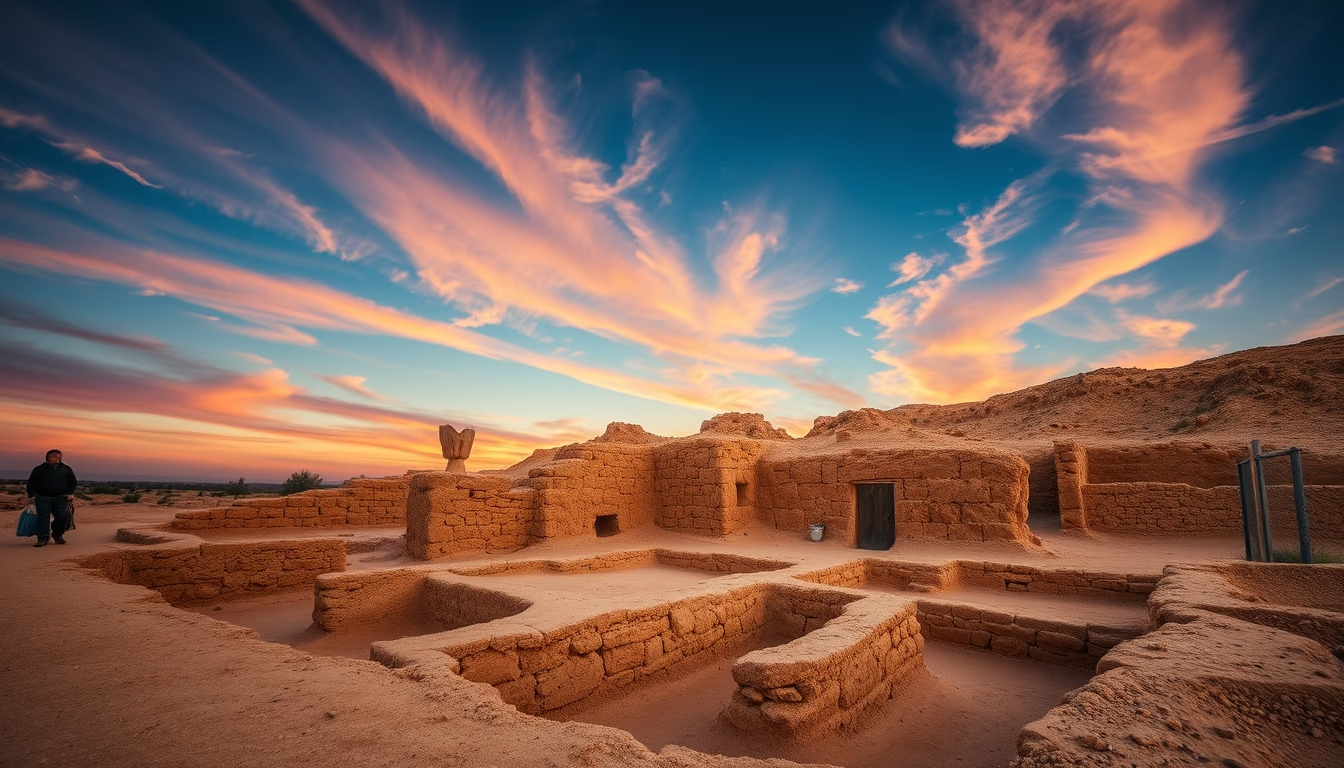
Archaeological dig sites uncover traces of past civilizations through systematic excavations. Understand the process and its significance.
About this subject
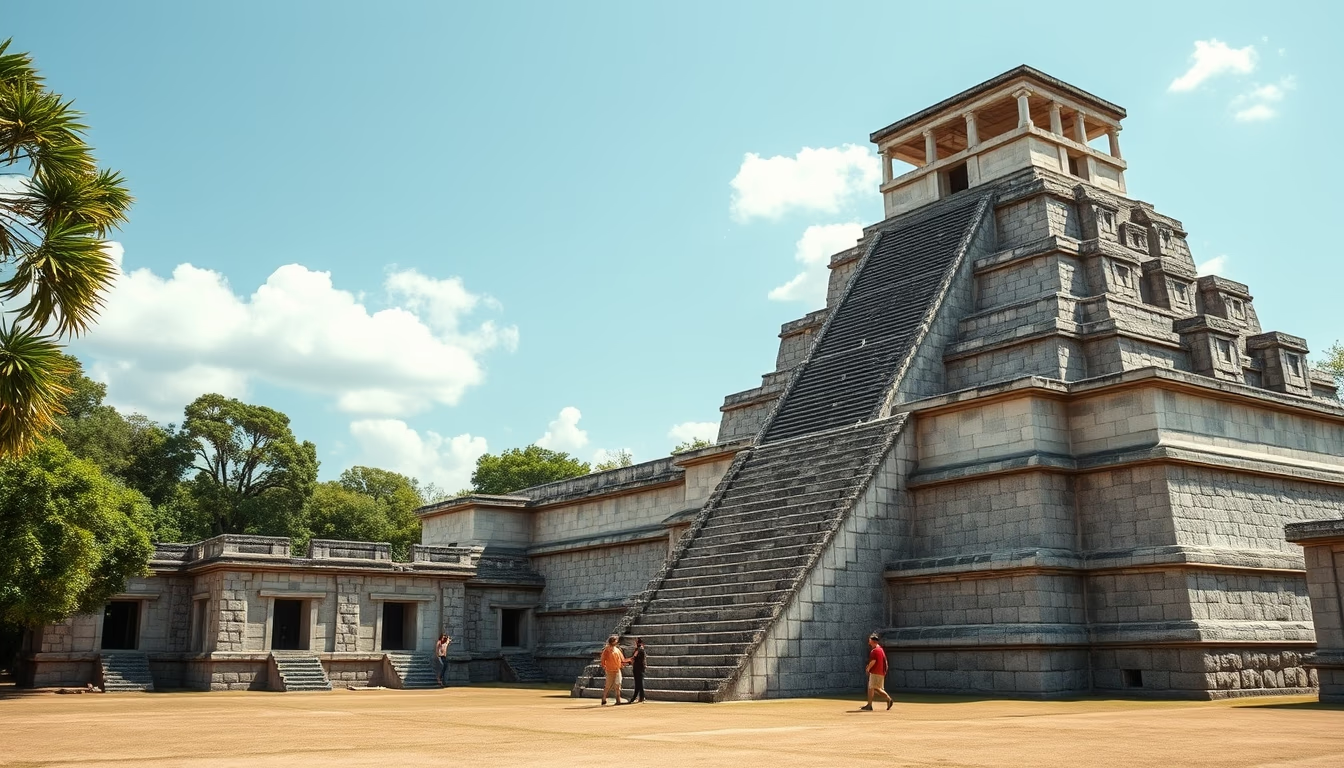
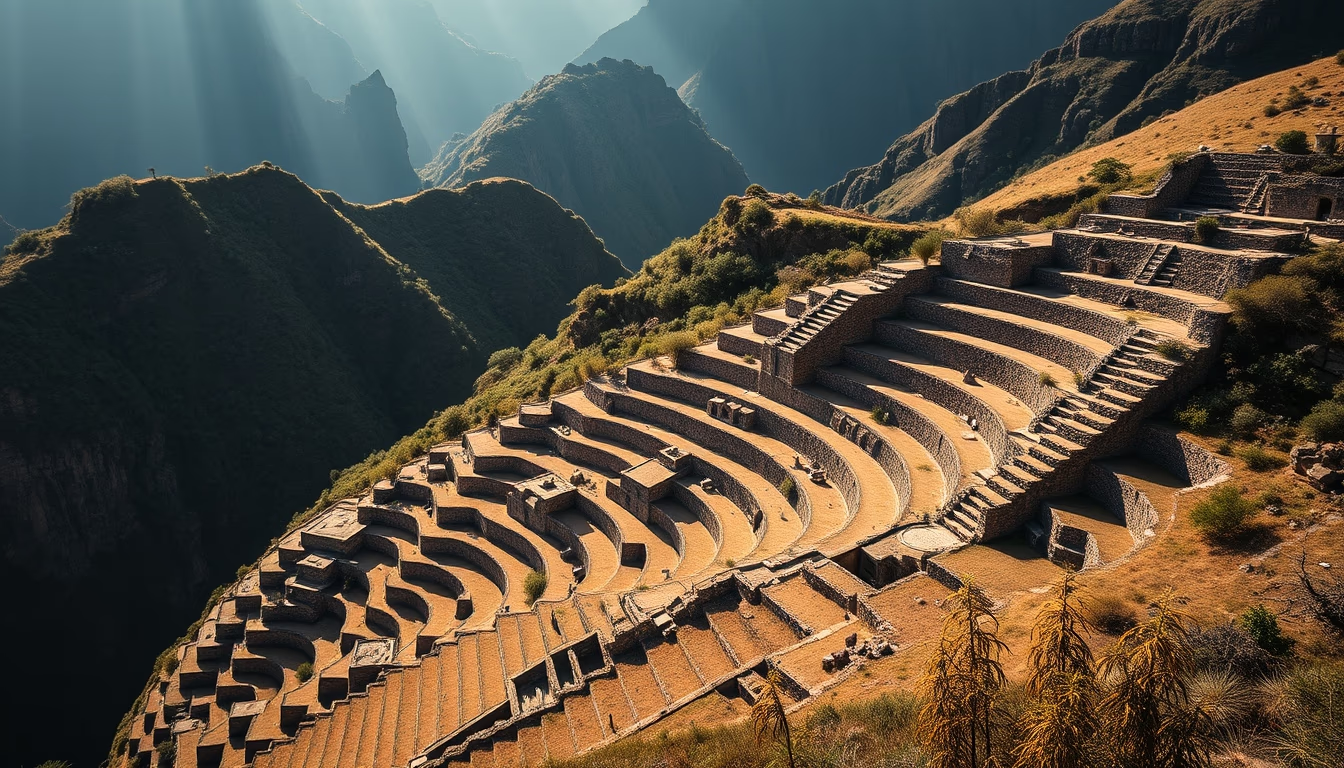
An archaeological excavation, or dig site, is an area where researchers carefully remove layers of soil to expose artifacts, structures, and other remains left by ancient societies. The process follows rigorous methodologies: each layer is recorded, dated, and analyzed to reconstruct the site's history. Stratigraphy, a fundamental principle, allows understanding the chronological sequence of human occupations.
In Brazil, sites like Lapa do Santo in Minas Gerais (occupied over 12,000 years ago) or the Serra da Capivara National Park in Piauí (with rock paintings dating 25,000 years) are notable examples. Globally, excavations such as Pompeii in Italy, buried by Vesuvius in 79 AD, or Göbekli Tepe in Turkey, dated to 10,000 BC, have transformed our understanding of civilization's origins.
Modern technology, including ground-penetrating radar, drones, and radiocarbon dating, has increased precision. However, excavation still relies on patience and manual skill. Every artifact, from a simple potsherd to a monumental statue, provides clues about economy, religion, and daily life. Preserving context is vital: removing an object without recording its position means losing historical information.
Curiosity: the world's largest continuous archaeological site is the Valley of the Kings in Egypt, with over 60 tombs discovered. In Brazil, more than 20,000 sites are cataloged by IPHAN, but only a fraction has been excavated. Archaeology does not seek treasures but knowledge, each soil layer is a page of human history.
Frequently Asked Questions
How do archaeologists choose where to dig?
Selection often begins with surface surveys, remote sensing, or accidental discoveries. Sites may be identified by anomalous vegetation, soil changes, or local reports. Excavations target areas with potential to answer specific historical questions.
What is the difference between an archaeological site and an excavation?
An archaeological site is a location with ancient human remains. Excavation is the activity of removing soil layers to expose those remains. Not all sites are excavated; many are preserved for future research.
Who owns the artifacts found?
Generally, they belong to the country where they are found. In Brazil, IPHAN regulates ownership and conservation. Artifacts may be stored in museums or labs, rarely sold, and unauthorized collection by amateurs is illegal.
Direct URL
https://pub-c7d6a6ea828543ac903a74a341ccb2e1.r2.dev/imagens/archaeological-dig-site-long-exposure-p10.avifHow to credit
Include a visible link back to UtilizAí. Copy one of the snippets below:
<a href="https://xn--utiliza-eza.com/en/midia/imagens/archaeological-dig-site-long-exposure-p10">Archaeological dig site</a> by <a href="https://xn--utiliza-eza.com">UtilizAí</a>, licensed under <a href="https://creativecommons.org/licenses/by/4.0/">CC BY 4.0</a>.
[Archaeological dig site](https://xn--utiliza-eza.com/en/midia/imagens/archaeological-dig-site-long-exposure-p10) by [UtilizAí](https://xn--utiliza-eza.com), CC BY 4.0
License: CC-BY-4.0