Archaeological dig site
1344×768 · AVIF · CC BY 4.0
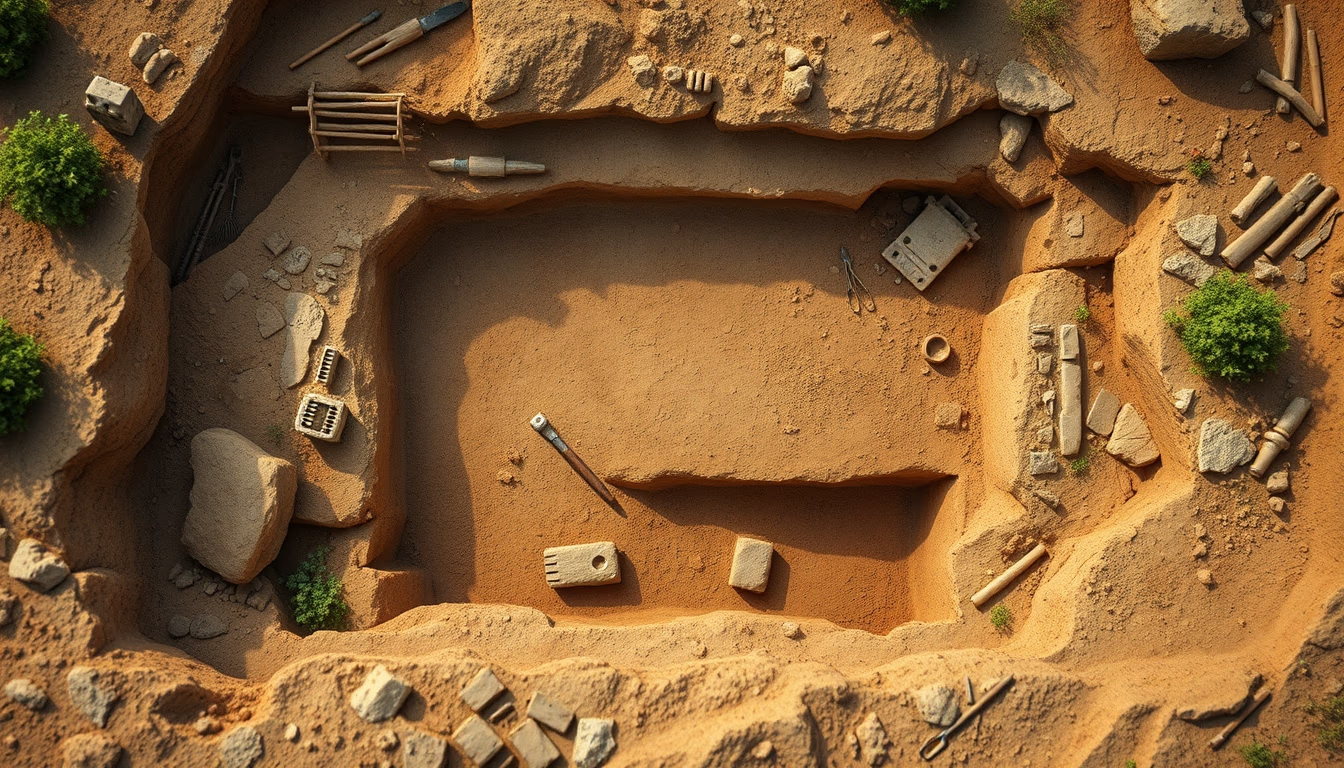
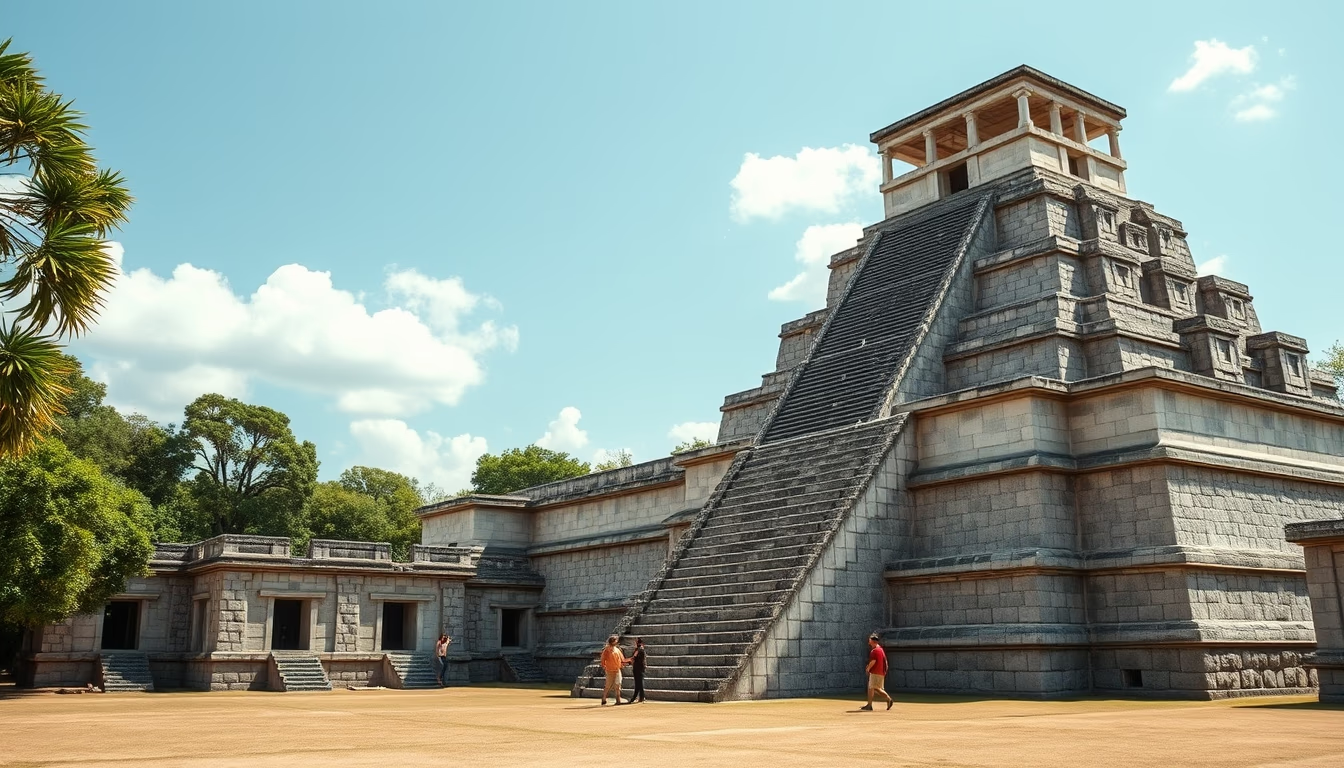
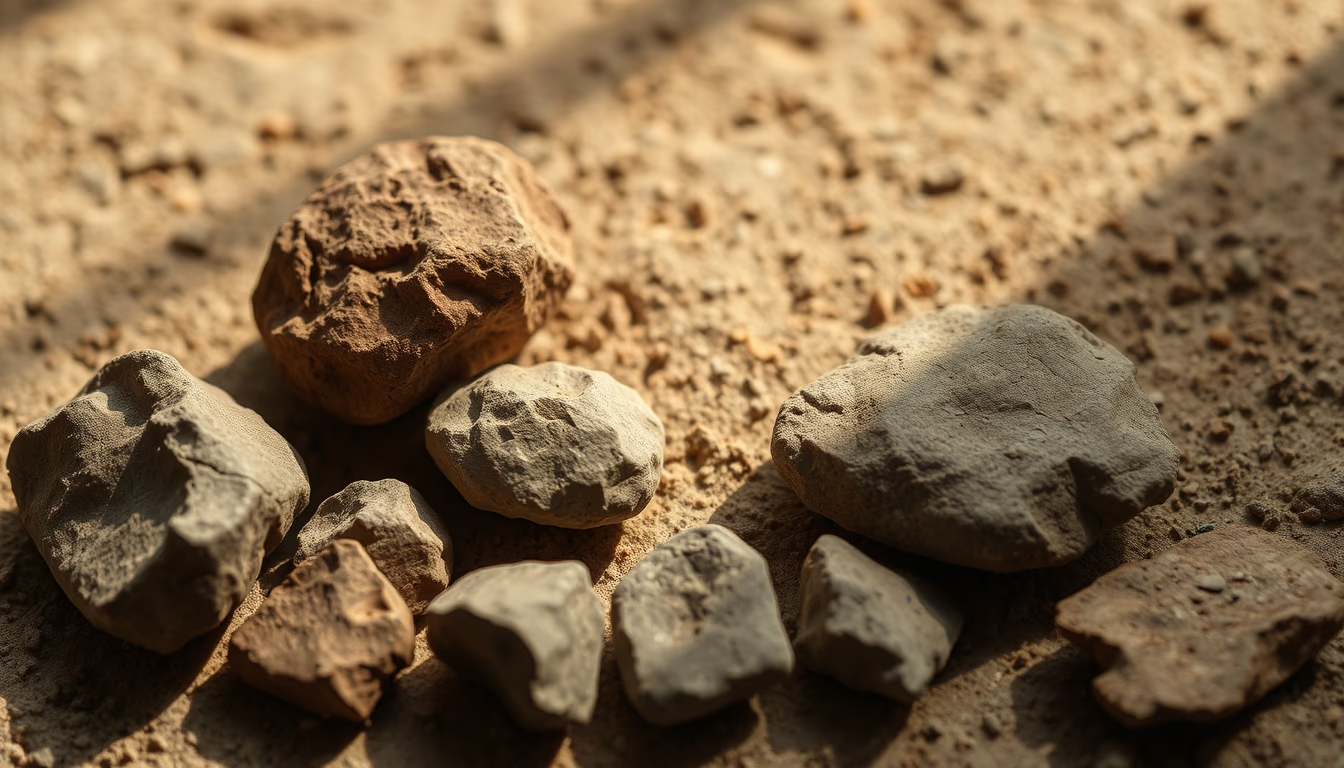
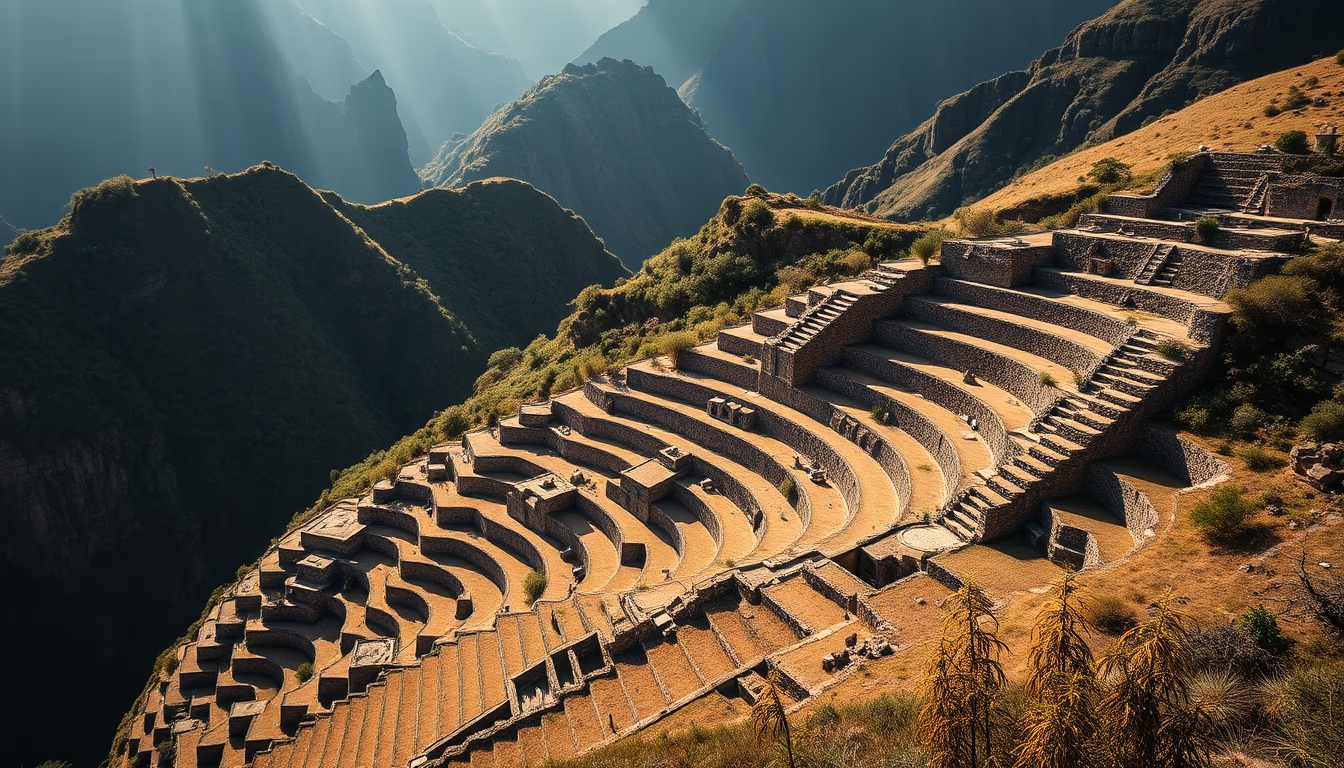
Archaeological sites reveal traces of past civilizations through meticulous excavations and scientific analyses, providing data on ancient habits, technologies, and cultures.
About this subject
An archaeological site is any location that preserves evidence of past human activity, whether a pre-Columbian village, a hunter-gatherer campsite, or the ruins of an ancient city. Such sites can be identified through surface survey, ground-penetrating radar, or analysis of aerial photographs. Once located, the excavation process follows a stratigraphic approach, where each soil layer represents a chronological period, allowing archaeologists to reconstruct the sequence of human occupation.
Archaeological excavation demands rigorous documentation: three-dimensional coordinates for each artifact, collection of samples for radiocarbon dating or thermoluminescence, and detailed photographic records. These data enable not only the dating of objects but also their functional and symbolic context. For instance, organic residue analysis in pottery can reveal ancient diets, while strontium isotopes in teeth indicate migration patterns.
World-famous sites like Pompeii in Italy provide detailed information about Roman daily life due to exceptional preservation caused by the Vesuvius eruption. In Brazil, Serra da Capivara in Piauí houses rock paintings dating back over 10,000 years, challenging earlier theories about the peopling of the Americas. Each site contributes unique pieces to the puzzle of human history.
Preservation of archaeological sites faces challenges such as urbanization, looting, and climate change. Therefore, many countries have protective laws and promote sustainable tourism with guided visits. Archaeology is not limited to the past; techniques like experimental archaeology recreate ancient processes, strengthening the connection between the present and the societies that preceded us.
Frequently Asked Questions
How do archaeologists choose a site to excavate?
The selection combines systematic survey, analysis of historical records, satellite imagery, and remote sensing. In potential areas, tests like shovel tests or ground-penetrating radar confirm the presence of remains before full excavation.
What is radiocarbon dating and how does it work?
Radiocarbon dating measures the amount of radioactive carbon-14 in organic materials. Since carbon-14 decays at a known rate, comparing the remaining amount to the original estimates the time since the organism's death, providing ages for objects up to about 50,000 years.
What is the difference between an archaeological site and a paleontological site?
Archaeological sites contain traces of human activity (tools, pottery, structures). Paleontological sites preserve fossils of plants, animals, or other organisms without direct evidence of human intervention, such as dinosaurs or mammoths.
Direct URL
https://pub-c7d6a6ea828543ac903a74a341ccb2e1.r2.dev/imagens/archaeological-dig-site-isometric-flat-lay-p11.avifHow to credit
Include a visible link back to UtilizAí. Copy one of the snippets below:
<a href="https://xn--utiliza-eza.com/en/midia/imagens/archaeological-dig-site-isometric-flat-lay-p11">Archaeological dig site</a> by <a href="https://xn--utiliza-eza.com">UtilizAí</a>, licensed under <a href="https://creativecommons.org/licenses/by/4.0/">CC BY 4.0</a>.
[Archaeological dig site](https://xn--utiliza-eza.com/en/midia/imagens/archaeological-dig-site-isometric-flat-lay-p11) by [UtilizAí](https://xn--utiliza-eza.com), CC BY 4.0
License: CC-BY-4.0