Aquaponics system fish
1344×768 · AVIF · CC BY 4.0
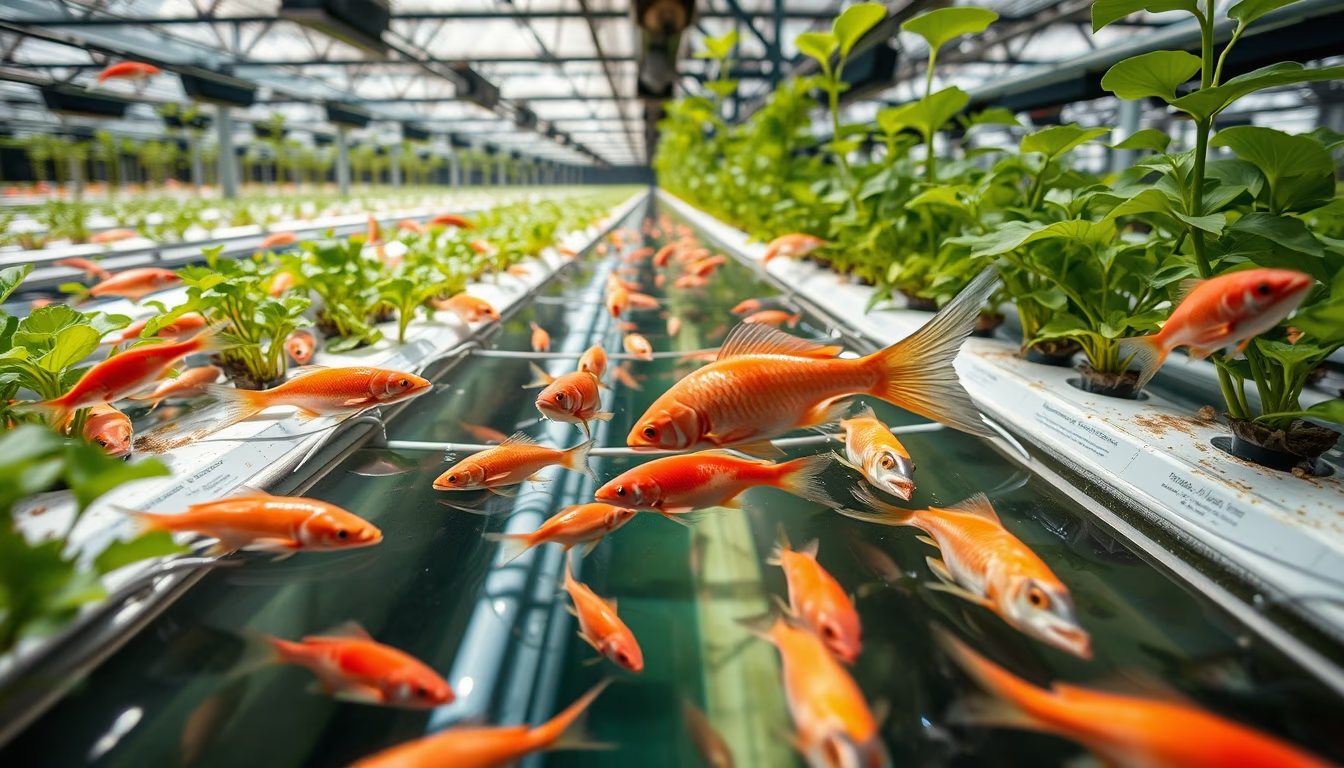
In aquaponics systems, fish provide essential nutrients for plant growth, creating a sustainable food production cycle.
About this subject
Aquaponics is an integrated system that combines aquaculture (fish farming) with hydroponics (growing plants in water). In this process, fish excrete ammonia through their gills and urine. Nitrifying bacteria convert ammonia into nitrites and then nitrates, which are absorbed by plants as fertilizer. The plants, in turn, filter the water, which returns clean to the fish tank.
Common fish species used in aquaponics include tilapia, carp, trout, and catfish. Tilapia is especially popular for its hardiness, fast growth, and tolerance to temperature and water quality variations. In tropical regions, tilapia can reach harvest size in six to eight months. Trout, on the other hand, prefers cooler water and requires higher dissolved oxygen levels.
One major advantage of aquaponics is water efficiency: the system uses up to 90% less water than conventional agriculture. It also eliminates the need for chemical fertilizers and pesticides, as plants receive natural nutrients from fish. Production can be done in small urban spaces, such as gardens or balconies, contributing to local food security.
Interestingly, practices similar to aquaponics have existed for thousands of years. The Aztecs cultivated chinampas, artificial islands where they raised fish and planted crops in canals. Chinese farmers also integrated fish into rice paddies. Today, modern aquaponics is seen as a solution for sustainable agriculture in areas with water and land scarcity.
Frequently Asked Questions
How does aquaponics work?
Aquaponics integrates fish farming with plant cultivation in a closed system. Fish produce ammonia-rich waste, which is converted by bacteria into nitrates, used as fertilizer by plants. The plants purify the water, which returns to the fish.
Which fish are most commonly used in aquaponics?
The most common species are tilapia, carp, trout, and catfish. Tilapia is preferred for its hardiness and fast growth in tropical climates. The choice depends on water temperature and system goals.
What are the environmental benefits of aquaponics?
Aquaponics saves up to 90% of water compared to traditional agriculture, eliminates the need for chemical fertilizers and pesticides, and allows local food production, reducing transportation carbon footprint.
Direct URL
https://pub-c7d6a6ea828543ac903a74a341ccb2e1.r2.dev/imagens/aquaponics-system-fish-national-geographic-style-p0.avifHow to credit
Include a visible link back to UtilizAí. Copy one of the snippets below:
<a href="https://xn--utiliza-eza.com/en/midia/imagens/aquaponics-system-fish-national-geographic-style-p0">Aquaponics system fish</a> by <a href="https://xn--utiliza-eza.com">UtilizAí</a>, licensed under <a href="https://creativecommons.org/licenses/by/4.0/">CC BY 4.0</a>.
[Aquaponics system fish](https://xn--utiliza-eza.com/en/midia/imagens/aquaponics-system-fish-national-geographic-style-p0) by [UtilizAí](https://xn--utiliza-eza.com), CC BY 4.0
License: CC-BY-4.0