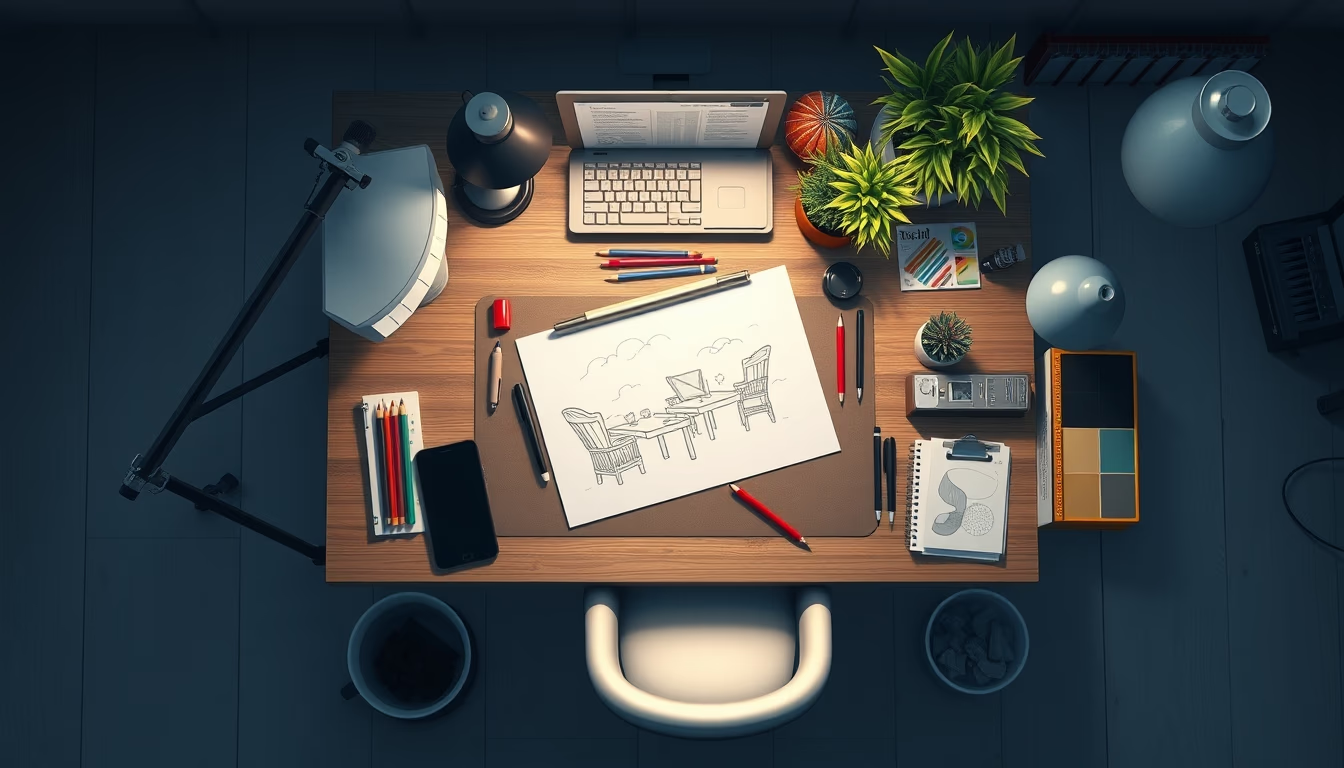
Anime studio drawing desk
1344×768 · AVIF · CC BY 4.0
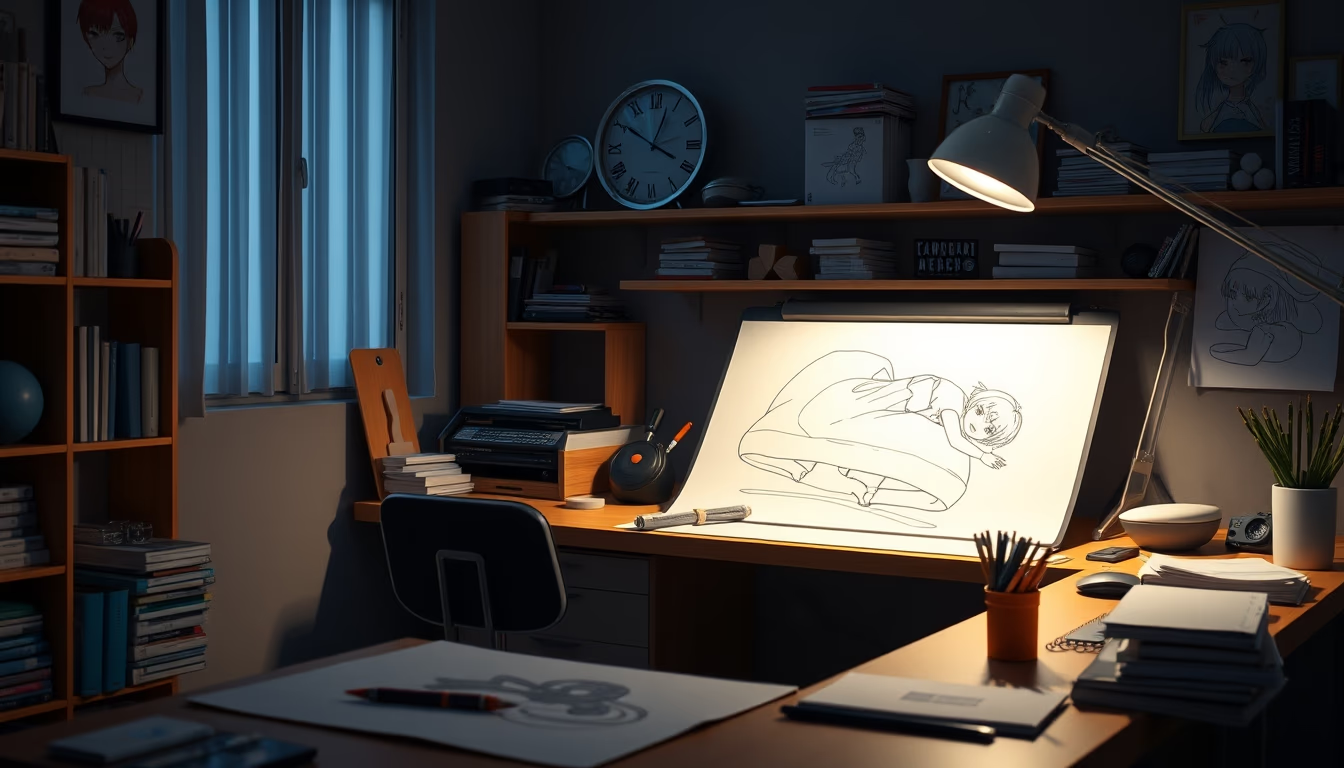
Anime studio drawing desk: the heart of traditional Japanese animation, where frames come to life.
About this subject
The drawing desk is the central workstation in any Japanese animation studio. Traditionally, these desks are made of sturdy wood with a slanted top and side compartments for storing paper and pens. The key feature is the light table, a surface illuminated from below (usually with fluorescent or LED lights) that allows animators to see multiple layers of paper overlapping to create animation frames. Drawings are secured with registration pegs, ensuring perfect alignment between frames.
In Japan, legendary studios like Ghibli and Toei Animation still use traditional desks for initial layout and key animation stages. Although digitization has advanced, many artists prefer the feel of pencil on paper to capture fluid expressions. The process: animators draw keyframes, then in-between frames, using the light table to see continuous motion. Each second of anime requires 24 frames, but typically only 12 to 15 are drawn, making the technique known as "limited animation" a hallmark of the style.
Culturally, the drawing desk symbolizes the craftsmanship and dedication of Japanese animators. Many studios maintain communal areas with dozens of these desks lined up, where animators work side by side, listening to music or discussing scenes. Despite modern technology, the allure of "hand-drawn animation" persists, and vintage desks are collector's items. At anime conventions, replica studio desks are displayed to help fans understand the creative process.
Fun fact: some drawing desks have adjustable height and angle to prevent posture issues, as animators spend hours drawing. The Japanese term for light table is "raito bokkusu" (ライトボックス), and for the desk itself, "desuku" (デスク). In Brazil, anime fans often improvise with supports and lamps to create their own animation stations.
Frequently Asked Questions
Why are drawing desks slanted in anime studios?
The slanted top reduces strain on the animator's neck and back, and also makes drawing in perspective easier. It improves visibility of the light table.
What is the difference between a digital and traditional light table?
Traditional light tables use internal bulbs and paper; digital ones have an LED screen that can adjust brightness and even connect to computers for hybrid animation.
Do anime studios still use manual drawing desks?
Yes, many studios like Ghibli and Toei still use them for initial stages. Digital animation is common, but manual tradition remains strong to maintain artistic quality.
Direct URL
https://pub-c7d6a6ea828543ac903a74a341ccb2e1.r2.dev/imagens/anime-studio-drawing-desk-fine-art-photography-fresh8.avifHow to credit
Include a visible link back to UtilizAí. Copy one of the snippets below:
<a href="https://xn--utiliza-eza.com/en/midia/imagens/anime-studio-drawing-desk-fine-art-photography-fresh8">Anime studio drawing desk</a> by <a href="https://xn--utiliza-eza.com">UtilizAí</a>, licensed under <a href="https://creativecommons.org/licenses/by/4.0/">CC BY 4.0</a>.
[Anime studio drawing desk](https://xn--utiliza-eza.com/en/midia/imagens/anime-studio-drawing-desk-fine-art-photography-fresh8) by [UtilizAí](https://xn--utiliza-eza.com), CC BY 4.0
License: CC-BY-4.0