Angkor wat sunrise temple
1344×768 · AVIF · CC BY 4.0
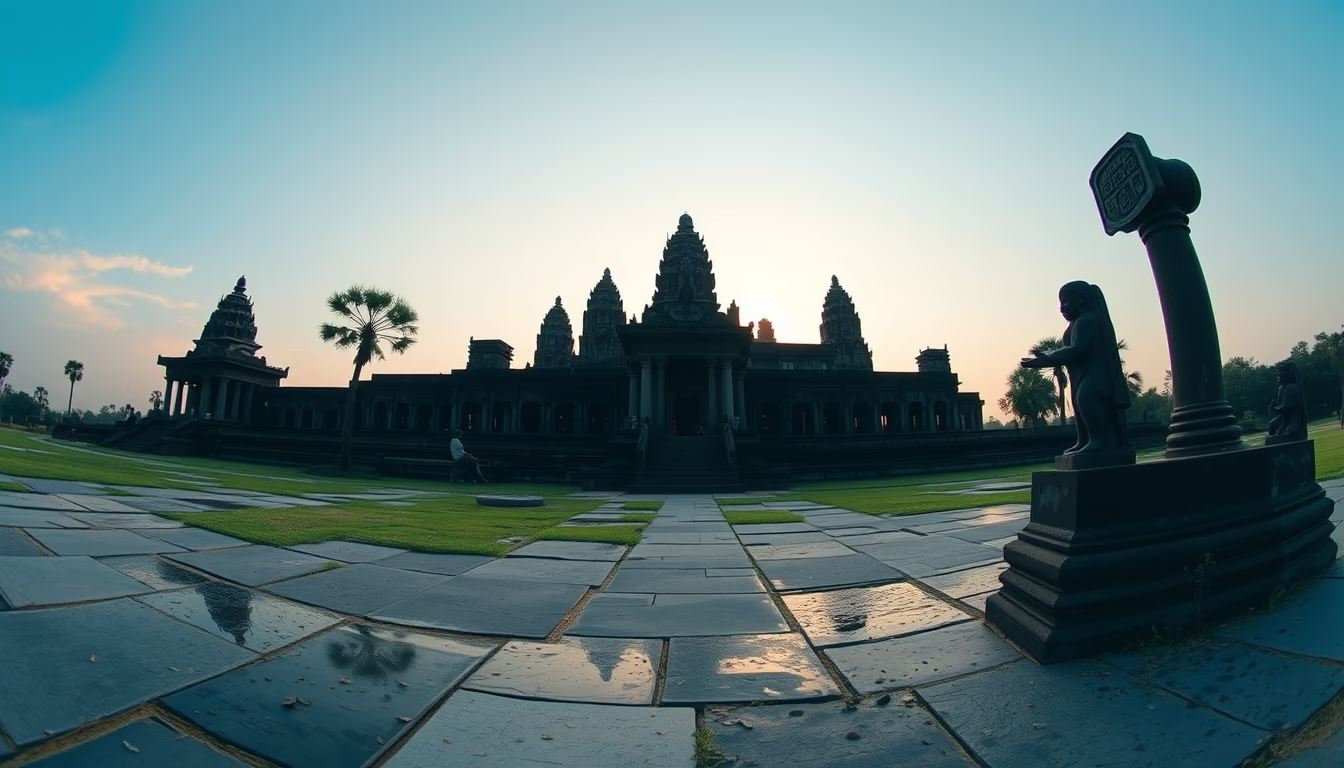
Angkor Wat in Cambodia is the largest religious monument in the world, an icon of Khmer architecture and a witness to the dawn of the empire.
About this subject
Angkor Wat, located in Siem Reap, Cambodia, is the largest religious monument ever built, covering an area of 162.6 hectares. Erected in the 12th century by King Suryavarman II, it was originally dedicated to the Hindu god Vishnu but gradually transformed into a Buddhist temple. The complex is the heart of the Angkor Archaeological Park, a UNESCO World Heritage site since 1992.
The structure symbolizes Mount Meru, the abode of the gods in Hinduism, with central towers representing sacred peaks. The famous bas-reliefs in the galleries depict epic scenes such as the Battle of Kurukshetra from the Mahabharata and the Churning of the Ocean of Milk. The temple's orientation is unique: while most Khmer temples face east, Angkor Wat opens to the west, sparking debates among scholars about its funerary purpose or symbolism tied to sunset.
Sunrise over Angkor Wat is one of the most photographed spectacles in the world. The silhouette of the towers against the orange sky, reflected in the artificial lake in front, creates an iconic view. Thousands of tourists gather daily at dawn to witness the phenomenon. The best time to observe is between November and March, during the dry season, when the sky is clearer. Despite tourist pressure, the site maintains a spiritual and majestic atmosphere.
Interestingly, Angkor Wat was never completely abandoned. Unlike other Angkor temples, it remained inhabited by Buddhist monks since its conversion. During the Khmer Rouge period, the temple was spared major destruction, serving as a symbol of cultural resistance. Today, it is a source of national pride and appears on the Cambodian flag, the only flag in the world to feature a building.
Frequently Asked Questions
What is the best time to visit Angkor Wat to see the sunrise?
The best time is between 5 and 6 AM during the dry season from November to March. Arrive early to secure a good spot near the reflective lake.
Why is Angkor Wat oriented westward, unlike other Khmer temples?
The westward orientation is still debated. It may be linked to sunset and death symbolism, as Vishnu is also associated with the west. Others suggest the temple was a mausoleum for King Suryavarman II.
Is Angkor Wat a Hindu or Buddhist temple?
Originally Hindu, dedicated to Vishnu, it was gradually converted to Theravada Buddhism in the 14th century and remains an active Buddhist temple today.
Direct URL
https://pub-c7d6a6ea828543ac903a74a341ccb2e1.r2.dev/imagens/angkor-wat-sunrise-temple-fish-eye-wide-angle-p10.avifHow to credit
Include a visible link back to UtilizAí. Copy one of the snippets below:
<a href="https://xn--utiliza-eza.com/en/midia/imagens/angkor-wat-sunrise-temple-fish-eye-wide-angle-p10">Angkor wat sunrise temple</a> by <a href="https://xn--utiliza-eza.com">UtilizAí</a>, licensed under <a href="https://creativecommons.org/licenses/by/4.0/">CC BY 4.0</a>.
[Angkor wat sunrise temple](https://xn--utiliza-eza.com/en/midia/imagens/angkor-wat-sunrise-temple-fish-eye-wide-angle-p10) by [UtilizAí](https://xn--utiliza-eza.com), CC BY 4.0
License: CC-BY-4.0