Amethyst geode purple
1344×768 · AVIF · CC BY 4.0
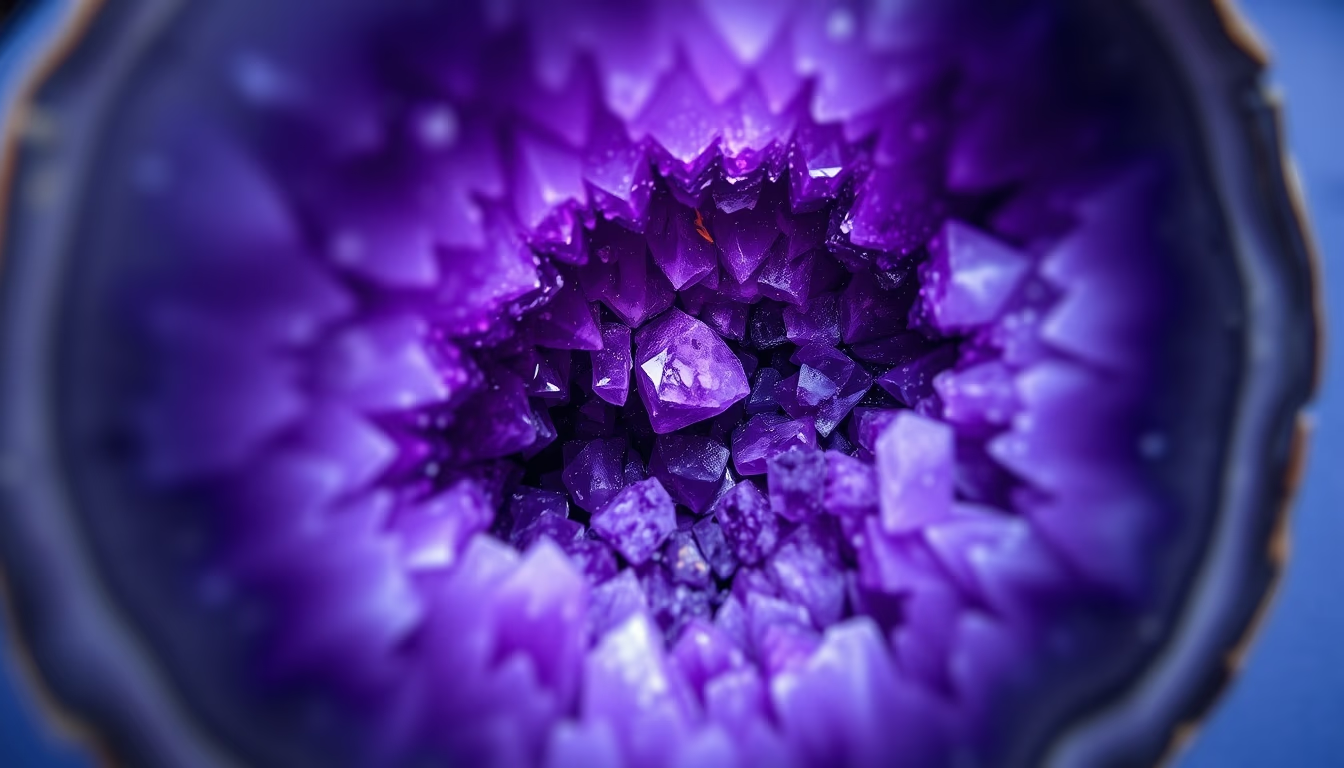
An amethyst geode is a hollow rock formation lined with violet quartz crystals, formed in cavities of volcanic lava millions of years ago.
About this subject
Amethyst geodes are fascinating geological formations originating in cavities of volcanic rocks, especially basalts. When lava cools, gas bubbles become trapped, and over millions of years, silica-rich and other mineral solutions penetrate these cavities. The silica crystallizes slowly, forming quartz crystals. The distinctive violet color of amethyst is due to iron impurities and exposure to natural radiation during crystal growth.
Brazil is one of the world's largest producers of amethyst, with notable deposits in Rio Grande do Sul, particularly the city of Ametista do Sul. Brazilian geodes can reach enormous sizes, some weighing tens of tons. The largest amethyst geode ever found, weighing 35 tons, was discovered in this region. Uruguay and other South American countries also have significant deposits. Amethyst is a variety of quartz, with a hardness of 7 on the Mohs scale, making it durable and suitable for jewelry and decorative objects.
Culturally, amethyst has been valued since antiquity. Greeks and Romans believed it prevented intoxication, and the word 'amethyst' derives from the Greek 'amethystos', meaning 'not intoxicated'. In the Middle Ages, it was used by clergy as a symbol of purity. Today, it is one of the most popular gemstones, used in rings, necklaces, and carvings. Many people also attribute mystical properties to amethyst, such as spiritual protection and mental clarity.
The extraction of amethyst geodes involves specialized techniques, as geodes may be buried in layers of rock and clay. In Brazil, mining is often artisanal, with miners using hand tools and controlled explosives. After extraction, geodes are cut, polished, and sold to collectors, jewelers, and mineral enthusiasts. The unique beauty of each geode, with its crystals arranged in druzes, makes them coveted items for decoration and mineralogical studies.
Frequently Asked Questions
How is an amethyst geode formed?
Amethyst geodes form in cavities of volcanic rocks like basalts. After lava solidifies, gas bubbles create hollow spaces. Over millions of years, silica-rich and iron-bearing fluids seep into these cavities, crystallizing into violet quartz. The color results from iron impurities and natural radiation.
What is the difference between amethyst and rose quartz?
Both are varieties of quartz, but amethyst gets its violet color from iron impurities and radiation exposure, while rose quartz owes its pink color to inclusions of aluminum and phosphorus. Additionally, amethyst is more common in geodes, whereas rose quartz occurs in massive formations.
Where are the largest amethyst geodes found?
The largest amethyst geodes are found in Brazil, especially Rio Grande do Sul (Ametista do Sul), and in Uruguay (Artigas). The world's largest geode, weighing 35 tons, was discovered in Ametista do Sul, Brazil, and is displayed in a local museum.
Direct URL
https://pub-c7d6a6ea828543ac903a74a341ccb2e1.r2.dev/imagens/amethyst-geode-purple-fish-eye-wide-angle-p0.avifHow to credit
Include a visible link back to UtilizAí. Copy one of the snippets below:
<a href="https://xn--utiliza-eza.com/en/midia/imagens/amethyst-geode-purple-fish-eye-wide-angle-p0">Amethyst geode purple</a> by <a href="https://xn--utiliza-eza.com">UtilizAí</a>, licensed under <a href="https://creativecommons.org/licenses/by/4.0/">CC BY 4.0</a>.
[Amethyst geode purple](https://xn--utiliza-eza.com/en/midia/imagens/amethyst-geode-purple-fish-eye-wide-angle-p0) by [UtilizAí](https://xn--utiliza-eza.com), CC BY 4.0
License: CC-BY-4.0