Amethyst geode purple
1344×768 · AVIF · CC BY 4.0
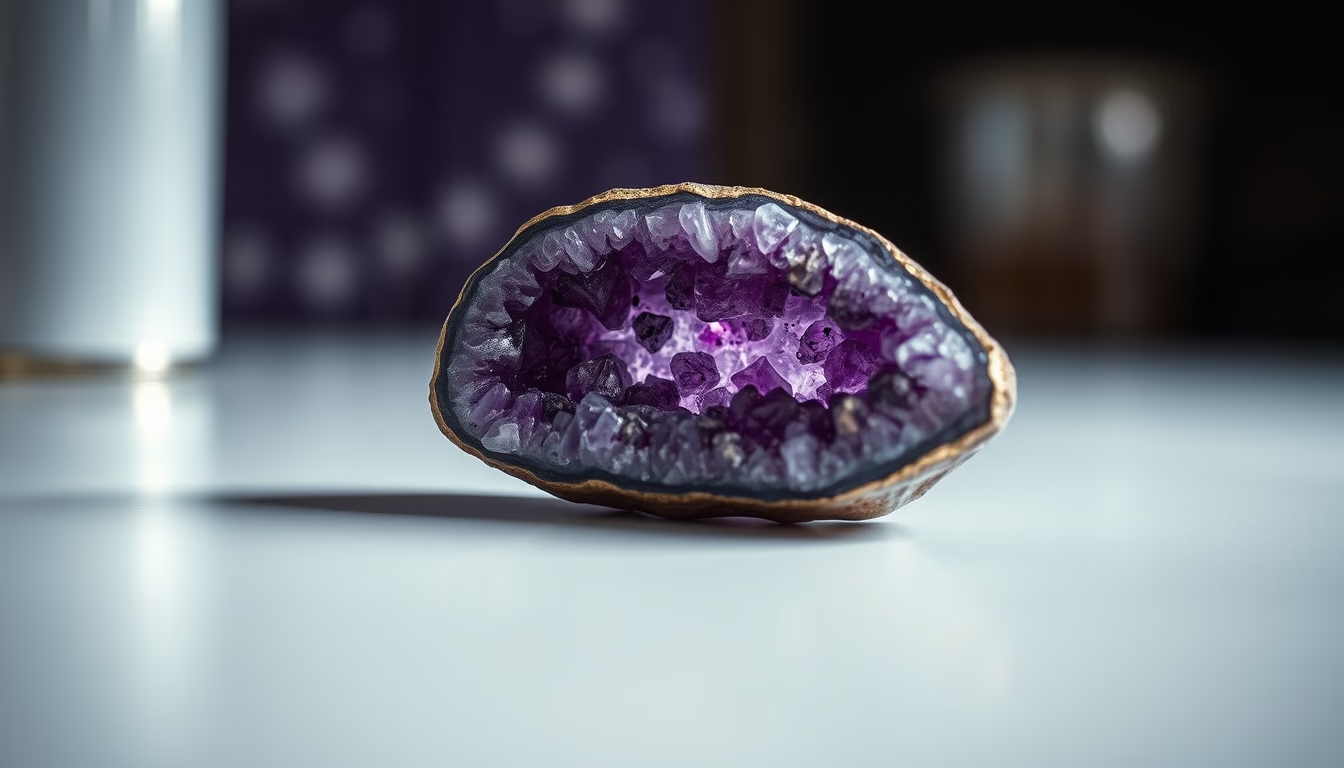
Amethyst geode with intense purple crystals, one of the most valued mineral formations for collectors and decorators.
About this subject
Amethyst geodes are hollow rock cavities lined with hundreds of purple quartz crystals. The characteristic violet color comes from iron and other trace elements within the crystal lattice, activated by natural radiation over millions of years. The largest commercial deposits of amethyst geodes are found in Brazil, especially in the southern state of Rio Grande do Sul, in towns like Ametista do Sul and the Quaraí district. These geodes range from a few centimeters to several meters in diameter, with the largest used as decorative pieces in museums and homes.
Geode formation begins with gas bubbles in volcanic or sedimentary rocks. Over time, silica-rich fluids fill the cavity, and as the solution cools and solidifies, crystals grow from the outer edges inward, often leaving a hollow center. This process can take millions of years, and the final color and crystal size depend on specific temperature, pressure, and chemical conditions. Brazilian amethysts are known for deep, uniform purple tones, while varieties from other regions, such as Uruguay and Zambia, may display lighter or zoned colors.
Culturally, amethyst is the birthstone for February and is associated with calmness and mental clarity in the tradition of lithotherapy. Historically, it was used by Egyptians, Greeks, and Romans in jewelry and talismans. Today, beyond ornamental use, amethyst geodes are popular in Feng Shui and meditation practices. The value of a geode depends on its size, color intensity, crystal transparency, and the absence of fractures.
Frequently Asked Questions
What determines the color of amethyst?
The purple color of amethyst is caused by iron impurities in its crystal structure, combined with exposure to natural radiation over millions of years.
Where are the largest amethyst geodes found?
The largest commercial deposits are in Brazil, especially in Rio Grande do Sul state, in the regions of Ametista do Sul and Quaraí.
Does amethyst have any historical or cultural significance?
Yes, amethyst is the February birthstone and was used by ancient civilizations such as the Egyptians, Greeks, and Romans in jewelry and talismans.
Direct URL
https://pub-c7d6a6ea828543ac903a74a341ccb2e1.r2.dev/imagens/amethyst-geode-purple-fine-art-photography-p8.avifHow to credit
Include a visible link back to UtilizAí. Copy one of the snippets below:
<a href="https://xn--utiliza-eza.com/en/midia/imagens/amethyst-geode-purple-fine-art-photography-p8">Amethyst geode purple</a> by <a href="https://xn--utiliza-eza.com">UtilizAí</a>, licensed under <a href="https://creativecommons.org/licenses/by/4.0/">CC BY 4.0</a>.
[Amethyst geode purple](https://xn--utiliza-eza.com/en/midia/imagens/amethyst-geode-purple-fine-art-photography-p8) by [UtilizAí](https://xn--utiliza-eza.com), CC BY 4.0
License: CC-BY-4.0