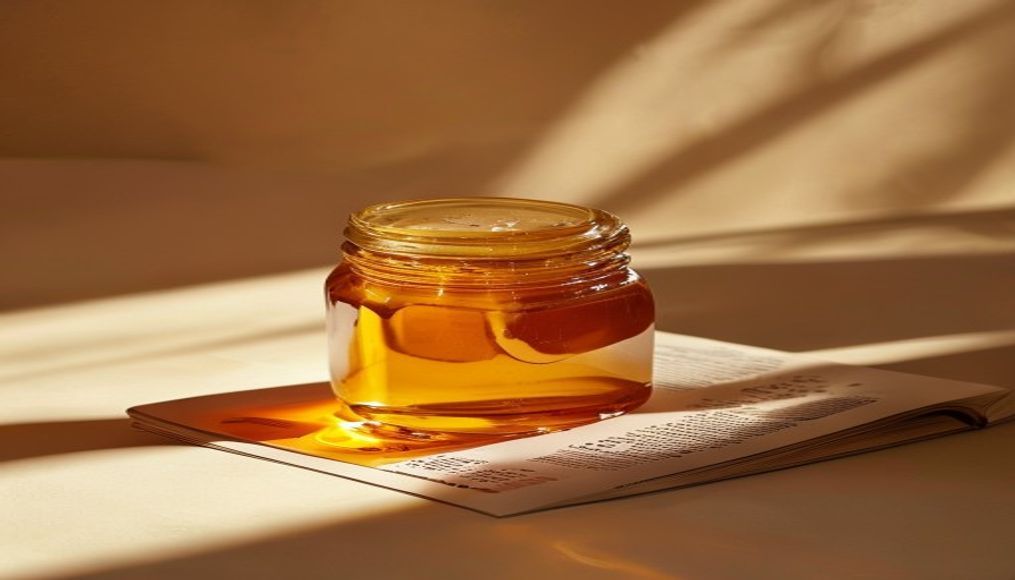
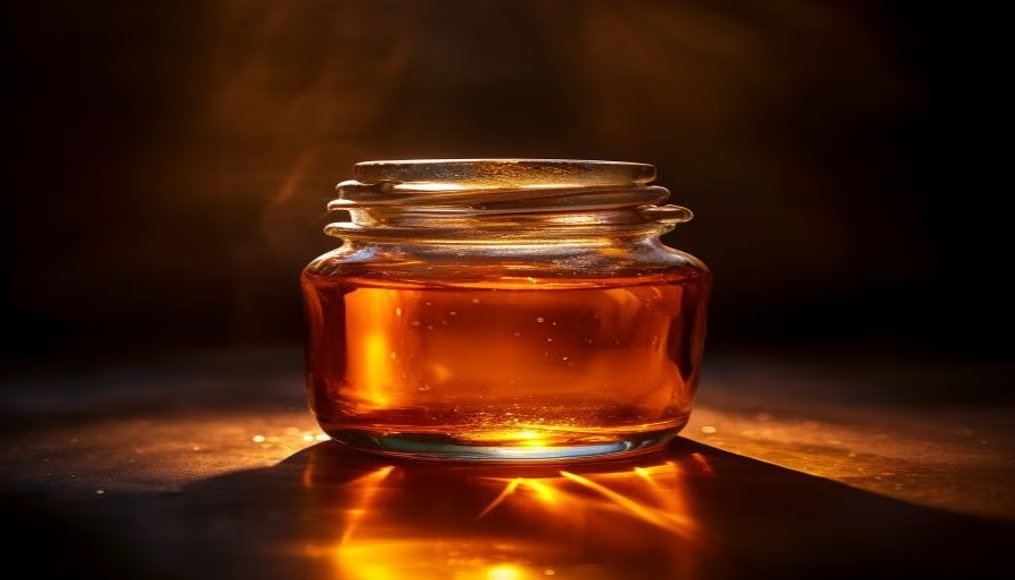
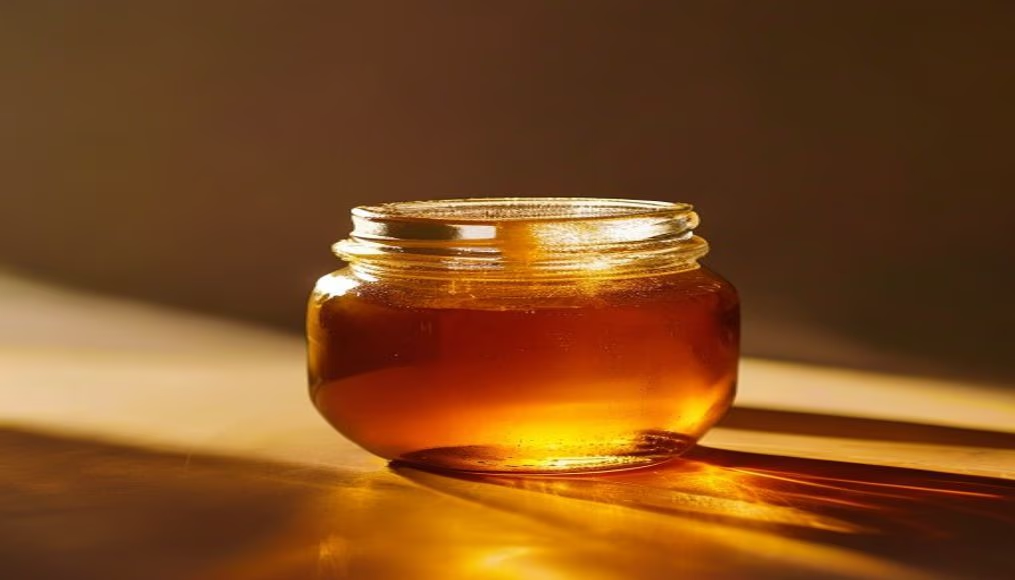
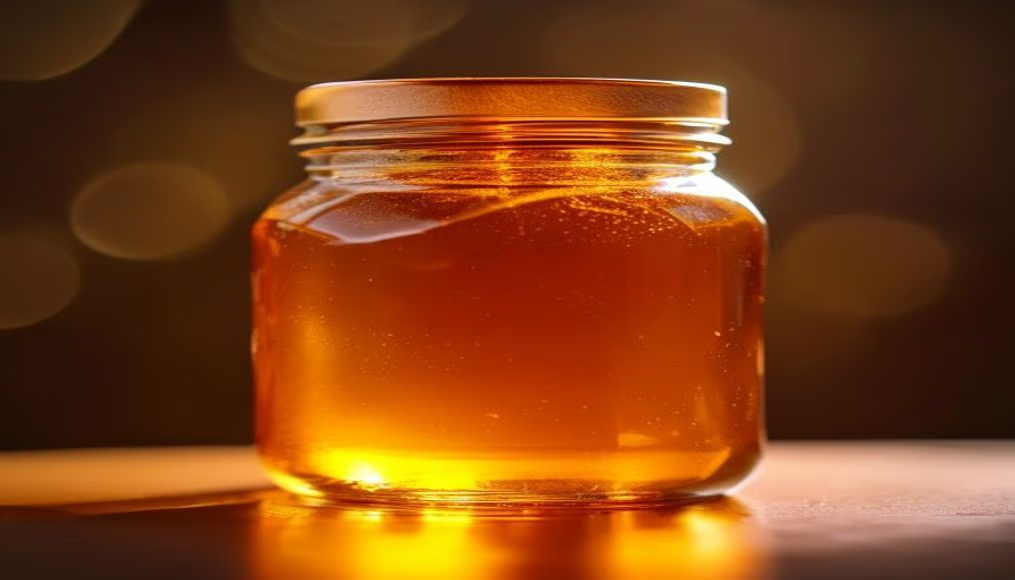
Amber resin insect inside
1344×768 · AVIF · CC BY 4.0
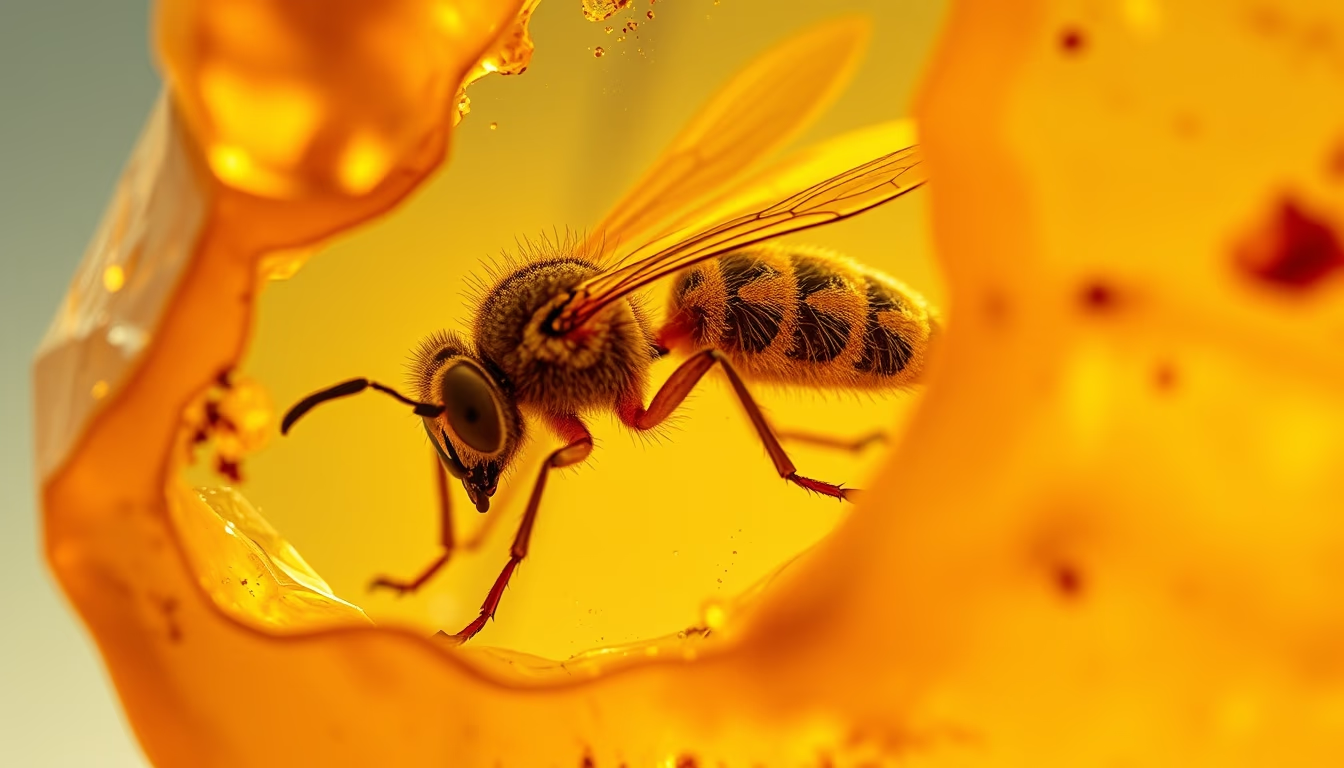
Amber with an insect preserved inside: a natural time capsule that reveals extinct species from millions of years ago.
About this subject
Amber is a fossilized resin produced by coniferous trees, mainly of the genus Pinus, that lived tens to hundreds of millions of years ago. When resin oozed from injured bark, it could trap small organisms such as insects, leaves, feathers, or even lizards, preserving them in exquisite detail. This fossilization process is rare and requires specific conditions, such as rapid burial and absence of oxygen, which prevent decomposition. Amber with inclusions is highly prized by collectors and scientists alike, as it offers a window into ancient ecosystems, allowing the study of anatomy, behavior, and even DNA of species that lived in the Mesozoic or Cenozoic eras.
The most famous deposits of insect-bearing amber are in the Dominican Republic, the Baltic region (Baltic amber), and Myanmar (Burmese amber). Dominican amber, from the Miocene (about 20 million years ago), is known for its clarity and diversity of preserved invertebrates. Baltic amber, from the Eocene (roughly 44 million years ago), has been mined for centuries and has yielded over 3,000 arthropod species. Burmese amber, from the Cretaceous (about 99 million years ago), is particularly important for preserving small dinosaur remains, such as a feathered tail.
The study of amber goes beyond paleontology: it is also used in jewelry and alternative medicine, although no scientific evidence supports healing properties. Genuine amber with inclusions can be identified by its texture, color (ranging from light yellow to dark brown), density, and the presence of air bubbles or natural fractures. Imitations made of synthetic resin or plastic are common, but fluorescence analysis and microscopy help distinguish the real material.
Interestingly, the word “amber” comes from the Arabic “anbar,” which originally referred to ambergris (from sperm whales), but was later applied to the fossil resin due to similar color. Amber with insects has inspired science fiction, such as the film Jurassic Park, where dinosaur DNA is extracted from preserved mosquitoes. Although the idea is fictional, real amber has allowed the discovery of original pigments and even the reconstruction of colors of extinct animals.
Frequently Asked Questions
How does an insect get trapped inside amber?
When a tree exudes resin to heal a wound, small insects can get stuck in the sticky substance. Over time, the resin hardens and, if buried, fossilizes, preserving the insect perfectly.
What is the typical age of insect-bearing amber?
Most insect-bearing amber ranges from 20 to 100 million years old, depending on the deposit. Burmese amber from the Cretaceous is up to 99 million years old, while Dominican amber is about 20 million years old.
Can DNA from insects in amber be used to clone dinosaurs?
No. DNA degrades quickly after death; even in amber, only tiny, damaged fragments are occasionally detected, not enough to reconstruct a whole organism. The idea from Jurassic Park is fiction.
Direct URL
https://pub-c7d6a6ea828543ac903a74a341ccb2e1.r2.dev/imagens/amber-resin-insect-inside-film-grain-authentic-p5.avifHow to credit
Include a visible link back to UtilizAí. Copy one of the snippets below:
<a href="https://xn--utiliza-eza.com/en/midia/imagens/amber-resin-insect-inside-film-grain-authentic-p5">Amber resin insect inside</a> by <a href="https://xn--utiliza-eza.com">UtilizAí</a>, licensed under <a href="https://creativecommons.org/licenses/by/4.0/">CC BY 4.0</a>.
[Amber resin insect inside](https://xn--utiliza-eza.com/en/midia/imagens/amber-resin-insect-inside-film-grain-authentic-p5) by [UtilizAí](https://xn--utiliza-eza.com), CC BY 4.0
License: CC-BY-4.0