Air purifier modern living room
1344×768 · AVIF · CC BY 4.0
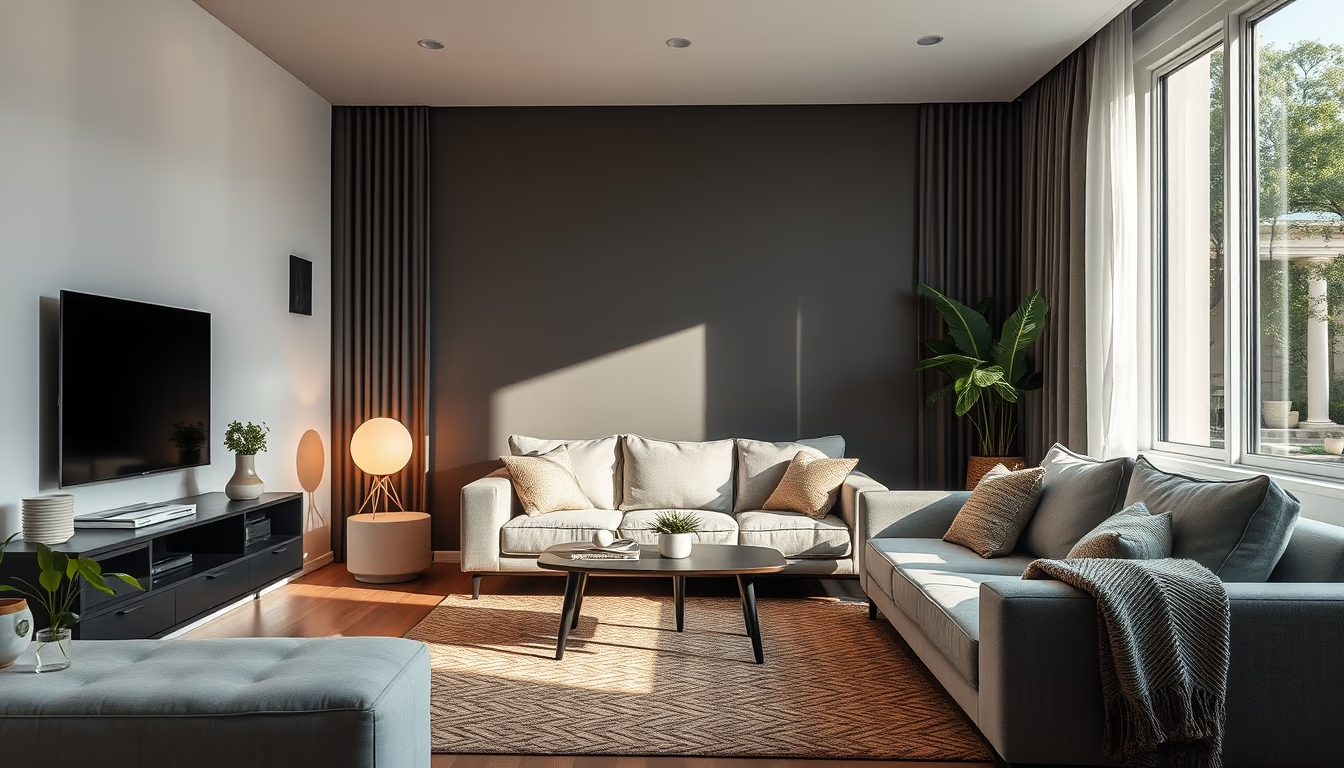
Modern air purifiers blend sleek design with advanced filtration technology, turning living rooms into healthier spaces.
About this subject
Air purifiers have become essential in contemporary homes, especially in large urban areas where air quality is a growing concern. Equipped with HEPA and activated carbon filters, they remove particles such as dust, pollen, pet dander, smoke, and volatile organic compounds (VOCs). Modern models feature real-time air quality sensors, automatic modes, and connectivity with virtual assistants, allowing smartphone control. Efficiency is measured by the clean air delivery rate (CADR), which indicates the volume of air filtered per minute. For medium-sized living rooms (up to 40 m²), a CADR of at least 200 m³/h is recommended.
The design of today's purifiers prioritizes aesthetic integration: minimalist shapes, wood or metal finishes, and soft LED lighting that can double as a night light. Brands like Dyson, Philips, Levoit, and Xiaomi invest in lines that look like decor items, with neutral color options that match sofas, rugs, and curtains. Moreover, the smart home trend has these devices communicating with thermostats, humidifiers, and ventilation systems, optimizing energy consumption.
Maintenance is simple: filter replacement every 6 to 12 months, depending on usage and local pollution levels. Some models have indicator lights that alert when it's time to replace. Noise is another crucial factor: levels below 30 dB in sleep mode ensure a restful night. Studies from the U.S. Environmental Protection Agency (EPA) show that continuous use of purifiers reduces allergy and asthma symptoms, as well as improves concentration and overall well-being. By 2026, UV-C light and photocatalysis filtration technology are expected to become popular, eliminating viruses and bacteria more effectively.
Frequently Asked Questions
How often should I replace the air purifier filters?
It depends on the model and usage. Typically, HEPA filters last 6 to 12 months. Check the manual or the indicator light. More polluted environments require more frequent changes.
Do air purifiers help with allergies and asthma?
Yes. HEPA filters capture allergens like pollen, dust mites, and pet dander, reducing flare-ups. The EPA confirms their effectiveness in improving indoor air quality.
What size air purifier is ideal for a living room?
For rooms up to 40 m², look for a CADR of at least 200 m³/h. Measure the space and choose a compatible model. Undersized purifiers won't be efficient.
Direct URL
https://pub-c7d6a6ea828543ac903a74a341ccb2e1.r2.dev/imagens/air-purifier-modern-living-room-magazine-editorial-p0.avifHow to credit
Include a visible link back to UtilizAí. Copy one of the snippets below:
<a href="https://xn--utiliza-eza.com/en/midia/imagens/air-purifier-modern-living-room-magazine-editorial-p0">Air purifier modern living room</a> by <a href="https://xn--utiliza-eza.com">UtilizAí</a>, licensed under <a href="https://creativecommons.org/licenses/by/4.0/">CC BY 4.0</a>.
[Air purifier modern living room](https://xn--utiliza-eza.com/en/midia/imagens/air-purifier-modern-living-room-magazine-editorial-p0) by [UtilizAí](https://xn--utiliza-eza.com), CC BY 4.0
License: CC-BY-4.0