Agronomist with tablet in field analyzing crop data
1344×768 · AVIF · CC BY 4.0
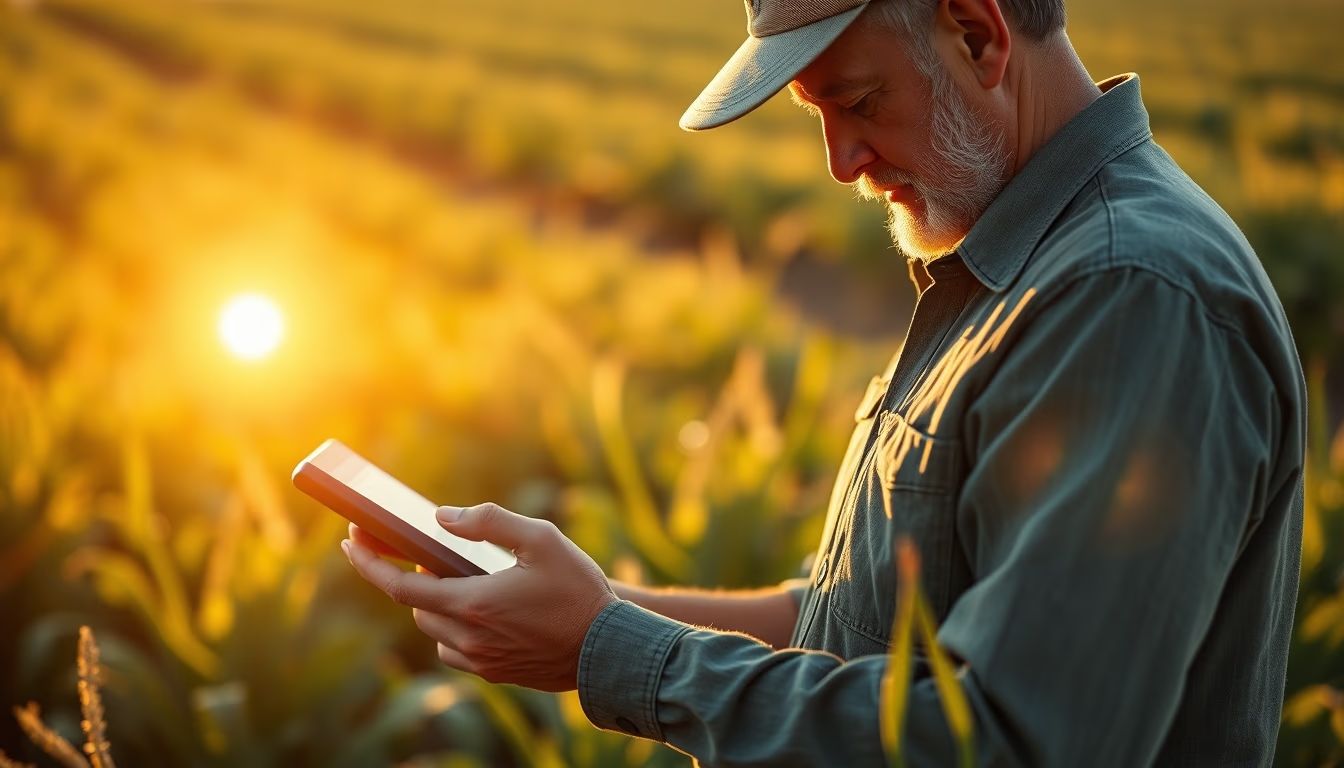
Agronomist uses tablet in field to analyze crop data, optimizing productivity in agribusiness.
About this subject
Precision agriculture has transformed the work of agronomists, who now use tablets and other mobile devices to collect and analyze data in real time directly in the field. This practice allows monitoring soil conditions, plant development, and water needs with high accuracy. In Brazil, one of the world's largest producers of soybeans, corn, and sugarcane, the adoption of technologies such as sensors, drones, and agricultural management software has grown rapidly, driven by the need to increase efficiency and reduce costs.
Using tablets in the field replaces paper notebooks and spreadsheets, streamlining the recording of information such as pests, diseases, and phenological stages. Collected data can be synchronized with geographic information systems (GIS) and digital agriculture platforms, enabling the creation of productivity maps and personalized recommendations for each plot. This approach reduces waste of inputs like fertilizers and pesticides, while also contributing to environmental sustainability.
The agronomist's work with a tablet is common on medium and large farms, especially during the harvest season. In regions such as Central-West and Matopiba, technology supports decisions on irrigation, planting, and harvesting. Technical training is essential, involving not only agronomic knowledge but also skills in data analysis and digital tool management.
Interestingly, the term "Agriculture 4.0" encompasses these practices, including the Internet of Things (IoT) and artificial intelligence. In Brazil, agtech startups have developed specific solutions for the field, such as apps that integrate climate and market data. The agronomist with a tablet symbolizes this evolution, where technology enhances food production in a smarter and more sustainable way.
Frequently Asked Questions
What does an agronomist do with a tablet in the field?
They collect and analyze real-time data on soil, plants, and weather, record pests and diseases, and make decisions on irrigation, fertilization, and harvesting, all digitally and integrated.
What are the benefits of precision agriculture for farmers?
Increased productivity, reduced input costs, lower environmental impact, and data-driven decision-making, optimizing resource use.
Is using tablets in the field common in Brazil?
Yes, especially on medium and large farms in the Central-West and Matopiba regions, where technology is widely adopted to improve agricultural efficiency.
Direct URL
https://pub-c7d6a6ea828543ac903a74a341ccb2e1.r2.dev/imagens/agronomist-with-tablet-in-field-analyzing-crop-data-wide-late-afternoon-3.avifHow to credit
Include a visible link back to UtilizAí. Copy one of the snippets below:
<a href="https://xn--utiliza-eza.com/en/midia/imagens/agronomist-with-tablet-in-field-analyzing-crop-data-wide-late-afternoon-3">Agronomist with tablet in field analyzing crop data</a> by <a href="https://xn--utiliza-eza.com">UtilizAí</a>, licensed under <a href="https://creativecommons.org/licenses/by/4.0/">CC BY 4.0</a>.
[Agronomist with tablet in field analyzing crop data](https://xn--utiliza-eza.com/en/midia/imagens/agronomist-with-tablet-in-field-analyzing-crop-data-wide-late-afternoon-3) by [UtilizAí](https://xn--utiliza-eza.com), CC BY 4.0
License: CC-BY-4.0