Agronomist with tablet in field analyzing crop data
1344×768 · AVIF · CC BY 4.0
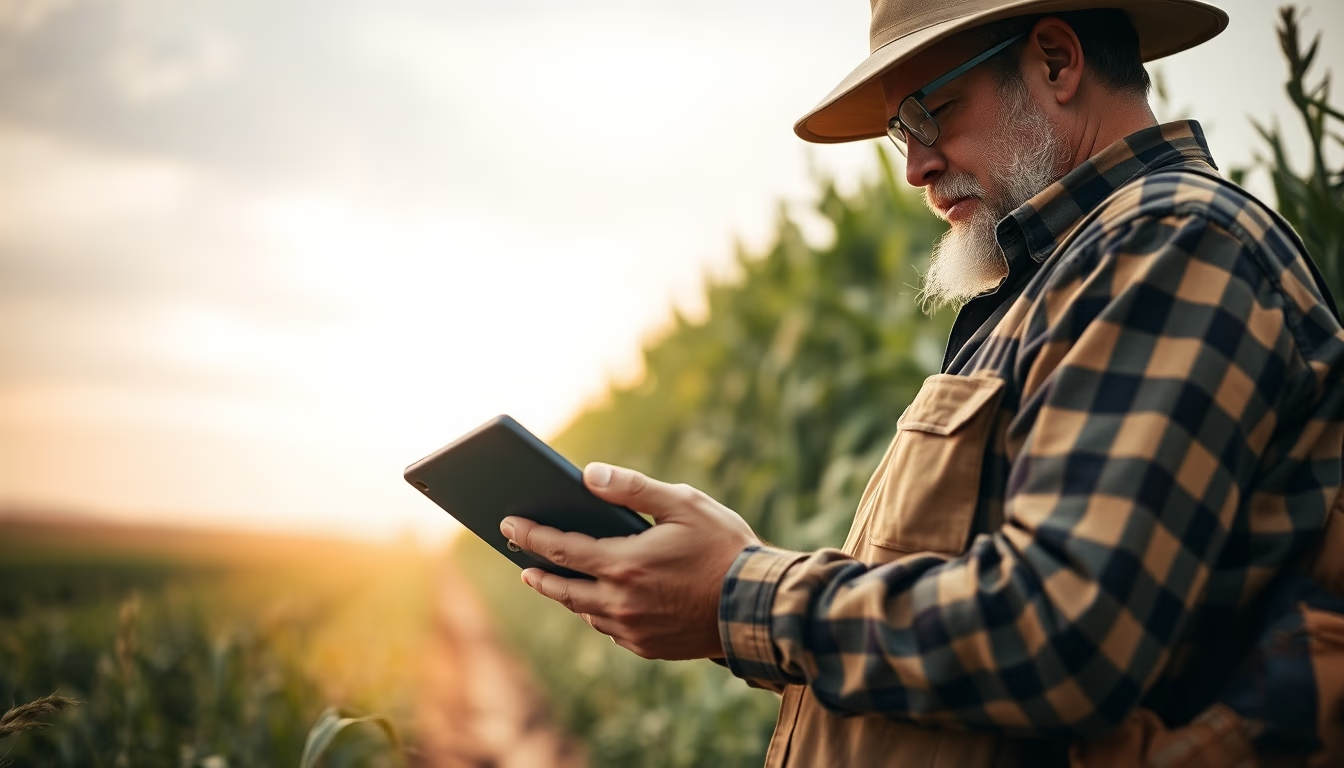
Agronomist analyzes crop data on tablet during field visit on overcast day, a key practice in precision agriculture.
About this subject
Precision agriculture has transformed the work of agronomists, who now use tablets and specialized software to collect and analyze real-time data in the field. Equipped with a tablet, the professional can access productivity maps, management history, and technical recommendations while walking through the crop. This technology allows for the identification of variations in soil and crops, enabling localized application of inputs like fertilizers and pesticides, reducing costs and environmental impacts.
In Brazil, the world's largest producer of soybeans, coffee, and sugarcane, the adoption of digital tools in agribusiness has grown rapidly. Data from Embrapa indicates that over 60% of Brazilian rural properties already use some form of precision agriculture technology. Tablets are commonly used in the field for pest monitoring, water stress assessment, and harvest planning, especially in regions like the Cerrado and Southern Brazil.
Overcast days, such as the one depicted in the image, are frequent during growing seasons in many Brazilian regions. Diffuse light can even benefit photosynthesis in some crops, but it also requires management adjustments, as lower solar radiation reduces evapotranspiration and may favor fungal diseases. The agronomist, armed with precise data, can make quick decisions to mitigate risks.
Agronomy education includes subjects like soil science, crop science, and remote sensing, enabling professionals to interpret data from moisture sensors, satellite images, and drones. This expertise is crucial for sustainable agricultural production, especially in a climate change scenario that demands greater efficiency in natural resource use.
Frequently Asked Questions
What does an agronomist do in the field?
An agronomist in the field monitors crops, collects soil and plant data, diagnoses pests and diseases, and advises on agricultural management to optimize productivity and sustainability.
How does precision agriculture help the agronomist?
Precision agriculture provides tools like GPS, sensors, and software that allow the agronomist to analyze spatial and temporal variability, applying inputs locally and reducing waste.
Why are overcast days relevant in agriculture?
Overcast days reduce solar radiation, affecting photosynthesis and evapotranspiration. They can benefit crops like coffee and sugarcane but also increase the risk of fungal diseases, requiring specific management.
Direct URL
https://pub-c7d6a6ea828543ac903a74a341ccb2e1.r2.dev/imagens/agronomist-with-tablet-in-field-analyzing-crop-data-editorial-overcast-daytime-4.avifHow to credit
Include a visible link back to UtilizAí. Copy one of the snippets below:
<a href="https://xn--utiliza-eza.com/en/midia/imagens/agronomist-with-tablet-in-field-analyzing-crop-data-editorial-overcast-daytime-4">Agronomist with tablet in field analyzing crop data</a> by <a href="https://xn--utiliza-eza.com">UtilizAí</a>, licensed under <a href="https://creativecommons.org/licenses/by/4.0/">CC BY 4.0</a>.
[Agronomist with tablet in field analyzing crop data](https://xn--utiliza-eza.com/en/midia/imagens/agronomist-with-tablet-in-field-analyzing-crop-data-editorial-overcast-daytime-4) by [UtilizAí](https://xn--utiliza-eza.com), CC BY 4.0
License: CC-BY-4.0