Agronomist with tablet in field analyzing crop data
1344×768 · AVIF · CC BY 4.0
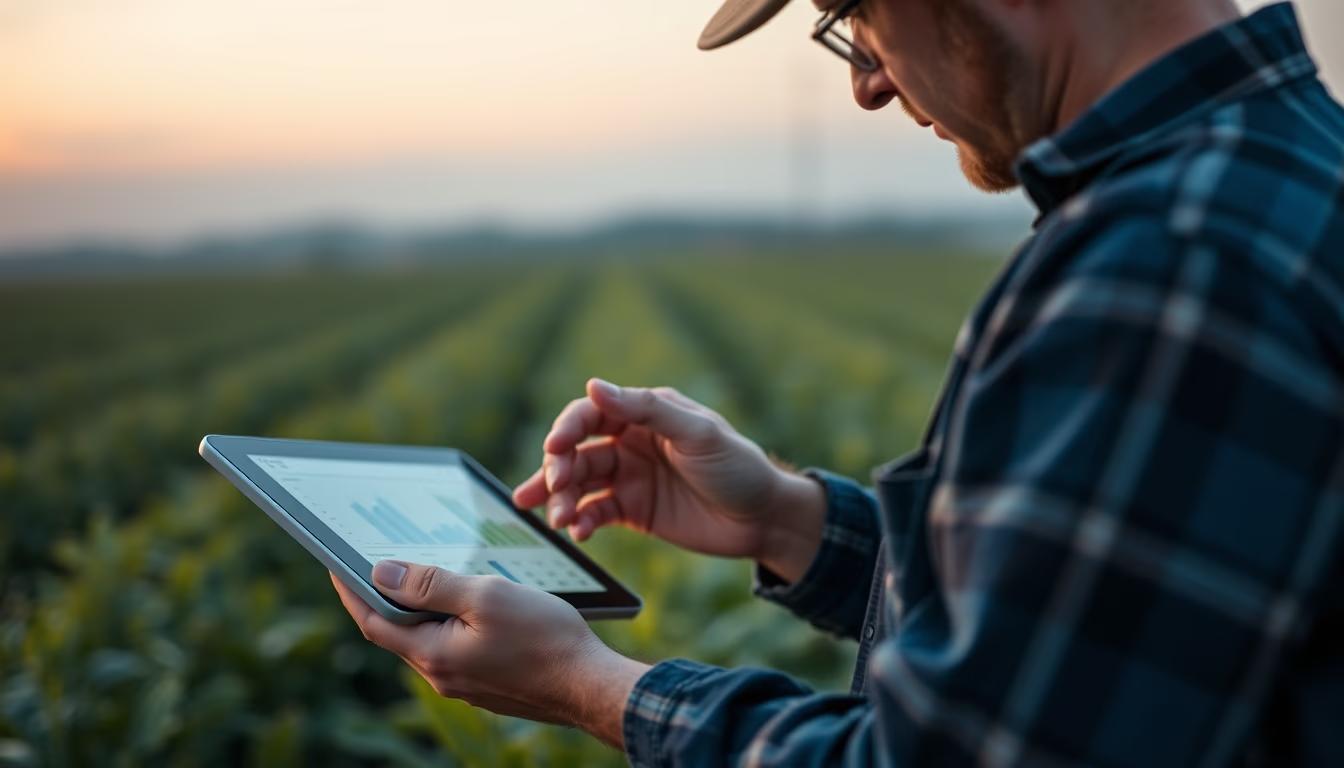
Agronomist uses tablet for crop data analysis in the field, integrating technology and sustainability.
About this subject
Precision agriculture, a practice that uses technology to optimize crop management, has the agronomist as one of its main protagonists. Equipped with a tablet, the professional collects and analyzes real-time data on soil, climate, and plant development, enabling more assertive decisions on irrigation, fertilization, and pest control. This approach reduces costs and environmental impacts by applying inputs only where and when needed.
In Brazil, the world's largest exporter of soybeans, coffee, and sugar, the adoption of digital tools in the field is growing rapidly. According to Embrapa, over 60% of large Brazilian farms already use some form of precision agriculture technology. The use of tablets and sensors connected to satellites allows mapping the spatial variability of crops, increasing productivity by up to 20%.
The agronomist's work goes beyond data collection: they interpret NDVI (Normalized Difference Vegetation Index) graphs, harvest maps, and predictive climate models. This integrated analysis helps forecast yields, identify water stress, and plan planting at optimal times. The image captured at twilight in the field symbolizes the convergence of traditional agricultural knowledge and digital innovation.
Interestingly, the tablet used in the field must be rugged, with protection against dust, moisture, and drops. Models with high-brightness screens are essential for viewing under intense sunlight. 4G or 5G connectivity, increasingly present in rural Brazil, allows instant data upload to cloud platforms, enabling remote monitoring by technical teams and consultants.
Frequently Asked Questions
What is precision agriculture?
Precision agriculture is a management system that uses technologies such as GPS, sensors, and software to monitor and optimize crop production, applying inputs locally and variably according to the specific needs of each area of the field.
What are the benefits of using tablets in the field?
Tablets allow real-time data collection and analysis, access to maps and reports, communication with teams and consultants, and integration with drones and sensors. This increases efficiency, reduces costs, and improves decision-making.
How does technology help agricultural sustainability?
Technology enables rational use of water, fertilizers, and pesticides, reducing waste and environmental contamination. It also helps monitor carbon emissions and preserve native vegetation areas, promoting greener agriculture.
Direct URL
https://pub-c7d6a6ea828543ac903a74a341ccb2e1.r2.dev/imagens/agronomist-with-tablet-in-field-analyzing-crop-data-closeup-twilight-2.avifHow to credit
Include a visible link back to UtilizAí. Copy one of the snippets below:
<a href="https://xn--utiliza-eza.com/en/midia/imagens/agronomist-with-tablet-in-field-analyzing-crop-data-closeup-twilight-2">Agronomist with tablet in field analyzing crop data</a> by <a href="https://xn--utiliza-eza.com">UtilizAí</a>, licensed under <a href="https://creativecommons.org/licenses/by/4.0/">CC BY 4.0</a>.
[Agronomist with tablet in field analyzing crop data](https://xn--utiliza-eza.com/en/midia/imagens/agronomist-with-tablet-in-field-analyzing-crop-data-closeup-twilight-2) by [UtilizAí](https://xn--utiliza-eza.com), CC BY 4.0
License: CC-BY-4.0