78 rpm shellac vintage
1344×768 · AVIF · CC BY 4.0
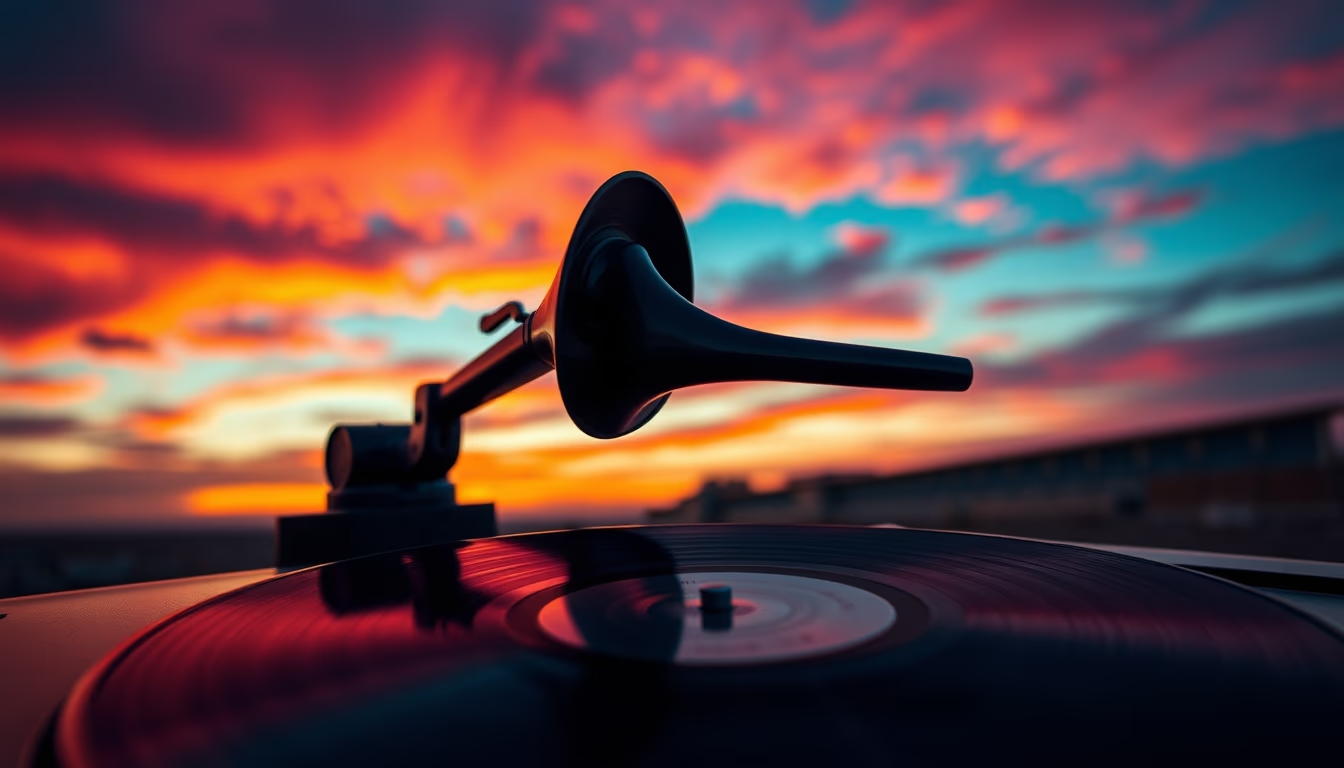
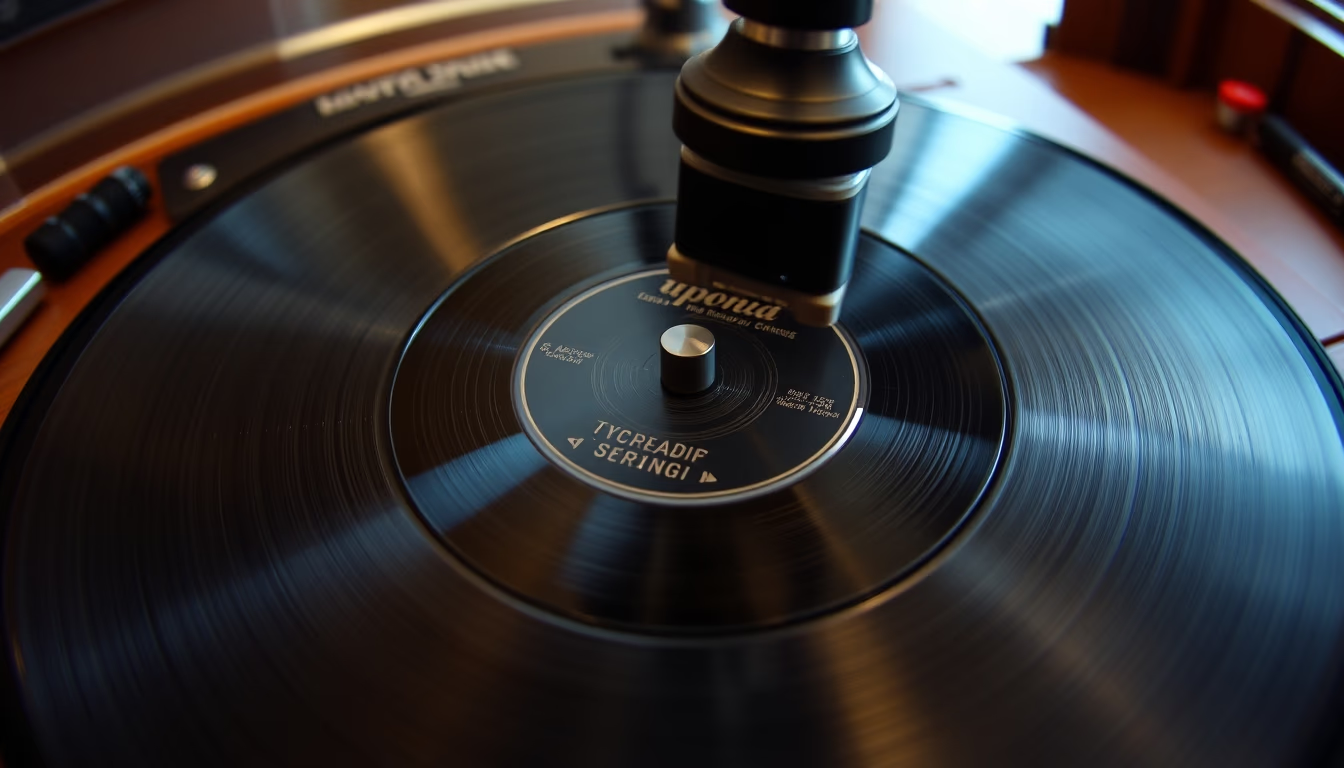
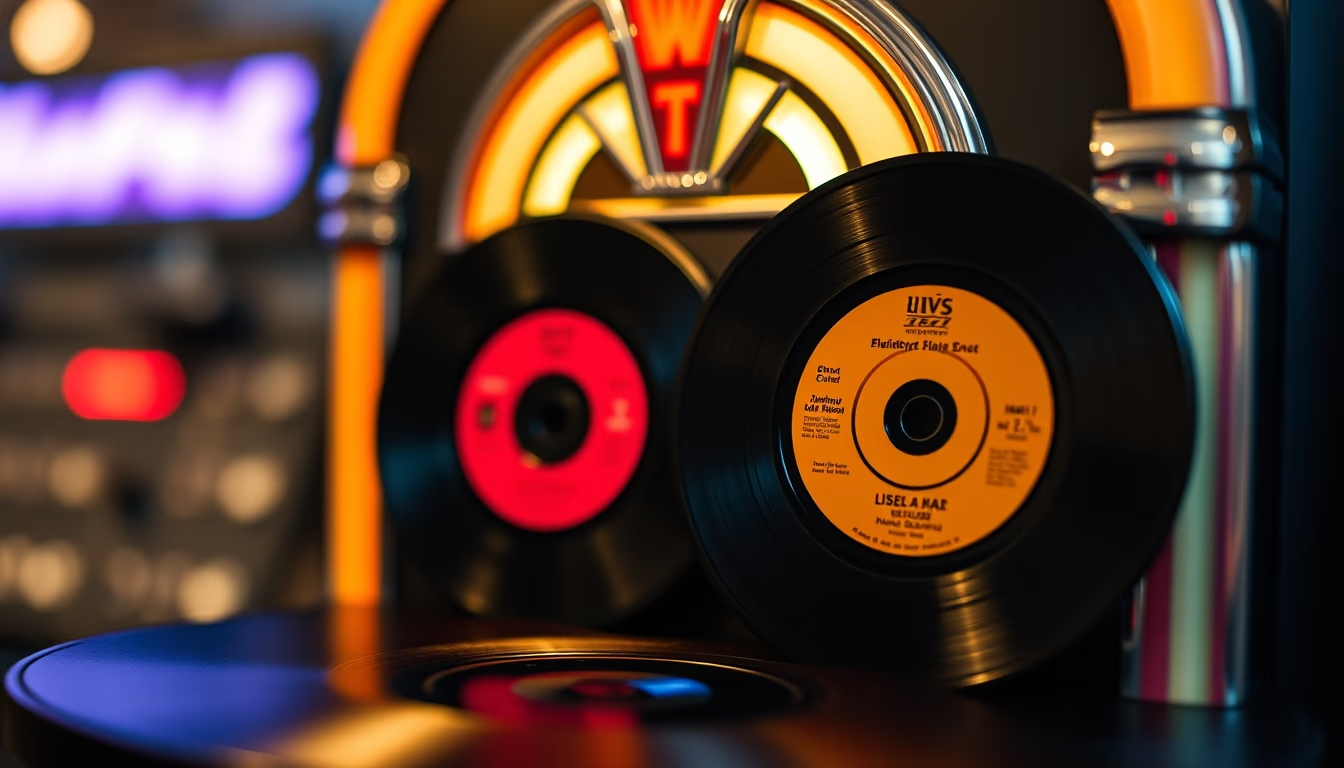
78 rpm shellac records dominated the recording industry from 1898 to the late 1950s, known for their fragility and limited playing time.
About this subject
78 rpm records were the standard sound recording medium for most of the early 20th century. Made from shellac, a natural resin, these discs were harder and more brittle than later vinyl records. Each side held approximately 3 to 5 minutes of audio, which directly influenced the length of popular songs at the time. The 78 rpm speed originated from early mechanical gramophones and was standardized by the industry to ensure compatibility.
Mass production of 78 rpm shellac records began with companies like the Victor Talking Machine Company and Columbia Graphophone Company, competing for the home market. Shellac was mixed with mineral fillers such as stone powder and cotton fibers to give it body. This compound made records heavy and prone to chipping and breaking, and it produced a characteristic surface noise. Early recordings were acoustic, captured by metal horns, and only in the 1920s did the first electric microphones appear.
Culturally, 78 rpm records document the rise of jazz, blues, samba, and other popular genres. Pioneering artists like Louis Armstrong, Carmen Miranda, and Orlando Silva had their first hits on this format. During World War II, shellac shortages led to recycling campaigns, and in the 1950s vinyl gradually replaced shellac. Today, collectors prize rare 78 rpm discs, especially those pressed from original matrices of historic recordings, which can fetch high prices at auction.
Playing a 78 rpm record requires a turntable with a specific stylus (usually steel or sapphire) and a cartridge adapted to the wider groove. The exact speed varied between 78 and 80 rpm depending on the manufacturer and matrix. The resulting sound has a unique equalization (acoustic recording curve) that needs adjustment for faithful reproduction on modern systems. Digital preservation efforts, such as those by the Library of Congress, aim to salvage the content of these discs before the material completely degrades.
Frequently Asked Questions
What is the main difference between a 78 rpm record and a vinyl LP?
The material: 78 rpm records are made of shellac (a natural resin) while LPs are made of vinyl (PVC). 78s spin at 78 revolutions per minute, have wider grooves, and hold only 3 to 5 minutes per side, whereas LPs can play up to 30 minutes per side at 33⅓ rpm.
Why are 78 rpm records so fragile?
Shellac is a natural resin that hardens and becomes brittle. Mineral fillers and the lack of plasticizers increase fragility, causing the records to chip easily if dropped or mishandled.
Which famous Brazilian artists recorded on 78 rpm?
Carmen Miranda, Orlando Silva, Francisco Alves, Noel Rosa, and Pixinguinha are among those who released major hits on this format in the 1930s and 1940s.
Direct URL
https://pub-c7d6a6ea828543ac903a74a341ccb2e1.r2.dev/imagens/78-rpm-shellac-vintage-long-exposure-fresh16.avifHow to credit
Include a visible link back to UtilizAí. Copy one of the snippets below:
<a href="https://xn--utiliza-eza.com/en/midia/imagens/78-rpm-shellac-vintage-long-exposure-fresh16">78 rpm shellac vintage</a> by <a href="https://xn--utiliza-eza.com">UtilizAí</a>, licensed under <a href="https://creativecommons.org/licenses/by/4.0/">CC BY 4.0</a>.
[78 rpm shellac vintage](https://xn--utiliza-eza.com/en/midia/imagens/78-rpm-shellac-vintage-long-exposure-fresh16) by [UtilizAí](https://xn--utiliza-eza.com), CC BY 4.0
License: CC-BY-4.0