Zen garden raked sand
1344×768 · AVIF · CC BY 4.0
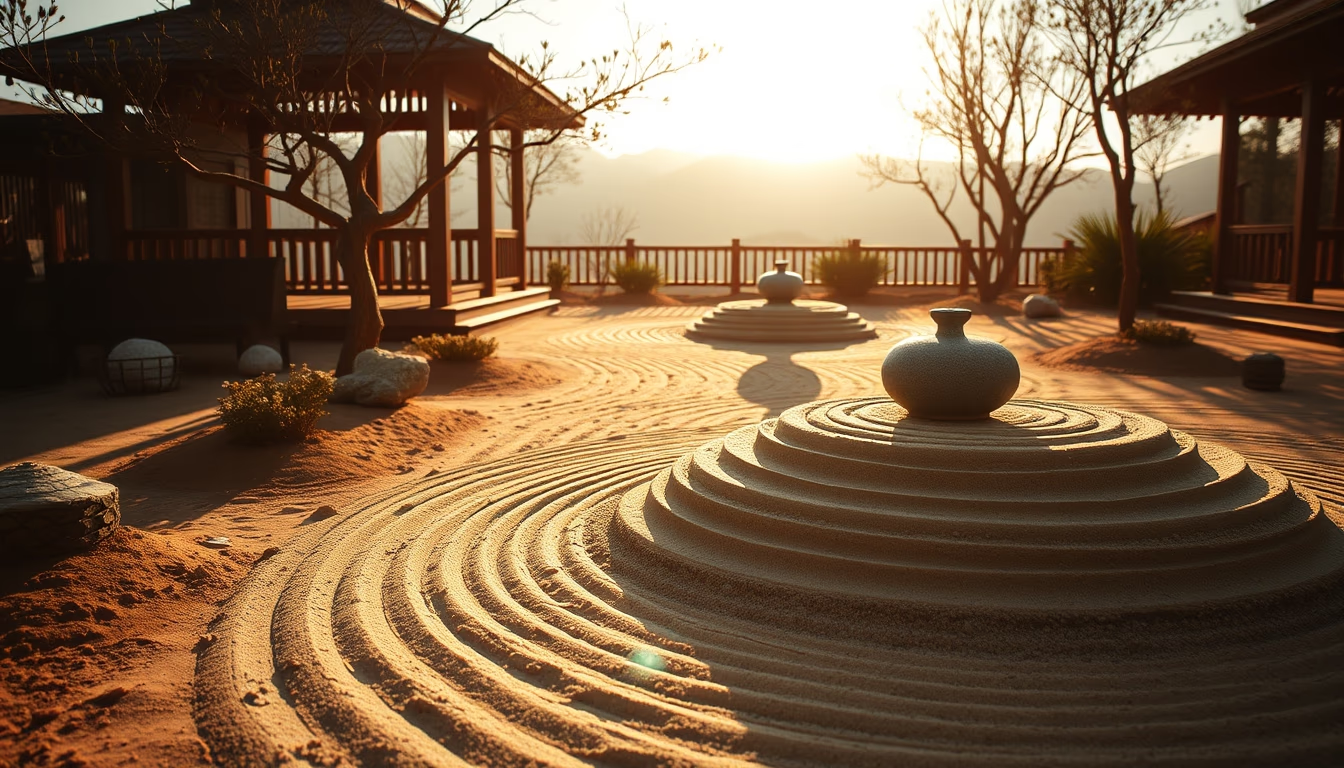
Japanese zen gardens, known as karesansui, use meticulously raked sand to represent water and promote meditation.
About this subject
The zen garden, or karesansui (dry garden), is a landscape art form originating in Japan during the Muromachi period (14th to 16th centuries). Heavily influenced by Zen Buddhism, it eliminates actual water features, replacing ponds and rivers with carefully raked gravel or fine sand. The wavy pattern created by the rake symbolizes the flow of water, while rocks represent mountains or islands. This minimalist style aims to evoke the essence of nature and facilitate contemplation.
The most famous example is the garden at Ryoan-ji temple in Kyoto, a UNESCO World Heritage site. Its composition of 15 rocks arranged on a bed of white gravel has been studied for centuries. Every element serves a purpose: the white sand purifies, mosses add texture, and the silence invites introspection. The act of raking the sand, called hōmaki, is considered a form of active meditation.
Today, zen gardens are adopted worldwide as wellness tools. Having a miniature zen garden on a desk, with sand and a rake, has become popular for stress relief. Studies show that the repetitive raking motion and observation of geometric patterns help calm the mind, akin to mindfulness practice. In Japan, maintaining a zen garden is seen as an exercise in discipline and harmony with the environment.
Interestingly, the patterns are not random. Straight lines represent calm waters, while concentric circles around rocks symbolize waves hitting islands. Symmetry and balance are carefully planned. Despite its simple appearance, creating a zen garden requires knowledge of proportions, drainage, and material selection, such as weathered granite for the stones.
Frequently Asked Questions
What is the origin of zen gardens?
Zen gardens originated in Japan during the Muromachi period (14th-16th centuries), inspired by Zen Buddhism. Monks created them to aid meditation, replacing water with raked gravel to represent rivers and seas.
What do the sand patterns in zen gardens mean?
The patterns mimic water: straight lines indicate calm waters, ripples represent currents or waves, and concentric circles around rocks symbolize waves hitting islands.
How can a zen garden help with wellness?
Raking the sand and observing the patterns promote relaxation and mental focus, acting as active meditation. Studies show stress reduction and improved concentration, used in mindfulness therapies.
Direct URL
https://pub-c7d6a6ea828543ac903a74a341ccb2e1.r2.dev/imagens/zen-garden-raked-sand-travel-photography-p3.avifHow to credit
Include a visible link back to UtilizAí. Copy one of the snippets below:
<a href="https://xn--utiliza-eza.com/en/midia/imagens/zen-garden-raked-sand-travel-photography-p3">Zen garden raked sand</a> by <a href="https://xn--utiliza-eza.com">UtilizAí</a>, licensed under <a href="https://creativecommons.org/licenses/by/4.0/">CC BY 4.0</a>.
[Zen garden raked sand](https://xn--utiliza-eza.com/en/midia/imagens/zen-garden-raked-sand-travel-photography-p3) by [UtilizAí](https://xn--utiliza-eza.com), CC BY 4.0
License: CC-BY-4.0